
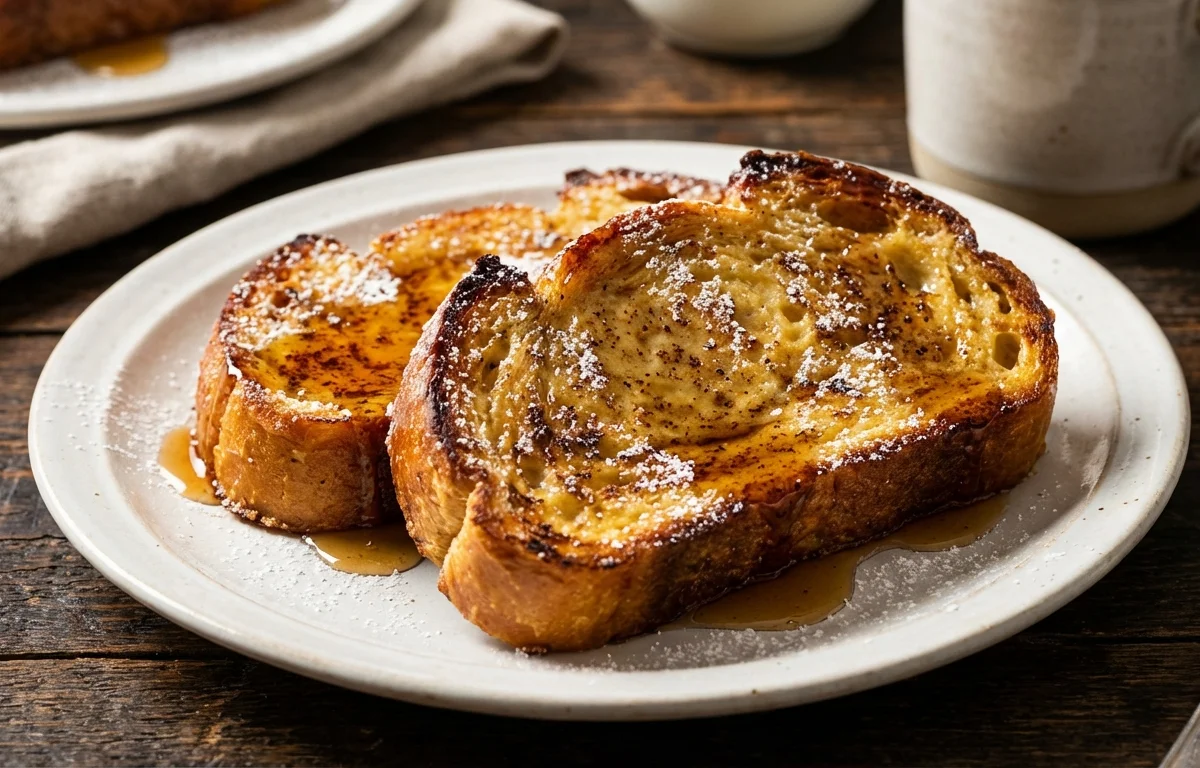
Pain Perdu
Literally 'lost bread,' this New Orleans classic transforms stale French bread into a decadent breakfast. Soaked in a rich, spiced custard and pan-fried to perfection, it's a sweet, satisfying start to any day.
For 4 servings
4 steps. 15 minutes total.
- 1
Step 1
- a.Prepare the Custard Bath
- b.In a shallow dish or pie plate wide enough to fit a slice of bread, whisk the eggs vigorously until the yolks and whites are fully combined and slightly frothy.
- c.Whisk in the whole milk, heavy cream, granulated sugar, vanilla extract, cinnamon, nutmeg, and salt.
- d.If using, stir in the dark rum or brandy. Continue whisking until the mixture is homogenous and the sugar has completely dissolved. This should take about 2-3 minutes.
- 2
Step 2
- a.Soak the Bread Slices
- b.Working one slice at a time, dip the stale French bread into the custard mixture.
- c.Allow each side to soak for 20-30 seconds. The goal is for the bread to be saturated but not so delicate that it falls apart. The staleness of the bread helps it maintain its structure.
- d.Place the soaked slices on a wire rack set over a baking sheet to allow any excess custard to drip off.
- 3
Step 3
- a.Pan-Fry to Golden Perfection
- b.Place a large non-stick skillet or griddle over medium heat. Add 1 tablespoon of unsalted butter and let it melt and foam.
- c.Carefully place 2-3 soaked bread slices in the hot skillet, ensuring they are not overcrowded.
- d.Cook for 3-4 minutes per side, until a deep golden brown, caramelized crust forms and the center is cooked through and custardy.
- e.Adjust the heat as needed to prevent the butter from burning. If the bread is browning too quickly, lower the heat to medium-low.
- f.Transfer the cooked Pain Perdu to a serving platter or a wire rack in a warm oven (200°F / 95°C) to keep warm.
- g.Wipe the skillet with a paper towel and repeat the process with the remaining butter and bread slices.
- 4
Step 4
- a.Serve and Garnish
- b.Arrange the warm Pain Perdu on individual plates.
- c.Dust generously with powdered sugar using a fine-mesh sieve for an even coating.
- d.Serve immediately with your favorite toppings, such as pure maple syrup, fresh berries, sliced bananas, or a dollop of whipped cream.
What to keep in mind.
5 tips from the recipe — small details that make a real difference to the final dish.
- 1Day-old (or even two-day-old) sturdy bread like French bread, brioche, or challah is essential. Fresh bread will turn to mush.
- 2For an even richer custard, you can use all heavy cream instead of a mix of milk and cream.
- 3Don't press down on the bread while it's cooking. This can squeeze out the custard and make it dense.
- 4Wipe the pan between batches to remove any burnt bits of butter or sugar, ensuring each batch is perfectly cooked.
- 5To keep the first batches warm without getting soggy, place them in a single layer on a wire rack set on a baking sheet in a 200°F (95°C) oven.
Adapt it for your goals.
Spice It Up
Add a pinch of cardamom or allspice to the custard mixture for a different warm spice profile.
Citrus ZestCitrus Zest
Add the zest of half an orange or lemon to the custard for a bright, fresh flavor that cuts through the richness.
Stuffed Pain PerduStuffed Pain Perdu
Create a pocket in thicker slices of bread and stuff with a mixture of cream cheese, sugar, and fruit preserves before soaking and frying.
Nutty ToppingNutty Topping
Serve topped with toasted pecans or almonds for a delightful crunch and nutty flavor.
Why this is on our healthy list.
Provides Quick Energy
The carbohydrates from the bread and sugar provide a rapid source of energy, making this a filling breakfast to start your day.
Source of Protein
With eggs and milk as key components of the custard, Pain Perdu offers a good amount of protein, which contributes to satiety and helps you feel full longer.
Contains Essential Nutrients
The dairy and eggs in this recipe provide essential nutrients like calcium for bone health and Vitamin D, which supports immune function.
Frequently asked questions
While similar, classic New Orleans Pain Perdu is typically richer than standard French toast. It often uses French bread, a higher ratio of cream and eggs in the custard, and includes flavorings like nutmeg and rum, resulting in a more decadent, custardy texture.