
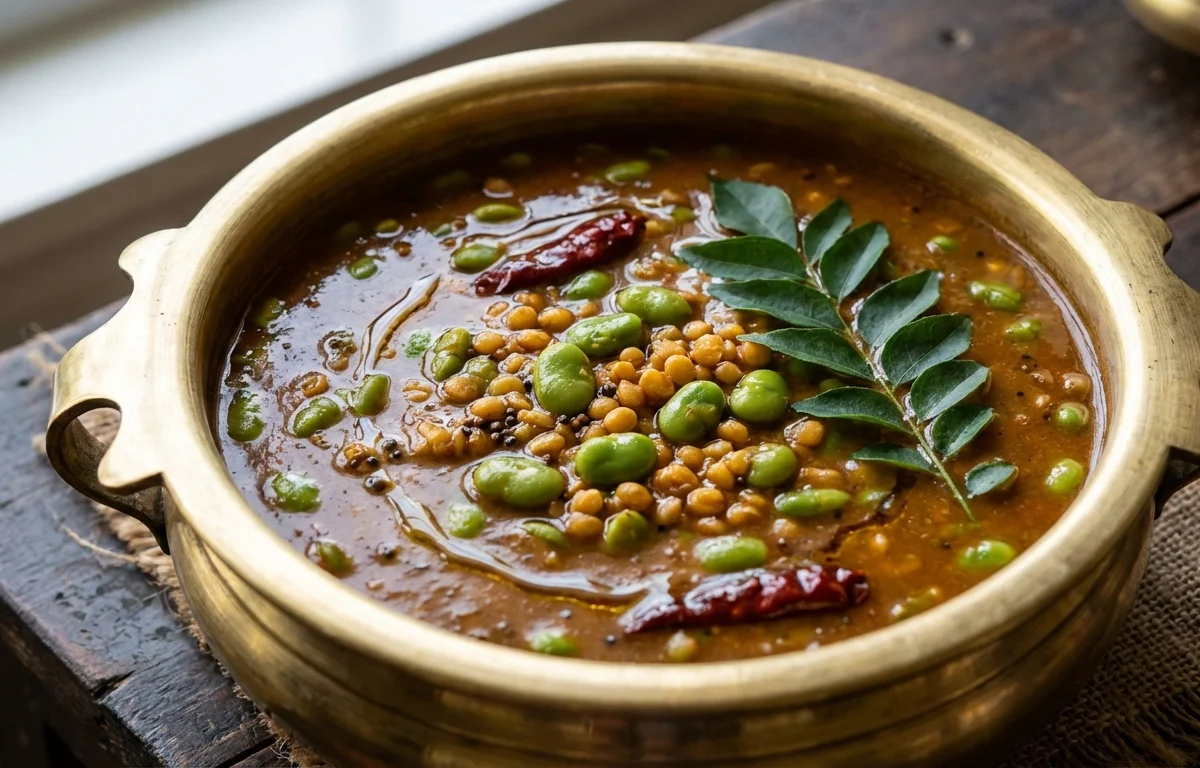
Pachai Mochai Kuzhambu
A tangy and aromatic South Indian curry from Tamil Nadu, featuring fresh field beans simmered in a tamarind and coconut-based gravy. This comforting kuzhambu is the perfect accompaniment to steamed rice.
For 4 servings
Prepare Tamarind and Coconut Paste
- Soak the tamarind in 1.5 cups of warm water for 20 minutes. Squeeze the pulp thoroughly to extract the juice. Strain the liquid and discard the solids. Set the tamarind extract aside.
- In a blender jar, combine the grated coconut, fennel seeds, and poppy seeds. Add about 1/4 cup of water and grind to a very smooth, fine paste. Set aside.
Cook the Mochai Beans
- Rinse the shelled mochai beans. In a pot, add the beans and enough water to cover them.
- Bring to a boil and cook for 15-20 minutes until they are tender but still hold their shape. Alternatively, pressure cook with 1 cup of water for 2 whistles.
- Drain the cooked beans and set aside.
Prepare the Kuzhambu Base (Tempering)
- Heat gingelly oil in a heavy-bottomed pan or kadai over medium heat.
- Add the mustard seeds and let them splutter completely. Then, add the urad dal and sauté until it turns golden brown.
- Add the broken dried red chilies, curry leaves, and asafoetida. Sauté for 30 seconds until fragrant.
- Add the finely chopped onions and sauté for 3-4 minutes until they become soft and translucent.
- Add the minced garlic and cook for another minute until the raw smell disappears.
Build the Gravy
- Add the chopped tomatoes and cook for 5-6 minutes, stirring occasionally, until they turn soft and mushy.
- Reduce the heat to low. Add the turmeric powder and sambar powder. Stir and cook for 1 minute.
- Pour in the prepared tamarind extract. Add salt and the optional jaggery. Mix well.
- Bring the mixture to a rolling boil, then reduce the heat and let it simmer for 8-10 minutes, allowing the raw flavor of the tamarind to cook off.
Combine and Finish
- Add the cooked mochai beans to the simmering tamarind gravy.
- Gently stir in the ground coconut paste. Add up to 1/2 cup of water if the gravy is too thick.
- Let the kuzhambu simmer on low heat for 5-7 minutes. Do not let it boil vigorously, as this can cause the coconut to separate. The gravy will thicken slightly.
- Turn off the heat and let the kuzhambu rest for at least 10 minutes for the flavors to meld together.
Serve
- Serve the hot Pachai Mochai Kuzhambu with steamed rice, idli, or dosa, accompanied by a dollop of ghee and a crispy appalam (papad).
What to keep in mind.
6 tips from the recipe — small details that make a real difference to the final dish.
- 1For the most authentic taste, use gingelly (Indian sesame) oil for the tempering.
- 2Do not over-boil the kuzhambu after adding the coconut paste, as it can cause the gravy to separate or curdle.
- 3A small piece of jaggery is key to balancing the tangy flavor of the tamarind and enhancing the overall taste.
- 4If fresh mochai is not available, you can use dried field beans (soaked overnight and pressure cooked) or frozen lima beans.
- 5You can also add vegetables like drumsticks or eggplant along with the field beans for extra texture and flavor.
- 6The consistency of the kuzhambu can be adjusted by adding more or less water after adding the coconut paste.
Adapt it for your goals.
Add Vegetables
Incorporate vegetables like drumsticks (murungakkai), brinjal (kathirikai), or yellow pumpkin (parangikai). Add them after sautéing the tomatoes and cook until tender before adding the tamarind extract.
Without CoconutWithout Coconut
For a lighter version, you can skip the coconut paste. The kuzhambu will be thinner and tangier. You may need to simmer it a bit longer to thicken.
Different BeansDifferent Beans
This recipe works well with other beans like black-eyed peas (karamani) or double beans. Adjust cooking time as needed for the beans you choose.
With Toor DalWith Toor Dal
For a thicker, more sambar-like consistency, add 1/4 cup of cooked and mashed toor dal along with the cooked mochai beans.
Why this is on our healthy list.
Rich in Protein and Fiber
Pachai Mochai (field beans) are an excellent source of plant-based protein, essential for muscle repair, and dietary fiber, which aids digestion, promotes satiety, and helps regulate blood sugar levels.
Aids Digestion
The combination of tamarind, asafoetida, and spices like fennel seeds stimulates digestive enzymes, helping to prevent bloating and indigestion. The fiber content further supports a healthy gut.
Source of Healthy Fats
The use of coconut and gingelly (sesame) oil provides medium-chain triglycerides (MCTs) and monounsaturated fats, which are beneficial for heart health and provide sustained energy.
Boosts Immunity
Spices like turmeric, garlic, and curry leaves are rich in antioxidants and have anti-inflammatory properties that help strengthen the immune system and protect the body from cellular damage.
Frequently asked questions
If fresh mochai (field beans) are unavailable, you can use dried mochai. Soak them overnight, then pressure cook until tender before using. Frozen lima beans or double beans are also excellent substitutes.