
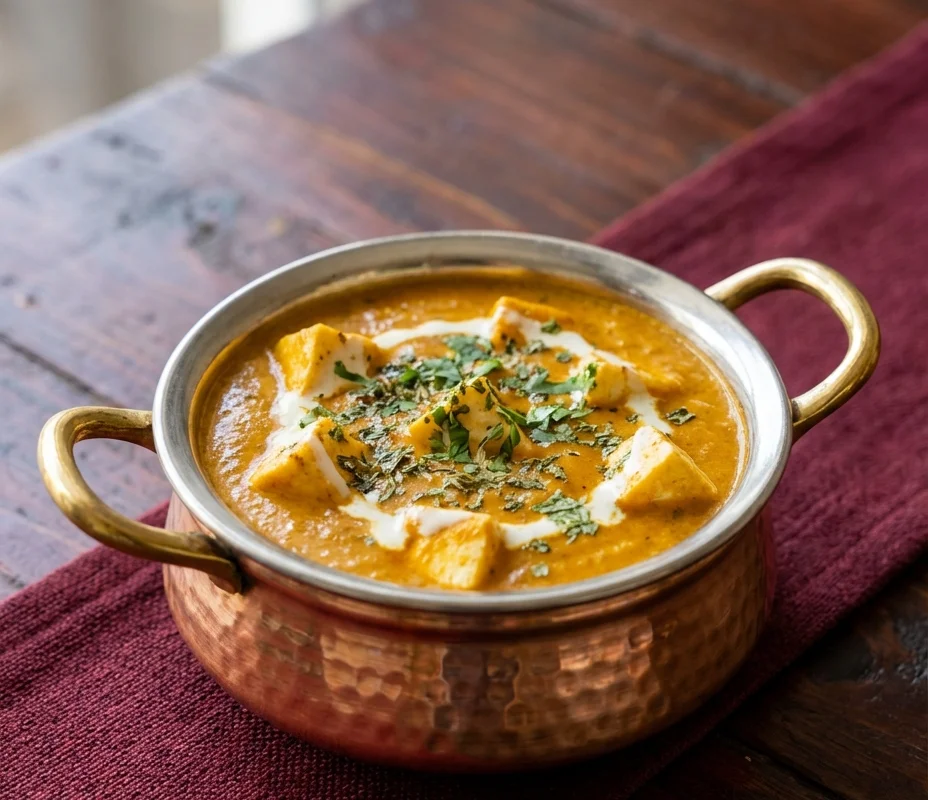
Paaro Mangkho
A unique and delightful curry where soft paneer cubes are simmered in a creamy, tangy mango gravy. This sweet and savory dish is a surprising twist on traditional Indian curries, perfect for a special meal.
For 4 servings
Prepare Pastes and Paneer
- Drain the soaked cashews and grind them with 2-3 tablespoons of water into a very smooth paste. Set aside.
- If your paneer is very firm, soak the cubes in warm salted water for 10-15 minutes to soften them. Drain before using.
- Heat 1 tablespoon of ghee in a non-stick pan over medium heat. Add the paneer cubes and shallow-fry for 3-4 minutes, turning occasionally, until light golden on all sides. Remove and set aside.
Build the Masala Base
- In the same pan, add the remaining 2 tablespoons of ghee. Once hot, add the cumin seeds and let them sizzle for about 30 seconds until fragrant.
- Add the finely chopped onion and sauté for 8-10 minutes until it turns soft and golden brown.
- Add the ginger-garlic paste and slit green chilies. Sauté for another minute until the raw aroma disappears.
Cook the Gravy
- Stir in the tomato puree and cook for 5-6 minutes, until it thickens and you see oil separating at the edges of the pan.
- Reduce the heat to low. Add the turmeric powder, Kashmiri red chili powder, and coriander powder. Mix well and cook for 1 minute, stirring constantly to prevent burning.
Combine and Simmer
- Add the prepared cashew paste and cook for 2 minutes, stirring continuously.
- Pour in the mango puree and mix everything thoroughly. Cook for another 2-3 minutes.
- Add 1 cup of water and salt. Stir well and bring the gravy to a gentle simmer.
Finish and Serve
- Gently add the fried paneer cubes to the gravy. Sprinkle the garam masala over the top.
- Cover the pan and let it simmer on low heat for 5-7 minutes, allowing the paneer to absorb the flavors of the curry.
- Turn off the heat. Stir in the fresh cream and the crushed kasuri methi. Mix gently until just combined.
- Garnish with fresh coriander leaves. Serve hot with naan, roti, or jeera rice.
What to keep in mind.
5 tips from the recipe — small details that make a real difference to the final dish.
- 1Use ripe but firm mangoes like Alphonso or Kesar for the best flavor, color, and non-fibrous texture.
- 2Do not over-boil the gravy after adding mango puree, as it can sometimes develop a slightly bitter taste.
- 3Soaking the paneer in warm water is a crucial step to ensure it remains soft and spongy in the curry.
- 4For a perfectly balanced flavor, taste the curry before adding cream. If it's too sweet, add a few drops of lemon juice. If too tangy, a pinch of sugar can help.
- 5Toasting the kasuri methi in a dry pan for 30 seconds before crushing enhances its aroma.
Adapt it for your goals.
Vegan
Replace paneer with firm tofu (pan-fried), ghee with coconut oil, and fresh cream with full-fat coconut cream or cashew cream.
Nut FreeNut-Free
Substitute the cashew paste with a paste made from 2 tablespoons of melon seeds (magaz) or poppy seeds (khus khus).
Richer GravyRicher Gravy
For a more decadent curry, add 2 tablespoons of crumbled khoya (milk solids) along with the onion and sauté until it dissolves.
Spicier VersionSpicier Version
Increase the amount of green chilies and add a pinch of black pepper along with the garam masala for extra heat.
Why this is on our healthy list.
Good Source of Protein
Paneer is an excellent source of vegetarian protein, which is essential for muscle building, tissue repair, and overall body function.
Immunity Boosting
Mangoes are rich in Vitamin C and Vitamin A, powerful antioxidants that help strengthen the immune system and protect the body against infections.
Contains Healthy Fats
The use of cashews and ghee provides monounsaturated and healthy saturated fats, which are important for brain health and energy production.
Aids Digestion
Spices like cumin, coriander, and ginger have been traditionally used in Indian cuisine to stimulate digestive enzymes and promote gut health.
Frequently asked questions
One serving of Paaro Mangkho contains approximately 440-480 calories. This is an estimate and can vary based on the specific ingredients used, such as the type of cream and the amount of ghee.