
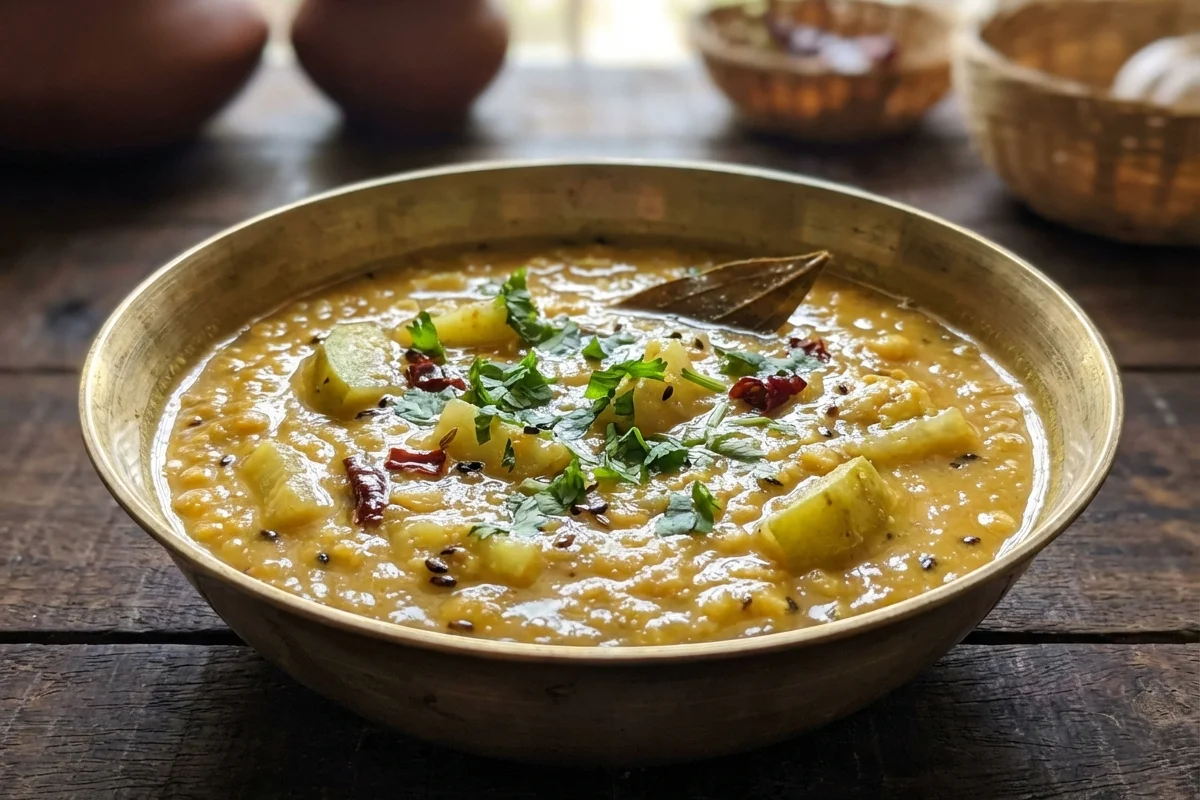
Ou Tenga Dal
A classic Assamese lentil dish featuring the unique sourness of elephant apple (ou tenga). This light and tangy dal, made with red lentils and a simple five-spice tempering, offers a refreshing taste of Assam's traditional cuisine.
For 4 servings
Prepare the Ou Tenga
- Peel the ou tenga, discard the hard core, and cut the petals into thin slices.
- In a small pot, combine the ou tenga slices with 1 cup of water.
- Bring to a boil and cook for 7-8 minutes until the slices are tender.
- Drain the water and set the boiled ou tenga aside. This step softens the fruit and reduces its sliminess.
Cook the Dal
- Place the rinsed masoor dal in a pressure cooker.
- Add 4 cups of water, turmeric powder, and salt.
- Secure the lid and pressure cook on medium heat for 3-4 whistles, or for about 12-15 minutes, until the dal is completely soft.
- Allow the pressure to release naturally before opening the lid.
Combine and Simmer
- Open the pressure cooker and use a whisk to lightly mash the dal for a smooth, consistent texture.
- Add the pre-boiled ou tenga slices to the cooked dal.
- Place the cooker back on the stove (without the lid) and simmer on low-medium heat for 5-7 minutes. This allows the sour flavor of the ou tenga to infuse into the dal.
- If the dal is too thick, add a splash of hot water to reach your desired consistency.
Prepare the Tempering (Tadka)
- While the dal simmers, heat the mustard oil in a small tadka pan over medium-high heat until it just begins to smoke. This mellows its pungent flavor.
- Reduce the heat to low, add the panch phoron and let the seeds splutter for about 30 seconds.
- Add the bay leaf and slit green chilies. Sauté for another 30 seconds until fragrant.
Finish and Serve
- Carefully pour the hot tempering over the simmering dal. Be cautious as it will sizzle.
- Stir gently to combine and cook for one more minute to let the flavors meld.
- Turn off the heat, garnish with freshly chopped coriander leaves.
- Serve hot with steamed rice for an authentic Assamese meal.
What to keep in mind.
5 tips from the recipe — small details that make a real difference to the final dish.
- 1For an authentic flavor, use mustard oil. Heat it until it's lightly smoking to reduce its natural pungency before adding spices.
- 2The consistency of this dal is traditionally thin and soupy. Adjust the water quantity to your preference.
- 3Do not over-boil the dal after adding the tempering (tadka), as this can diminish the fresh aroma of the spices.
- 4If you don't have a pressure cooker, you can cook the dal in a covered pot. It will take longer, about 30-40 minutes, until the lentils are soft.
- 5Panch Phoron is a specific blend of five whole spices (fenugreek, nigella, cumin, black mustard, and fennel seeds) and is key to the dish's flavor profile.
Adapt it for your goals.
Souring Agent
If Ou Tenga is unavailable, you can use other souring agents like slices of raw mango, starfruit (carambola), or even tomatoes with a squeeze of lemon juice at the end. The flavor will be different but still delicious.
LentilLentil
While traditionally made with masoor dal (red lentils), you can also prepare this dish with toor dal (pigeon peas) or a mix of masoor and moong dal.
SpiceSpice
For a slight variation in the tempering, you can add a pinch of asafoetida (hing) and a couple of dried red chilies along with the panch phoron.
Why this is on our healthy list.
Rich in Plant-Based Protein
Masoor dal is an excellent source of plant-based protein, essential for muscle building, tissue repair, and keeping you feeling full and satisfied.
Promotes Digestive Health
The high fiber content from the lentils aids in digestion, prevents constipation, and supports a healthy gut microbiome. Elephant apple is also traditionally used to aid digestion.
Source of Antioxidants
Spices like turmeric and the Ou Tenga fruit itself are rich in antioxidants, which help protect the body's cells from damage caused by free radicals.
Supports Heart Health
This dal is low in saturated fat and cholesterol. The fiber in lentils can help lower cholesterol levels, contributing to better cardiovascular health.
Frequently asked questions
Ou Tenga, or Elephant Apple, is a fruit native to Southeast Asia. It has a unique sour and slightly astringent taste, which imparts a refreshing tang to the dal, making it distinct from other souring agents like tamarind or lemon.