
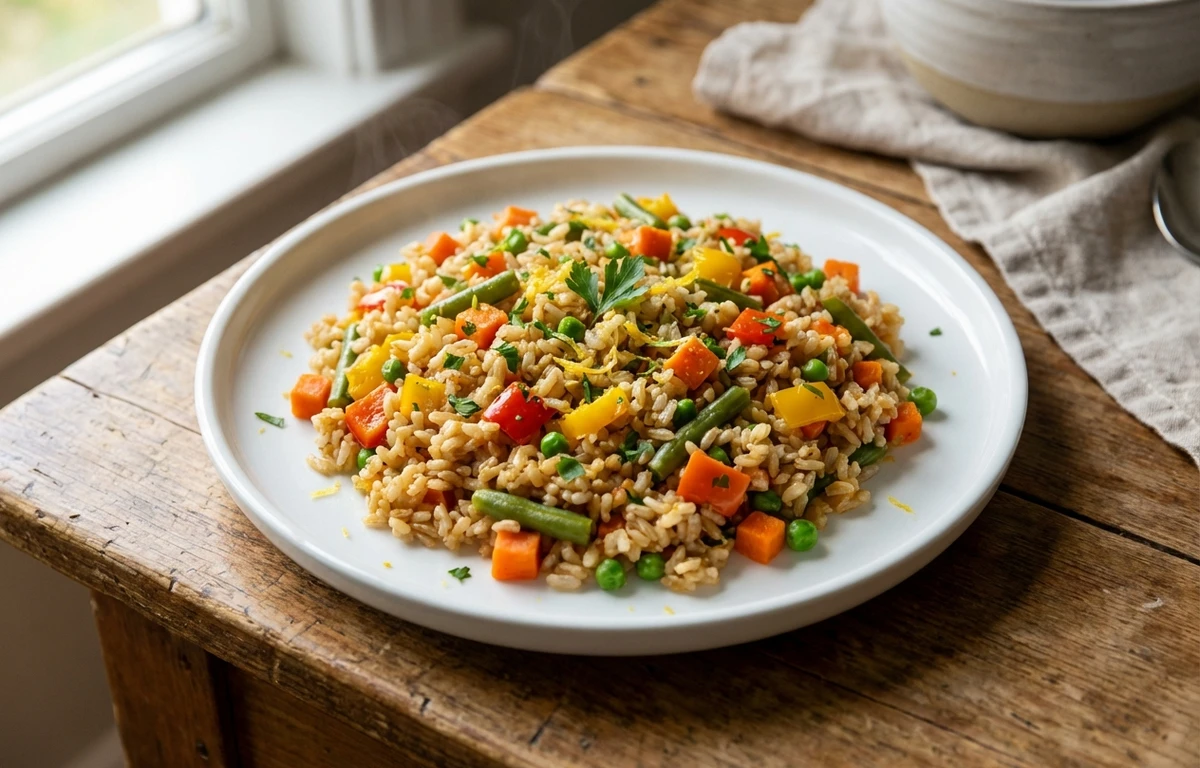
One-Pot Rice and Vegetable Pilaf
A light and flavorful one-pot meal designed for kidney health. This pilaf combines fluffy white rice with a medley of low-potassium vegetables and gentle spices, making it a safe and satisfying dish for a low-sodium, low-protein diet.
For 4 servings
4 steps. 25 minutes total.
- 1
Step 1
- a.Prepare and blanch the vegetables
- b.Bring a medium pot of water to a rolling boil.
- c.Add the diced carrots and cauliflower florets to the boiling water.
- d.Blanch for 2-3 minutes to help reduce their potassium content.
- e.Drain the vegetables well in a colander and set aside.
- 2
Step 2
- a.Sauté the aromatics and rice
- b.In a large pot or Dutch oven, heat the olive oil over medium heat.
- c.Add the chopped onion and sauté for 3-4 minutes until softened and translucent.
- d.Add the minced garlic and cook for another minute until fragrant.
- e.Stir in the rinsed white rice, ground cumin, turmeric, and black pepper. Toast for 1 minute, stirring constantly.
- 3
Step 3
- a.Cook the pilaf
- b.Add the blanched carrots and cauliflower, along with the diced red bell pepper, to the pot.
- c.Pour in the water (or unsalted broth) and the 1/4 tsp of salt. Stir everything together.
- d.Bring the mixture to a boil, then reduce the heat to low, cover the pot tightly, and let it simmer.
- e.Cook for 15-18 minutes, or until all the liquid has been absorbed and the rice is tender.
- 4
Step 4
- a.Rest and finish the dish
- b.Turn off the heat and let the pilaf stand, covered, for 5 minutes. Do not lift the lid.
- c.After resting, uncover the pot. Drizzle with fresh lemon juice.
- d.Gently fluff the rice and vegetables with a fork.
- e.Garnish with fresh parsley and serve warm.
What to keep in mind.
5 tips from the recipe — small details that make a real difference to the final dish.
- 1Rinsing the rice is essential to remove excess starch, which ensures a fluffy, non-sticky pilaf.
- 2Do not skip the blanching step; it is crucial for reducing the potassium content of the vegetables, making the dish safer for a kidney diet.
- 3For extra flavor without adding sodium, you can add a bay leaf to the pot while the rice simmers. Just remember to remove it before serving.
- 4Feel free to use other low-potassium vegetables like cabbage or green beans (blanched) instead of the ones listed.
- 5Store leftovers in an airtight container in the refrigerator for up to 3 days.
Adapt it for your goals.
Quick
Use a frozen mix of CKD-safe vegetables like cauliflower, carrots, and green beans. Blanch them directly from frozen for 2 minutes before adding to the pot.
budget friendlyBudget friendly
Use water instead of unsalted broth and stick to basic, affordable vegetables like cabbage and carrots to keep costs down.
Why this is on our healthy list.
Low in Sodium
With only a tiny amount of salt, this dish helps manage blood pressure and fluid balance, which is crucial for kidney health.
Controlled Potassium
By using low-potassium vegetables and blanching them before cooking, the overall potassium level of the dish is significantly reduced.
Low in Phosphorus
The use of white rice and fresh vegetables instead of dairy, nuts, or whole grains keeps the phosphorus content low, protecting bone health.
Easy on Kidneys
This recipe is very low in protein, which reduces the workload on the kidneys, helping to preserve their function.
Frequently asked questions
Yes, this recipe is specifically designed to be kidney-friendly. It is low in sodium, potassium, phosphorus, and protein by using white rice, low-potassium vegetables that are blanched, and minimal salt.