
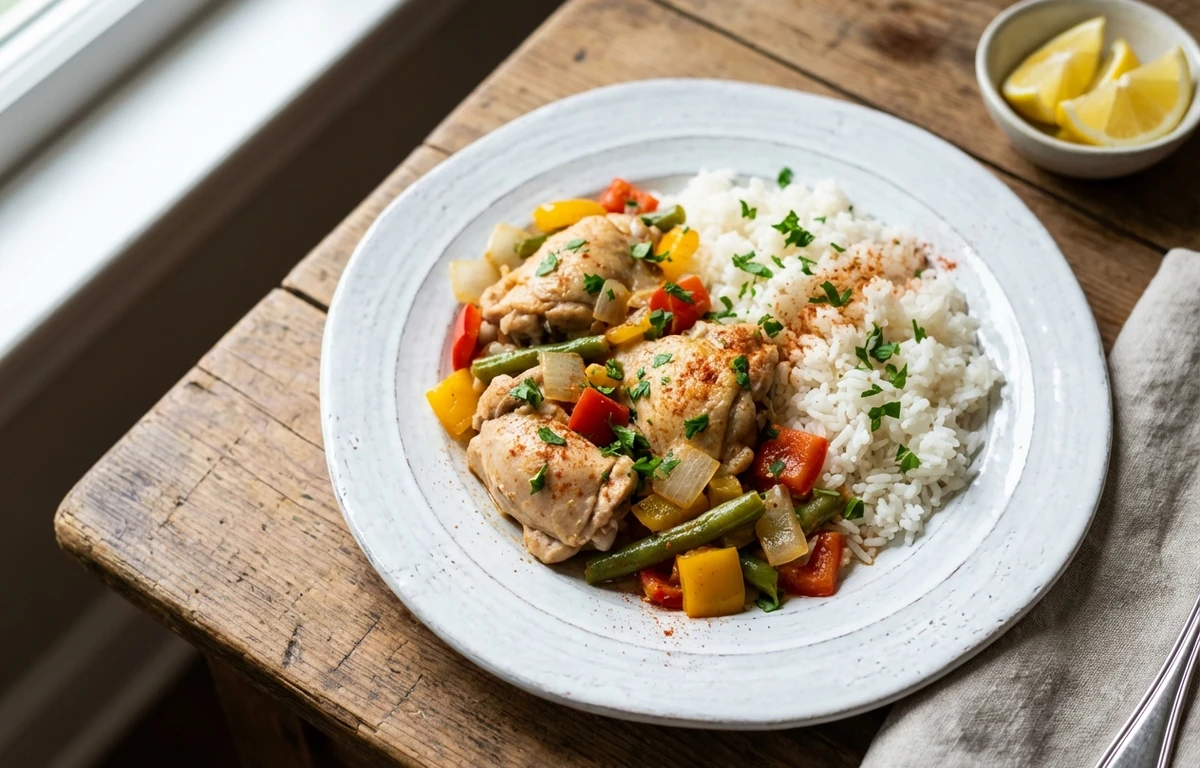
One-Pot Chicken and White Rice
A complete, balanced one-pot meal designed for a renal diet. Tender chicken, fluffy white rice, and kidney-safe vegetables come together in a savory, low-sodium dish that's both comforting and easy to prepare. Perfect for simple, worry-free weeknight dinners.
For 4 servings
5 steps. 25 minutes total.
- 1
Step 1
- a.Blanch the vegetables to reduce potassium
- b.Bring a medium pot of water to a rolling boil.
- c.Add the chopped red bell pepper and shredded cabbage.
- d.Boil for 2-3 minutes, then immediately drain the vegetables in a colander and rinse with cold water to stop the cooking process. Set aside.
- 2
Step 2
- a.Cook the chicken
- b.In a large pot or Dutch oven, heat 1 tablespoon of olive oil over medium-high heat.
- c.Add the cubed chicken breast and cook, stirring occasionally, until lightly browned on all sides, about 4-5 minutes. The chicken does not need to be cooked through.
- d.Remove the chicken from the pot and set it aside on a plate.
- 3
Step 3
- a.Sauté aromatics and toast the rice
- b.Add the remaining 1 tablespoon of olive oil to the same pot.
- c.Add the chopped onion and cook until softened and translucent, about 3-4 minutes.
- d.Add the rinsed white rice to the pot and stir for 1 minute to lightly toast it.
- 4
Step 4
- a.Combine and cook the dish
- b.Stir in the garlic powder, onion powder, dried thyme, black pepper, and salt.
- c.Add the 2 cups of water and the blanched vegetables to the pot. Stir everything together.
- d.Bring the mixture to a boil, then reduce the heat to low, cover the pot tightly, and simmer for 15-18 minutes, or until the rice is tender and the liquid is absorbed.
- 5
Step 5
- a.Finish and serve
- b.Turn off the heat. Return the cooked chicken to the pot, placing it on top of the rice.
- c.Cover the pot again and let it stand for 5 minutes to allow the chicken to heat through.
- d.Uncover, fluff the rice with a fork, and stir in the fresh lemon juice and chopped parsley.
- e.Divide evenly into 4 bowls and serve immediately. Check chicken internal temperature reaches 165°F (74°C).
What to keep in mind.
6 tips from the recipe — small details that make a real difference to the final dish.
- 1Rinsing the rice thoroughly removes excess starch, resulting in fluffier grains.
- 2Do not skip the blanching step for the vegetables; it is crucial for reducing potassium content in a renal diet.
- 3For extra flavor without adding sodium, use a no-salt-added herb blend instead of individual spices.
- 4Ensure your chicken cubes are small and uniform in size for even cooking.
- 5Do not lift the lid while the rice is simmering, as this lets steam escape and can result in undercooked rice.
- 6Leftovers can be stored in an airtight container in the refrigerator for up to 3 days.
Adapt it for your goals.
Why this is on our healthy list.
Controlled Protein
Provides a specific, limited amount of high-quality protein from chicken, which helps manage the workload on the kidneys.
Low in Sodium
Uses minimal salt and flavorful herbs to help manage blood pressure and fluid balance, which is crucial in managing kidney disease.
Reduced Potassium
Utilizes low-potassium vegetables and a blanching technique to keep potassium levels in a safe range for renal patients.
Low in Phosphorus
Avoids high-phosphorus ingredients like dairy, nuts, and whole grains, helping to protect bone health.
Frequently asked questions
Yes, this recipe is specifically designed to be kidney-friendly. It is low in sodium, potassium, and phosphorus, with a controlled amount of high-quality protein, which are key considerations for a CKD or renal diet.