
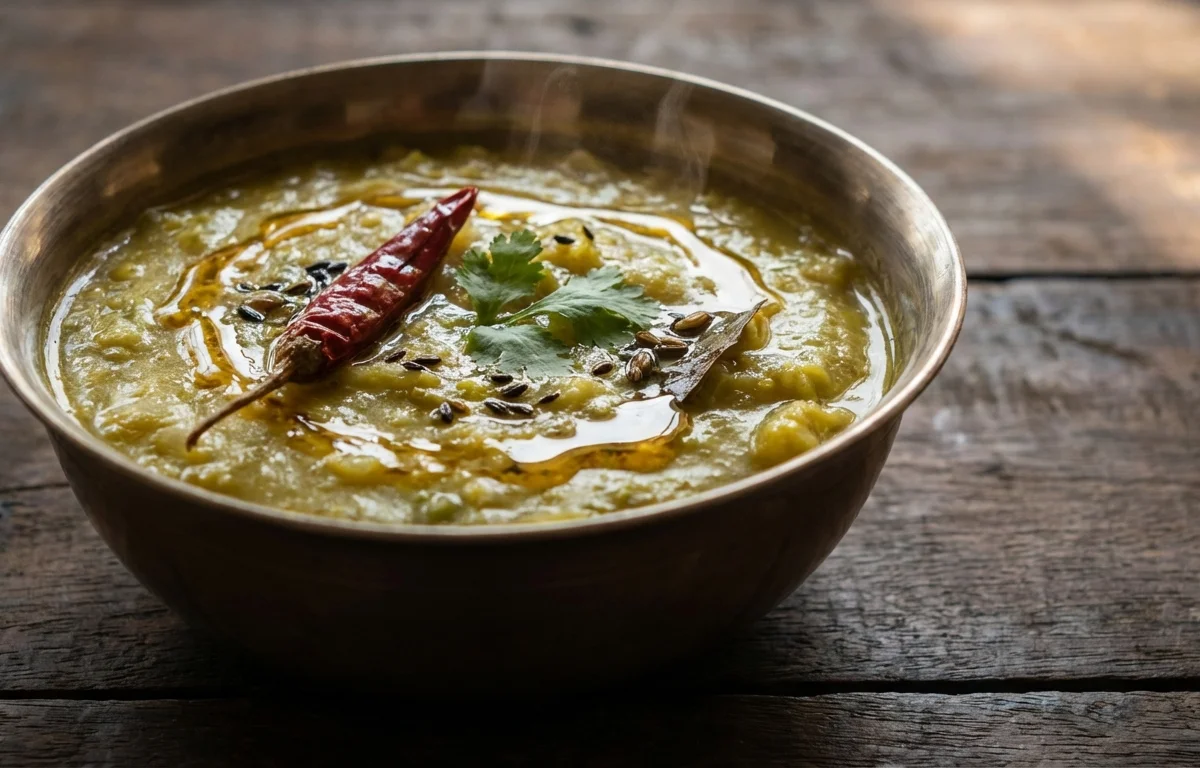
Omita aru Kaskol Khar
A traditional Assamese delicacy featuring raw papaya and tender banana stem cooked in an alkaline base. This unique dish has a subtle, earthy flavor and is a staple in Assamese homes, often served with rice.
For 4 servings
Prepare Vegetables
- Peel the raw papaya, discard the seeds, and chop it into 1-inch cubes.
- To prepare the banana stem, peel away the tough outer layers to reveal the tender white core. Slice the core into thin discs.
- As you slice, a thread-like fiber will appear. Wind this fiber around your finger and discard it. This is crucial for a pleasant, non-fibrous texture.
- Immediately place the sliced banana stem into a bowl of water to prevent oxidation and browning.
Temper the Spices
- Heat mustard oil in a heavy-bottomed pan or kadai over medium-high heat until it just begins to smoke. This removes its pungent raw smell.
- Immediately reduce the heat to medium-low. Add the bay leaf and panch phoron. Allow the spices to sizzle and become fragrant, which should take about 30-40 seconds.
Sauté Aromatics and Vegetables
- Add the grated ginger, minced garlic, and slit green chilies to the pan. Sauté for about 1 minute until the raw smell disappears.
- Drain the banana stem slices completely and add them to the pan along with the papaya cubes.
- Stir-fry for 5-7 minutes, ensuring the vegetables are well-coated with the oil and spices.
Cook the Khar
- Add the turmeric powder and salt, mixing well.
- Sprinkle the baking soda (the 'khar' element) evenly over the vegetables and stir for 30 seconds. You may notice a slight change in color.
- Pour in the water and bring the mixture to a rolling boil.
- Once boiling, reduce the heat to low, cover the pan with a lid, and let it simmer for 15-20 minutes. The vegetables should be very tender and easily pierced with a fork.
Finish and Serve
- Remove the lid. Use the back of a spoon to gently mash some of the papaya cubes against the side of the pan. This helps to create the characteristic semi-mushy, thick consistency.
- Stir everything together. If there's too much liquid, cook uncovered for another 2-3 minutes to reduce it.
- Turn off the heat and garnish with freshly chopped coriander leaves.
- Serve hot alongside steamed rice for an authentic Assamese meal.
What to keep in mind.
5 tips from the recipe — small details that make a real difference to the final dish.
- 1For the most authentic flavor, do not substitute mustard oil.
- 2Removing the fibers from the banana stem is a critical step; do not skip it.
- 3Use baking soda sparingly. Adding too much can result in a bitter or soapy taste.
- 4The final texture should be soft and slightly mushy, not chunky. Ensure the papaya is cooked until it's very soft.
- 5If you can find authentic 'kola khar' (alkali from sun-dried banana peels) at a specialty store, use it instead of baking soda for a more traditional taste.
Adapt it for your goals.
Add Lentils
For a heartier version, add 1/4 cup of rinsed masoor dal (red lentils) along with the papaya and banana stem. You may need to add a little extra water.
Different VegetablesDifferent Vegetables
You can make this dish with only papaya (Omita Khar) or add other vegetables like bottle gourd (lauki) or ash gourd.
Spicier VersionSpicier Version
Increase the number of green chilies or add a pinch of red chili powder along with the turmeric for more heat.
Thicker ConsistencyThicker Consistency
If you prefer a thicker consistency, mix 1 teaspoon of rice flour with 2 tablespoons of water to make a slurry and add it in the last 2 minutes of cooking, stirring continuously.
Why this is on our healthy list.
Promotes Digestive Health
Raw papaya contains the enzyme papain, which helps break down proteins and aids digestion. The high fiber content from both papaya and banana stem promotes regular bowel movements and supports a healthy gut.
Rich in Dietary Fiber
Banana stem is an excellent source of dietary fiber, which helps in creating a feeling of fullness, aiding in weight management. Fiber also helps regulate blood sugar levels and lower cholesterol.
Alkalizing Properties
The key ingredient 'khar' (or its substitute, baking soda) is alkaline in nature. In traditional Assamese belief, it helps to cleanse the stomach and balance the body's pH levels.
Low in Calories and Fat
This dish is prepared with minimal oil and is primarily vegetable-based, making it naturally low in calories and fat. It's an ideal choice for those on a weight management diet.
Frequently asked questions
Khar is a unique Assamese food category prepared with a key ingredient, also called khar. It is an alkaline liquid traditionally made by filtering water through the ashes of sun-dried banana peels. It imparts a distinct, subtle, and earthy flavor. Baking soda is a common and convenient substitute used in modern kitchens.