
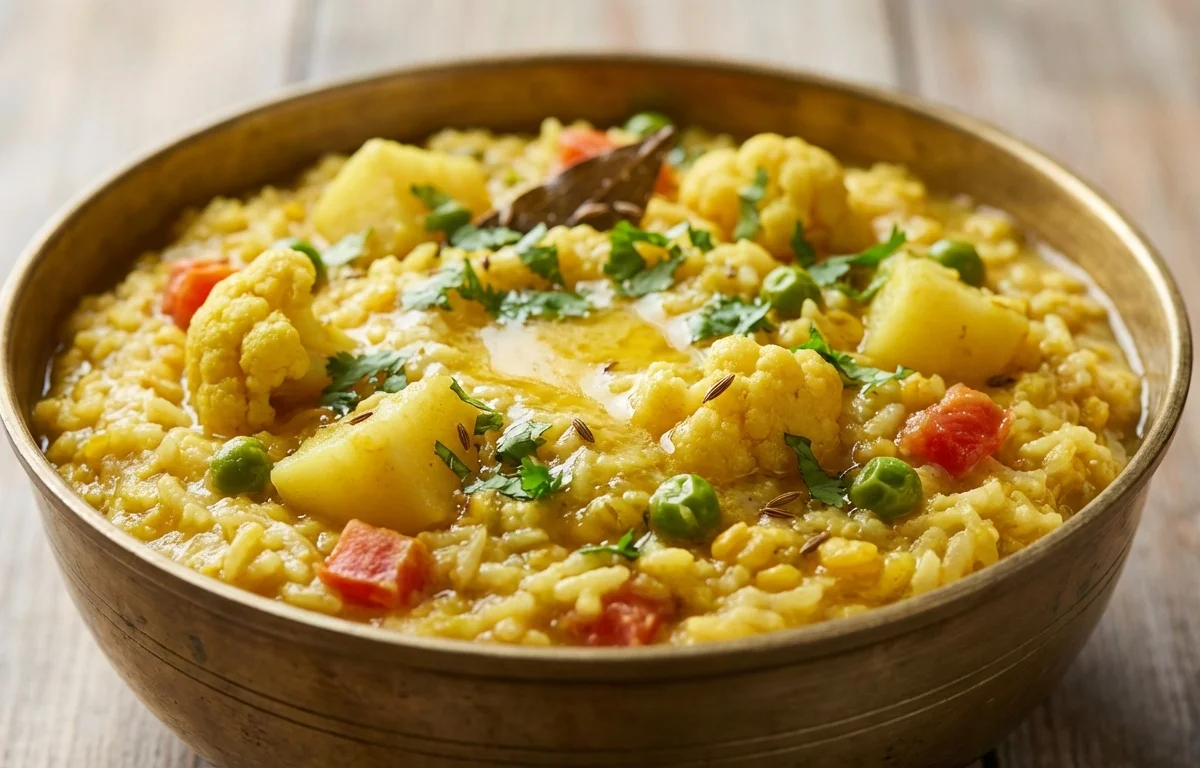
Odia Khichdi
A wholesome one-pot meal from Odisha, this khichdi combines fragrant rice and roasted moong dal with simple vegetables. It's a comforting, lightly spiced dish often served as temple prasad.
For 4 servings
Prepare Dal and Rice
- Rinse the moong dal thoroughly in water and drain completely.
- In a heavy-bottomed pan or pressure cooker, dry roast the drained moong dal on low-medium heat for 4-5 minutes, stirring continuously, until it turns light golden and aromatic. Remove from the pan and set aside.
- In a separate bowl, rinse the rice until the water runs clear. Drain and set aside.
Prepare the Tempering (Tadka)
- Heat ghee in the same pressure cooker or a deep pot over medium heat.
- Add the cumin seeds, bay leaves, and dried red chilies. Allow them to sizzle for about 30 seconds until fragrant.
- Add the asafoetida and grated ginger. Sauté for another 30 seconds.
Sauté Vegetables
- Add the cubed potatoes and cauliflower florets to the pot.
- Sauté for 3-4 minutes, stirring occasionally, until the edges of the vegetables are lightly browned.
Combine and Cook
- Add the roasted moong dal, rinsed rice, and green peas to the pot.
- Stir in the turmeric powder, salt, and sugar. Gently mix for one minute to coat everything with the spices.
- Pour in 5 cups of water and stir well to combine.
Pressure Cook or Simmer
- For Pressure Cooker: Secure the lid. Cook on medium heat for 3-4 whistles (about 12-15 minutes). Turn off the heat and let the pressure release naturally.
- For Pot Method: Bring the mixture to a boil. Reduce heat to low, cover with a tight-fitting lid, and simmer for 20-25 minutes, or until the rice and dal are completely cooked and soft. Stir occasionally to prevent sticking.
Garnish and Serve
- Once cooked, open the lid. The khichdi will thicken as it cools.
- Drizzle with an extra teaspoon of ghee and garnish with grated fresh coconut (if using).
- Serve hot with papad, pickle, or a side of fried vegetables (bhaja).
What to keep in mind.
6 tips from the recipe — small details that make a real difference to the final dish.
- 1Dry roasting the moong dal is the most crucial step for the authentic nutty flavor and aroma of Odia khichdi. Do not skip it.
- 2Using a short-grain, fragrant rice like Gobindobhog gives the best texture and taste.
- 3The small amount of sugar is a signature of Odia cuisine; it balances the savory flavors perfectly.
- 4Adjust the amount of water based on your preference. Use less water for a firmer, pulao-like khichdi and more for a softer, porridge-like consistency.
- 5For extra flavor, you can add a pinch of garam masala at the end, although traditional temple-style khichdi is simpler.
- 6Serve with traditional Odia accompaniments like 'Alu Bhaja' (fried potato), 'Baigana Bhaja' (fried eggplant), or a simple tomato chutney.
Adapt it for your goals.
Sattvic/No Onion No Garlic
This recipe is naturally sattvic (no onion or garlic), making it suitable for religious offerings (prasad).
Vegetable AdditionsVegetable Additions
Incorporate other vegetables like pumpkin (kakharu), carrots, or green beans. Add them along with the potatoes.
Millet KhichdiMillet Khichdi
For a healthier twist, replace the rice with an equal amount of foxtail millet or little millet. The cooking time may vary slightly.
Spicier VersionSpicier Version
For more heat, add 1-2 slit green chilies along with the ginger.
Why this is on our healthy list.
Complete Protein Source
The combination of rice (a cereal) and moong dal (a legume) provides all the essential amino acids, making it a complete protein source, which is especially beneficial for vegetarian diets.
Easy to Digest
Khichdi is a simple, one-pot meal that is light on the stomach. The soft-cooked grains and lentils are easy to digest, making it an ideal food during illness or for gut health maintenance.
Rich in Fiber
The inclusion of moong dal and various vegetables makes this dish a good source of dietary fiber, which aids in digestion, promotes satiety, and helps regulate blood sugar levels.
Nutrient-Dense
Packed with vegetables like cauliflower, potatoes, and peas, this khichdi delivers essential vitamins, minerals, and antioxidants, contributing to overall health and immunity.
Frequently asked questions
One serving of Odia Khichdi (approximately 425g) contains around 550-600 calories. The exact count depends on the amount of ghee and vegetables used.