
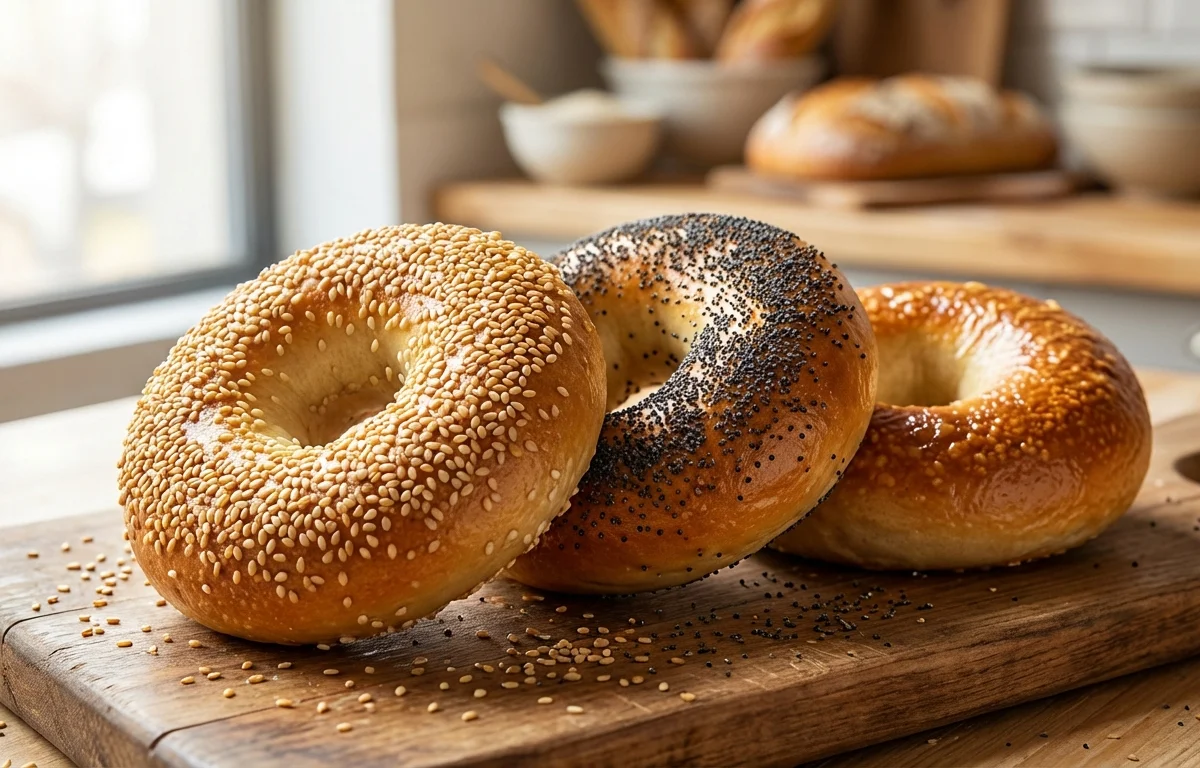
New York Bagels
Chewy on the inside, crisp on the outside, these authentic New York bagels are a true classic. The secret lies in the slow cold fermentation and the traditional boil before baking, creating that unmistakable texture and complex flavor. Perfect for a weekend baking project that brings a taste of the Big Apple to your kitchen!
For 8 servings
8 steps. 6 minutes total.
- 1
Step 1
- a.Activate Yeast and Mix Dough
- b.In the bowl of a stand mixer, combine the warm water, active dry yeast, and 2 tbsp of barley malt syrup. Stir gently and let it sit for 5-7 minutes until the mixture becomes foamy.
- c.Add the bread flour and salt to the bowl.
- d.Using the dough hook attachment, mix on low speed until a shaggy, stiff dough forms. Increase the speed to medium-low and knead for 10-12 minutes. The dough should be very smooth, firm, and elastic. It will be much stiffer than typical bread dough.
- 2
Step 2
- a.First Proof (Bulk Fermentation)
- b.Form the dough into a tight ball and place it in a lightly oiled bowl, turning it once to coat the surface.
- c.Cover the bowl with plastic wrap or a damp kitchen towel. Let it rise in a warm, draft-free place for 60-90 minutes. The dough will not double in size; it should rise by about 50%.
- 3
Step 3
- a.Divide and Shape Bagels
- b.Gently turn the dough out onto a clean, un-floured work surface. Do not punch it down.
- c.Divide the dough into 8 equal pieces, each weighing about 110g. Using a kitchen scale is highly recommended for uniform bagels.
- d.Roll each piece into a tight, smooth ball. To shape, poke your thumb through the center of the ball to create a hole. Gently stretch the hole with your fingers until it's about 1.5-2 inches in diameter. The bagel will shrink during proofing and puff up during boiling.
- e.Place the shaped bagels on a baking sheet lined with parchment paper and lightly dusted with cornmeal or flour to prevent sticking.
- 4
Step 4
- a.Cold Fermentation (Overnight Proof)
- b.Cover the baking sheet tightly with plastic wrap. Refrigerate for at least 12 hours and up to 24 hours.
- c.This slow, cold fermentation is the most critical step for developing the classic, complex flavor and chewy texture of a New York bagel.
- 5
Step 5
- a.Prepare for Boiling and Baking
- b.When ready to bake, arrange two oven racks in the upper and lower thirds of the oven and preheat to 425°F (220°C).
- c.Bring a large, wide pot of water (at least 3-4 quarts) to a rolling boil. Add 1 tbsp of barley malt syrup and the baking soda to the water.
- d.Perform the 'float test': Place one bagel in a small bowl of cold water. If it floats within 10-15 seconds, the bagels are ready to be boiled. If not, let them sit at room temperature for another 20-30 minutes and test again.
- 6
Step 6
- a.Boil the Bagels
- b.Gently lower 2-3 bagels at a time into the boiling water, ensuring they have room to float freely.
- c.Boil for 45-60 seconds on the first side, then flip and boil for another 45-60 seconds on the other side. A longer boil results in a thicker, chewier crust.
- d.Using a spider strainer or slotted spoon, remove the bagels from the water, allowing excess water to drip off, and place them back on the parchment-lined baking sheet.
- 7
Step 7
- a.Top and Bake
- b.If using, whisk the egg with 1 tbsp of water to create an egg wash. Lightly brush the tops of the boiled bagels.
- c.Immediately sprinkle generously with your desired toppings (sesame seeds, poppy seeds, everything seasoning, etc.).
- d.Bake for 18-22 minutes, rotating the baking sheet halfway through, until the bagels are a deep golden-brown with a glossy, blistered crust.
- 8
Step 8
- a.Cool and Serve
- b.Transfer the hot bagels to a wire rack to cool completely. This is important for the interior crumb to set properly.
- c.Do not slice into a bagel until it has cooled for at least 20-30 minutes for the best texture.
What to keep in mind.
7 tips from the recipe — small details that make a real difference to the final dish.
- 1For the most authentic texture, use high-gluten bread flour. It has a higher protein content which creates a stronger gluten network, resulting in a chewier bagel.
- 2A kitchen scale is your best friend for this recipe. Accurate measurements of flour and water are key to achieving the correct stiff dough consistency.
- 3Don't skip the cold fermentation. This step is non-negotiable for developing the deep, malty flavor and classic chewy texture.
- 4The 'float test' is the most reliable way to know if your bagels are properly proofed and ready for boiling.
- 5Do not overcrowd the pot when boiling. This can lower the water temperature and lead to dense, soggy bagels.
- 6For a classic 'everything' topping, mix equal parts sesame seeds, poppy seeds, dried minced onion, dried minced garlic, and coarse sea salt.
- 7Baked bagels freeze exceptionally well. For best results, slice them before freezing, then you can toast them directly from the freezer.
Adapt it for your goals.
Cinnamon Raisin Bagels
Knead 1.5 tsp of ground cinnamon and 1 cup of raisins into the dough during the last 2 minutes of mixing.
Everything BagelsEverything Bagels
Create a topping mix of equal parts poppy seeds, sesame seeds, dried minced garlic, dried minced onion, and coarse salt. Press the boiled bagels into the mix before baking.
Pumpernickel BagelsPumpernickel Bagels
Replace 1 cup of the bread flour with pumpernickel or dark rye flour. Add 2 tbsp of molasses and 1 tbsp of cocoa powder to the dough for color and flavor.
Whole Wheat BagelsWhole Wheat Bagels
Substitute up to 50% of the bread flour with whole wheat flour. You may need to add a little extra water to achieve the right dough consistency.
Why this is on our healthy list.
Provides Sustained Energy
Made from bread flour, these bagels are rich in complex carbohydrates, which are the body's primary source of fuel. They provide a slow and steady release of energy, making them a great breakfast choice to start your day.
Enhanced Flavor from Fermentation
The long, cold fermentation process doesn't just create a chewy texture; it also breaks down complex starches and proteins, developing a deeper, more nuanced flavor that is characteristic of authentic bagels.
Frequently asked questions
A plain homemade New York bagel of this size contains approximately 245-260 calories. This does not include toppings like seeds or spreads like cream cheese.