
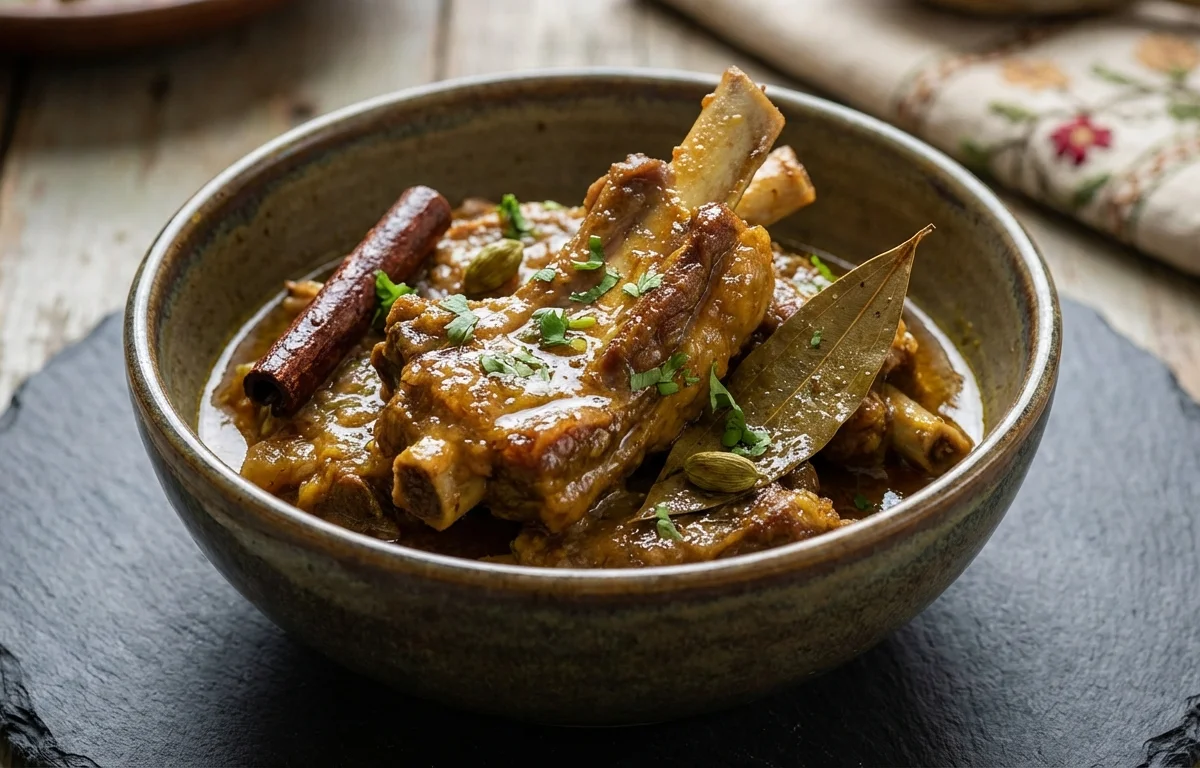
Mutton Tash
Succulent mutton ribs, first simmered with fragrant whole spices until incredibly tender, then fried in pure ghee to a perfect crisp. A celebrated dish from the heart of Kashmir, this is a meat lover's delight.
For 4 servings
3 steps. 60 minutes total.
- 1
Step 1
- a.Pressure Cook the Mutton Ribs
- b.Rinse the mutton ribs thoroughly under cold running water.
- c.Place the ribs in a 5-liter pressure cooker. Add 4 cups of water, salt, turmeric powder, fennel powder, dry ginger powder, and asafoetida.
- d.Add the whole spices: cinnamon stick, black cardamoms, green cardamoms, cloves, and bay leaves. Stir gently to combine.
- e.Secure the lid of the pressure cooker. Cook on medium-high heat for 5-6 whistles, which should take about 25-30 minutes.
- f.Turn off the heat and allow the pressure to release naturally. This ensures the meat remains tender.
- g.Carefully open the cooker. Check if the mutton is cooked through—it should be tender and pulling away from the bone, but not completely falling apart.
- h.Using tongs, carefully remove the ribs from the cooker and place them on a plate or tray. Reserve the flavourful stock (yakhni) for other dishes like soups or pulao.
- i.Let the ribs cool slightly, then pat them completely dry with paper towels. This step is absolutely crucial for achieving a crispy exterior when frying.
- 2
Step 2
- a.Shallow Fry to Perfection
- b.Heat the ghee in a heavy-bottomed pan or kadai over medium-high heat. The ghee should be hot but not smoking.
- c.Carefully place the dried mutton ribs in the hot ghee in a single layer. Do not overcrowd the pan; fry in two batches if necessary.
- d.Fry for 8-10 minutes, turning the ribs every 2-3 minutes, until they are a deep golden brown and uniformly crisp on all sides.
- e.Once crisped to your liking, remove the ribs from the pan and place them on a wire rack to allow any excess ghee to drain off.
- 3
Step 3
- a.Serve Hot
- b.Arrange the Mutton Tash on a serving platter.
- c.Serve immediately while hot and crispy as an appetizer or as part of a larger Kashmiri meal. It pairs wonderfully with onion rings and a squeeze of lemon.
What to keep in mind.
5 tips from the recipe — small details that make a real difference to the final dish.
- 1For the crispiest results, ensure the boiled ribs are bone-dry before they hit the hot ghee. Any moisture will cause them to steam instead of fry.
- 2Do not overcook the mutton in the pressure cooker. It should be tender enough to eat but firm enough to hold its shape during frying.
- 3The reserved mutton stock (yakhni) is liquid gold. Strain it and freeze it in portions to use as a base for curries, soups, or for cooking rice.
- 4Fry in batches to maintain the ghee's temperature. Overcrowding the pan will lower the temperature and result in greasy, less crispy ribs.
- 5Use pure ghee for the most authentic, nutty, and rich flavor that is characteristic of this Kashmiri delicacy.
Adapt it for your goals.
Spice Garnish
After frying, sprinkle the hot ribs with a pinch of chaat masala or a Kashmiri red chili powder-salt mix for an extra layer of flavor.
Different CutDifferent Cut
While ribs (Tabakh Maaz) are traditional, you can also use mutton chops or small bone-in pieces for a similar preparation.
Air Fryer MethodAir Fryer Method
For a lower-fat version, brush the boiled and dried ribs with a little melted ghee and air fry at 200°C (400°F) for 10-12 minutes, flipping halfway, until golden and crisp.
Why this is on our healthy list.
Excellent Source of Protein
Mutton is a high-quality protein source, essential for building and repairing tissues, muscle growth, and overall body function.
Rich in Heme Iron
This dish provides heme iron from the mutton, which is more easily absorbed by the body than non-heme iron from plants, helping to prevent anemia and boost energy levels.
B-Vitamin Powerhouse
Mutton is packed with essential B vitamins, particularly B12 and Niacin (B3), which are vital for energy metabolism, brain function, and maintaining a healthy nervous system.
Frequently asked questions
A single serving of Mutton Tash (approximately 160g) contains around 350-400 calories. The exact count can vary based on the fat content of the mutton and the amount of ghee absorbed during frying.