
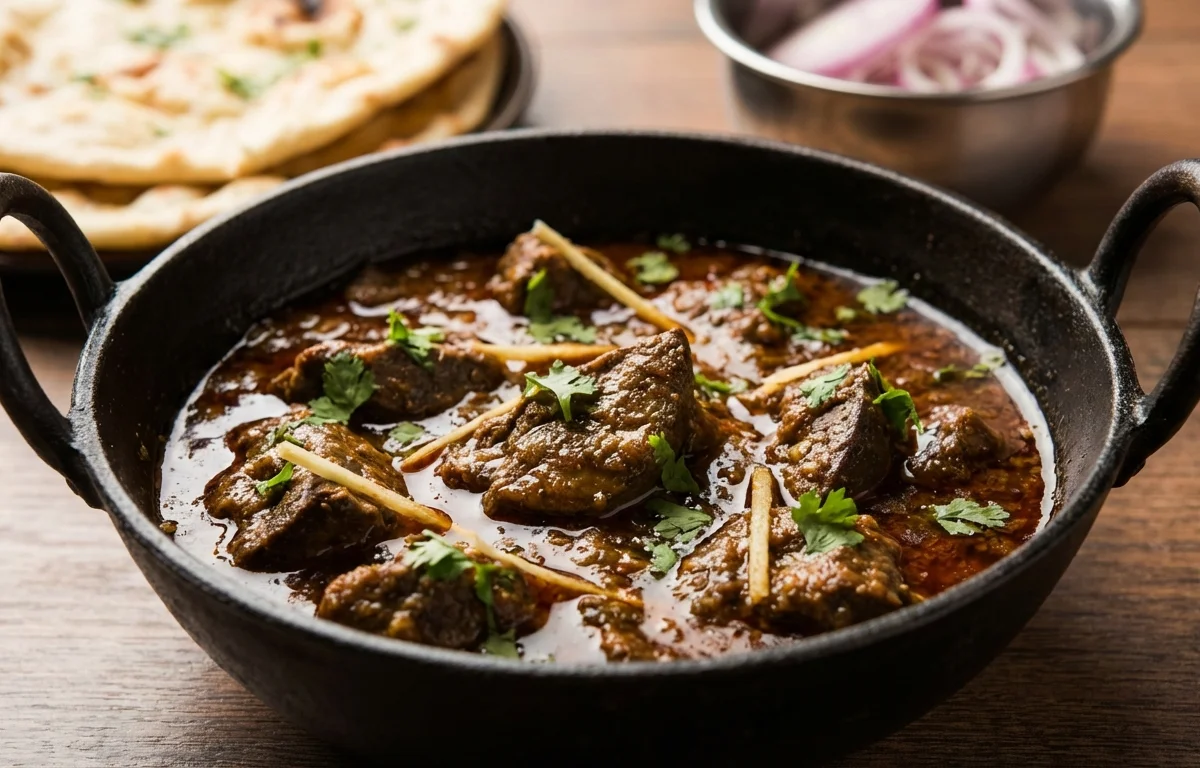
Mutton Kaleji Masala
Tender pieces of mutton liver simmered in a rich, aromatic masala of onions, tomatoes, and fragrant spices. This hearty North Indian delicacy is perfect with hot rotis or naan for a deeply satisfying meal.
For 4 servings
Prepare and Marinate the Liver
- Clean the mutton liver by removing any thin membranes, then rinse thoroughly under cold water. Cut into 1-inch pieces and pat dry with paper towels.
- In a bowl, combine the liver pieces with 1/2 tablespoon of ginger garlic paste, 1/4 teaspoon of turmeric powder, and 1/2 teaspoon of salt.
- Mix well to ensure the liver is evenly coated. Set aside to marinate for at least 15-20 minutes.
Prepare the Masala Base
- Heat oil in a heavy-bottomed pan or kadai over medium heat. Once hot, add the cumin seeds and let them splutter for about 30 seconds.
- Add the finely chopped onions and sauté for 8-10 minutes, stirring frequently, until they turn a deep golden brown.
- Add the remaining 1 tablespoon of ginger garlic paste and the slit green chillies. Sauté for another minute until the raw aroma disappears.
- Pour in the tomato puree. Cook for 5-7 minutes, stirring occasionally, until the mixture thickens and you see oil separating from the sides of the masala.
Cook the Liver
- Add the spice powders: remaining 1/4 teaspoon turmeric powder, red chili powder, and coriander powder. Stir and cook for one minute until fragrant.
- Add the marinated liver pieces to the pan. Increase the heat to high and sauté for 3-4 minutes, stirring continuously, until the liver is seared and changes color on all sides.
- Pour in 1/2 cup of hot water and add the remaining 3/4 teaspoon of salt. Mix well, bring the gravy to a simmer.
- Cover the pan, reduce the heat to low, and let it cook for 10-12 minutes. The liver should be tender but not rubbery. Avoid overcooking.
Finish and Garnish
- Turn the heat to the lowest setting. Add the whisked curd and stir continuously for a minute to prevent it from curdling.
- Once the curd is incorporated, increase the heat to medium and cook for another 2-3 minutes until the gravy thickens to your desired consistency.
- Sprinkle the garam masala and crushed kasuri methi over the curry. Give it a final gentle stir.
- Garnish with fresh coriander leaves and ginger juliennes. Serve hot with roti, naan, or rice.
What to keep in mind.
5 tips from the recipe — small details that make a real difference to the final dish.
- 1For a less gamey flavor, soak the liver in milk or a mixture of water and 1 tbsp of vinegar for 30 minutes before marinating. Rinse well afterwards.
- 2Do not overcook the liver; it should be just cooked through and tender. It will continue to cook in the residual heat of the gravy.
- 3Ensure onions are deeply browned (but not burnt) as this forms the rich flavor and color backbone of the masala.
- 4Always add curd on low heat and stir continuously to prevent it from splitting and to ensure a smooth gravy.
- 5Using hot water helps maintain the cooking temperature and keeps the liver tender.
Adapt it for your goals.
Protein Swap
Replace mutton liver with chicken liver. Reduce the simmering time in step 3 to 6-8 minutes as chicken liver cooks much faster.
Spicier VersionSpicier Version
Increase the amount of green chillies and red chilli powder. You can also add 1/2 teaspoon of black pepper powder along with the other spices for extra heat.
With PotatoesWith Potatoes
Add one small potato, diced, along with the onions and cook until it's partially done before adding the tomatoes. This adds extra body to the curry.
Why this is on our healthy list.
Rich in Iron
Mutton liver is one of the best dietary sources of heme iron, which is easily absorbed by the body and helps prevent iron-deficiency anemia.
Excellent Source of Protein
Provides high-quality protein essential for building and repairing tissues, muscle growth, and overall body function.
Packed with Vitamin B12
Extremely rich in Vitamin B12, which is crucial for brain health, nerve function, and the formation of red blood cells.
Frequently asked questions
One serving (approximately 260g) contains around 350-400 calories, primarily depending on the amount of oil used and the fat content of the liver.