
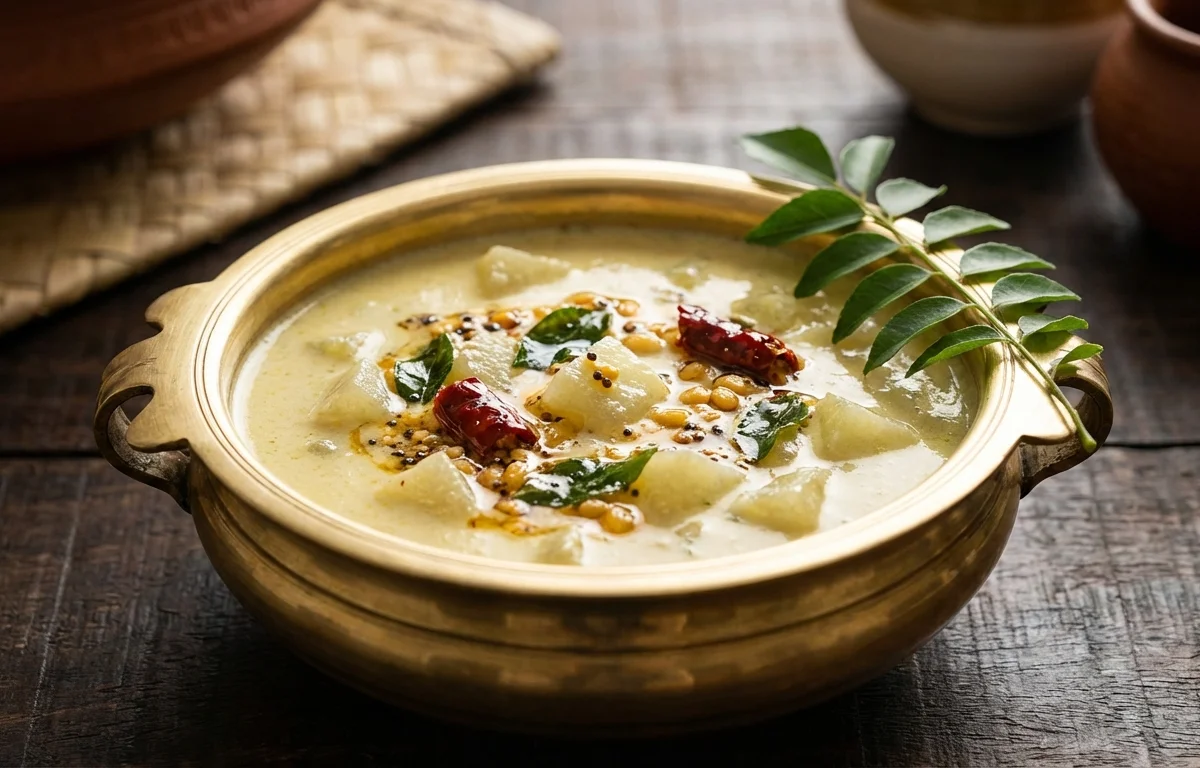
Moor Kuzhambu
A tangy and savory South Indian yogurt curry made with a freshly ground coconut-lentil paste and tender ash gourd. This traditional Tamil dish is a comforting and flavorful accompaniment to steamed rice.
For 4 servings
Prepare the Coconut Paste
- In a small bowl, soak the toor dal, chana dal, and raw rice in 1/4 cup of warm water for at least 30 minutes.
- After soaking, drain the water completely. Transfer the soaked items to a blender.
- Add the grated coconut, green chilies, ginger, and cumin seeds to the blender.
- Add 1/4 cup of water and grind everything to a very smooth, fine paste. Add a little more water if needed to facilitate grinding, but keep the paste thick. Set aside.
Cook the Ash Gourd
- In a medium-sized pot or kadai, combine the cubed ash gourd, 1 cup of water, turmeric powder, and salt.
- Bring the mixture to a boil over medium heat.
- Cook for 10-12 minutes, or until the ash gourd is tender and translucent but still holds its shape. It should be easily pierced with a fork.
Combine and Finish the Kuzhambu
- Reduce the heat to low. Add the ground coconut paste to the pot with the cooked ash gourd. Stir well to combine.
- Simmer for 3-4 minutes, stirring occasionally, until the raw smell of the paste disappears.
- Turn off the heat completely. This is a crucial step to prevent curdling.
- Slowly pour in the whisked curd while stirring continuously. Mix until everything is well incorporated.
- Return the pot to the stove on the lowest possible heat setting. Gently warm the kuzhambu for 1-2 minutes, stirring constantly, until it is heated through and becomes slightly frothy on top. Do not let it come to a simmer or boil.
Prepare the Tempering (Tadka)
- While the kuzhambu is warming, heat the coconut oil in a small tadka pan over medium heat.
- Once the oil is hot, add the mustard seeds and let them splutter completely.
- Add the urad dal and fry until it turns a light golden brown.
- Add the broken dried red chilies, curry leaves, and asafoetida. Sauté for 30 seconds until the chilies darken slightly and the curry leaves are crisp.
Final Assembly and Serving
- Immediately pour the hot tempering over the prepared Moor Kuzhambu.
- Stir gently to mix. Serve hot with steamed rice and a side of vegetable stir-fry (poriyal) or papad.
What to keep in mind.
6 tips from the recipe — small details that make a real difference to the final dish.
- 1Use sour curd for the best tangy flavor. If your curd isn't sour, leave it at room temperature for a few hours to develop sourness.
- 2The most crucial step is to **never boil** the kuzhambu after adding yogurt, as it will curdle. Heat it on the lowest flame until just frothy.
- 3You can replace ash gourd with other vegetables like okra (bhindi), chayote squash (chow chow), or even add fried lentil dumplings (paruppu urundai).
- 4Coconut oil provides the most authentic flavor for the tempering, but any neutral oil can be used.
- 5The kuzhambu will thicken as it cools. Adjust with a little warm water when reheating.
- 6When grinding the paste, add water little by little to achieve a smooth, thick consistency, similar to dosa batter.
Adapt it for your goals.
Vegetable Variations
Instead of ash gourd, try this recipe with sautéed okra (vendakkai), chayote squash (chow chow), bottle gourd (sorakkai), or even steamed colocasia roots (seppankizhangu).
No Grind Version (Thakkali Mor Kuzhambu)No-Grind Version (Thakkali Mor Kuzhambu)
For a quicker version, skip the ground paste. Sauté finely chopped onions and tomatoes, add turmeric and chili powder, then add the whisked yogurt and temper as usual.
With Lentil Dumplings (Paruppu Urundai)With Lentil Dumplings (Paruppu Urundai)
Make small dumplings from a coarse paste of soaked lentils (toor dal and chana dal) with spices, steam them, and add them to the kuzhambu at the end.
Why this is on our healthy list.
Promotes Gut Health
The primary ingredient, curd (yogurt), is a natural probiotic that introduces beneficial bacteria to the gut, aiding digestion and improving overall gut flora.
Cooling and Hydrating
Made with ash gourd and yogurt, both known for their cooling properties in Ayurveda, this dish is perfect for warm weather and helps keep the body hydrated.
Aids Digestion
Spices like ginger, cumin, and asafoetida are well-known digestive aids. They help prevent bloating and indigestion, making this curry light on the stomach.
Plant-Based Protein
The combination of lentils (toor dal, chana dal) and yogurt provides a good source of vegetarian protein, essential for muscle repair and maintenance.
Frequently asked questions
One serving (approx. 250g) of Moor Kuzhambu contains around 180-220 calories, depending on the fat content of the curd and the amount of oil used.