
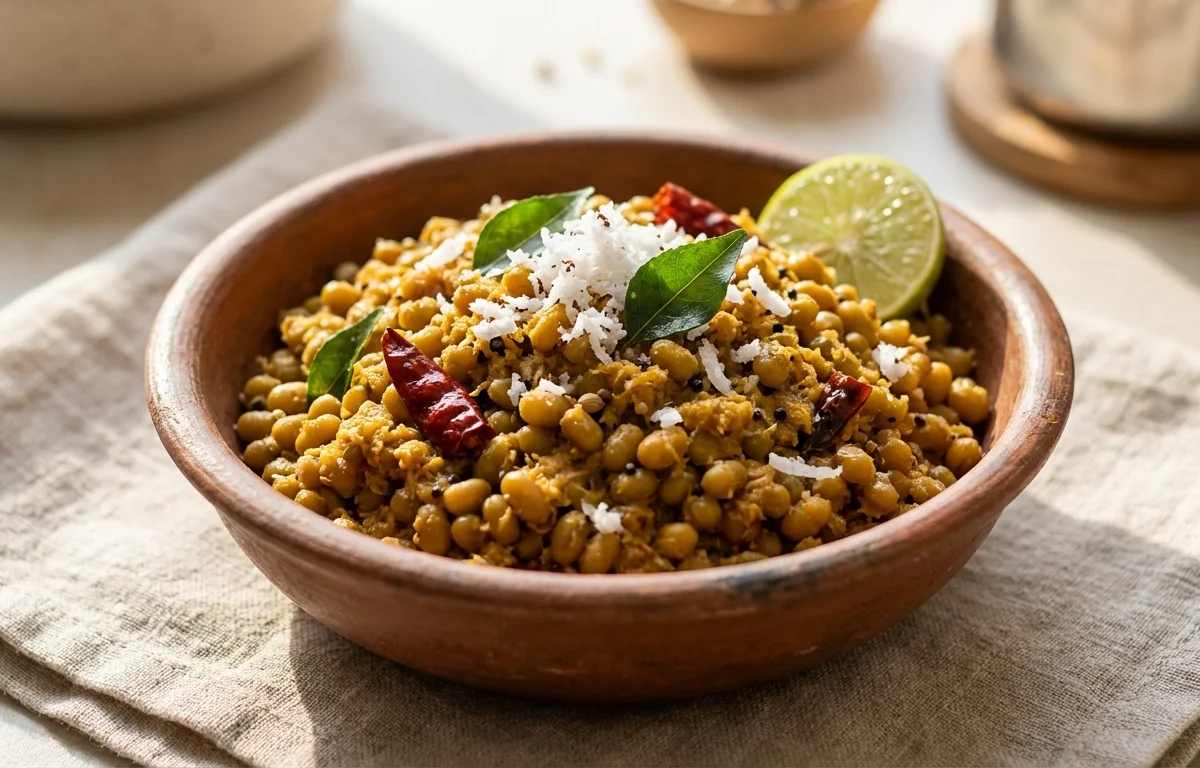
Moong Sukke
A traditional Goan vegetarian dish featuring whole green moong beans cooked in a semi-dry coconut masala. It has a unique blend of sweet, sour, and spicy flavors from jaggery, tamarind, and fresh spices. A perfect side for rice and dal.
For 4 servings
Cook the Moong Beans
- Drain the water from the overnight-soaked moong beans.
- In a pressure cooker, combine the soaked moong, 3 cups of fresh water, turmeric powder, and 0.5 tsp of salt.
- Pressure cook on medium heat for 3-4 whistles, or for about 15 minutes, until the beans are cooked through but still hold their shape. They should not be mushy.
- Let the pressure release naturally. Set the cooked moong aside.
Prepare the Coconut Masala Paste
- In a small, dry pan over low heat, lightly roast the Byadgi chilies and coriander seeds for 1-2 minutes until they become fragrant. Be careful not to burn them.
- Transfer the roasted spices to a grinder jar. Add the freshly grated coconut, tamarind paste, and grated jaggery.
- Add 3 tablespoons of water and grind to a coarse, thick paste. The texture should not be perfectly smooth.
Assemble the Sukke
- Heat coconut oil in a heavy-bottomed pan or kadai over medium heat.
- Add the mustard seeds and allow them to splutter completely, which takes about 30 seconds.
- Add the curry leaves and hing. Sauté for a few seconds until aromatic.
- Add the finely chopped onion and sauté for 5-7 minutes until it turns soft and translucent.
- Add the ground coconut masala paste to the pan. Stir-fry for 4-5 minutes, until the raw smell of the masala disappears and oil begins to separate at the edges.
Combine and Simmer
- Add the cooked moong beans along with any remaining cooking liquid to the pan.
- Add the remaining 0.5 tsp of salt, or adjust to your taste. Mix everything gently to combine without mashing the beans.
- Cover the pan and let it simmer on low heat for 5-7 minutes. This allows the moong to absorb the flavors of the masala and the dish to reach a semi-dry consistency.
- Turn off the heat. Serve hot.
What to keep in mind.
5 tips from the recipe — small details that make a real difference to the final dish.
- 1Soaking the moong beans overnight is crucial for even cooking and better digestion.
- 2For the most authentic flavor, use freshly grated coconut and cold-pressed coconut oil.
- 3Do not over-grind the masala paste; a slightly coarse texture is characteristic of this dish.
- 4Adjust the jaggery and tamarind to your preference for a perfect balance of sweet and sour notes.
- 5If the sukke becomes too dry while simmering, add a splash of hot water to reach the desired consistency.
Adapt it for your goals.
Add Vegetables
Incorporate diced potatoes, drumsticks (moringa), or raw banana along with the moong beans for a more substantial dish. Add them to the pressure cooker with the moong.
Use Sprouted MoongUse Sprouted Moong
For a nutritional boost, use sprouted moong beans. They cook much faster, so reduce the pressure cooking time to just 1 whistle.
Different LegumeDifferent Legume
This recipe works well with other legumes like black-eyed peas (chawli) or brown lentils (masoor). Adjust cooking times accordingly.
Increase SpiceIncrease Spice
For a spicier version, add 1-2 slit green chilies along with the onions during the tempering stage.
Why this is on our healthy list.
Rich in Plant-Based Protein
Whole green moong is an excellent source of plant-based protein, which is essential for muscle building, tissue repair, and overall body function.
High in Dietary Fiber
The combination of moong beans and coconut provides a significant amount of dietary fiber, which aids digestion, promotes gut health, and helps in maintaining stable blood sugar levels.
Good Source of Minerals
This dish is a good source of essential minerals like iron, magnesium, and potassium, which are vital for energy production, nerve function, and maintaining healthy blood pressure.
Provides Healthy Fats
The use of coconut and coconut oil provides medium-chain triglycerides (MCTs), a type of healthy fat that is easily digestible and can be a quick source of energy.
Frequently asked questions
Yes, Moong Sukke is very healthy. It is rich in plant-based protein and dietary fiber from the moong beans, contains healthy fats from coconut, and is packed with minerals and vitamins. It's a wholesome and balanced vegetarian dish.