
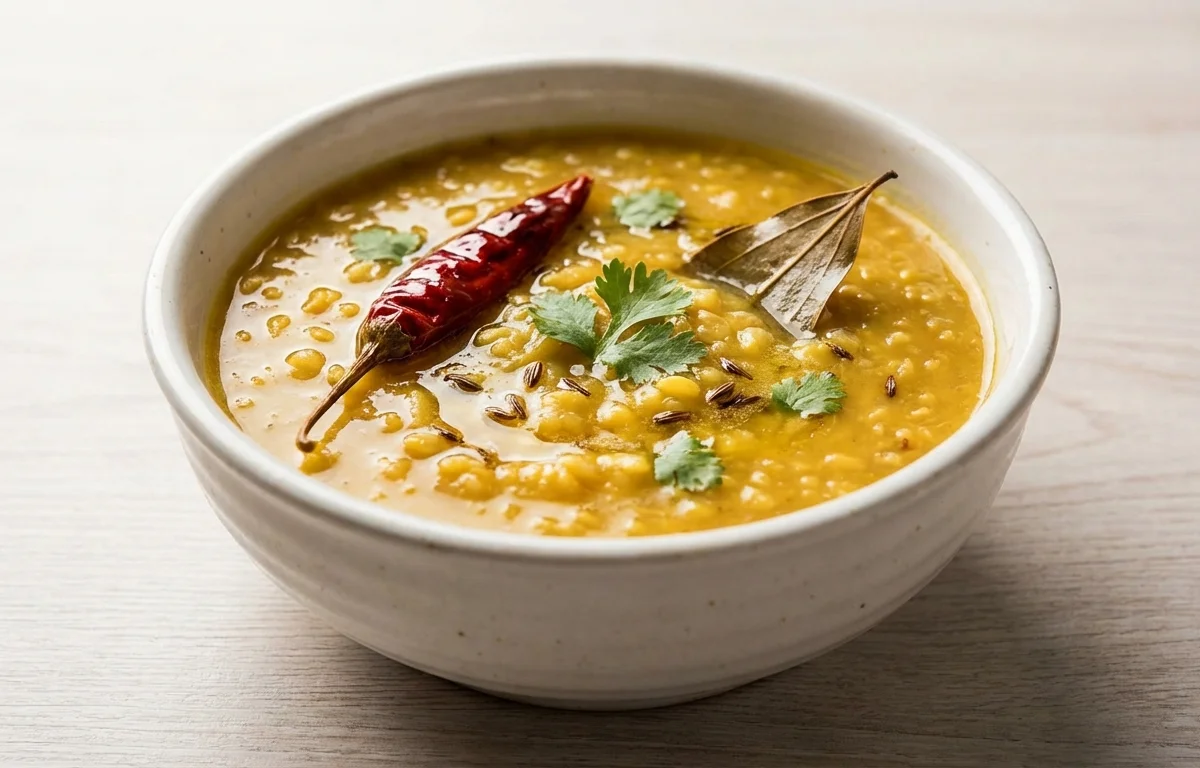
Moong Dal
Light yellow split moong dal cooked with turmeric and finished with a simple ghee-cumin tempering — the gentlest of the everyday Indian dals.
For 3 servings
3 steps. 20 minutes total.
- 1
Step 1
- a.Combine yellow moong dal, water, turmeric powder, and salt in a pressure cooker.
- b.Cook for 3 whistles over medium heat until the lentils are soft.
- c.Allow the pressure to release naturally, then whisk the dal until smooth.
TIPSoak the dal for 15 minutes before cooking to achieve a creamier texture and faster cooking time. - 2
Step 2
- a.Heat ghee in a small pan and add cumin seeds until they begin to sizzle.
- b.Add the garlic, dried red chili, ginger, and asafoetida; sauté for 30 seconds.
- c.Pour the hot tempering immediately over the cooked dal and stir to combine.
TIPWatch the garlic closely; it should be golden brown, not dark, to avoid a bitter aftertaste. - 3
Step 3
- a.Thin the dal with a little hot water if it has become too thick.
- b.Stir in the fresh lemon juice and chopped cilantro.
- c.Serve the dal hot while the tempering aroma is most potent.
What to keep in mind.
5 tips from the recipe — small details that make a real difference to the final dish.
- 1The key to authentic Bengali moong dal is the slow, even roasting of the lentils. Don't rush this step.
- 2For the best flavor, always use ghee for tempering. However, you can substitute it with a neutral oil if necessary.
- 3The dal will thicken as it cools. Before reheating, you may need to add a splash of hot water to achieve the desired consistency.
- 4Do not overcook the dal in the pressure cooker. The lentils should be soft and cooked through, but still retain a slight texture, not turn into a complete mush.
- 5A pinch of asafoetida (hing) can be added to the tempering for extra flavor and to aid digestion.
Adapt it for your goals.
With Vegetables
Add 1/2 cup of green peas or diced carrots along with the dal before pressure cooking for a more wholesome version.
Richer FlavorRicher Flavor
For a richer taste, add one chopped tomato to the dal before pressure cooking. This adds a slight tanginess.
Coconut VersionCoconut Version
For a coastal Bengali flavor, stir in 2 tablespoons of freshly grated coconut along with the sugar and simmer for a couple of minutes.
Why this is on our healthy list.
Rich in Plant-Based Protein
Moong dal is an excellent source of protein, which is essential for muscle repair, building tissues, and overall body function, making it a great choice for vegetarians and vegans.
Promotes Digestive Health
Being light and easy to digest, moong dal is gentle on the stomach. The soluble fiber content helps regulate bowel movements, prevent constipation, and promote a healthy gut microbiome.
Supports Heart Health
This dal is naturally low in saturated fat and cholesterol. It contains potassium and magnesium, which can help maintain healthy blood pressure levels and support cardiovascular function.
Packed with Nutrients
It provides essential micronutrients like iron, potassium, magnesium, copper, and various B vitamins, which are vital for energy production, red blood cell formation, and overall well-being.
Frequently asked questions
Yes, it is very healthy. Moong dal is a great source of plant-based protein, dietary fiber, and essential nutrients. It's light, easy to digest, and low in fat, making it an excellent choice for a balanced meal.