
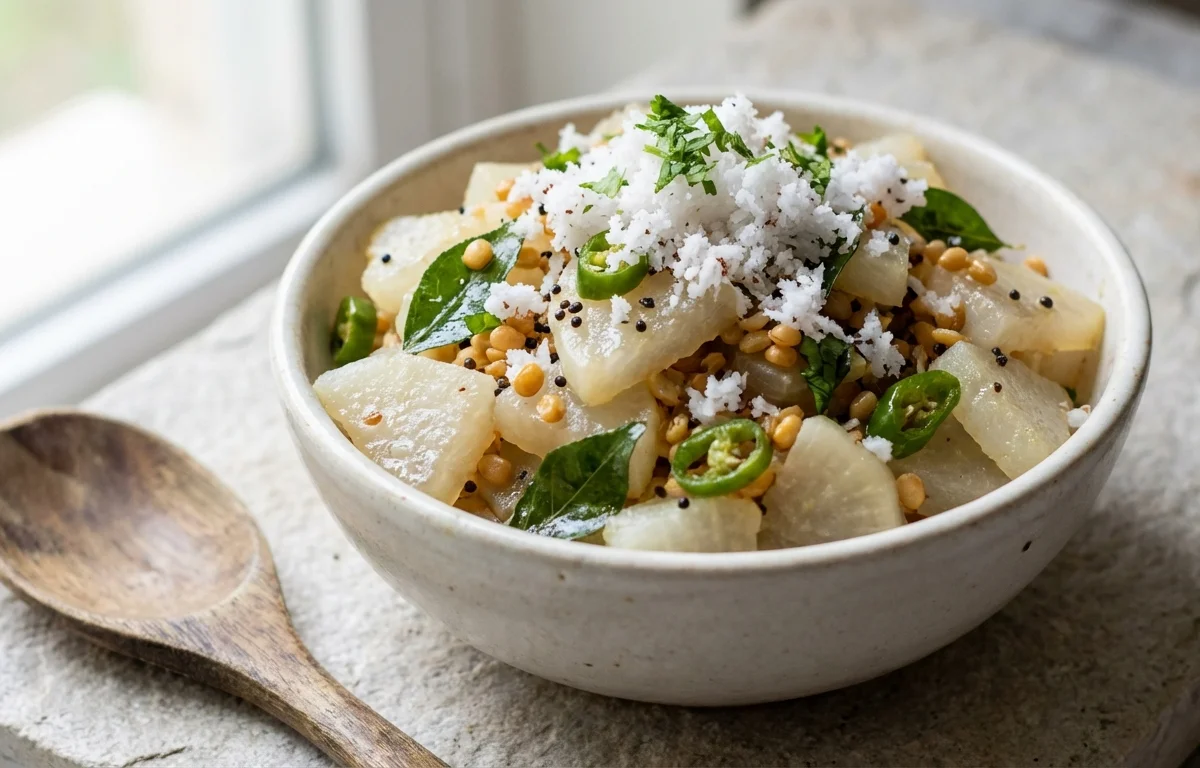
Moolangi Upkari
A simple and wholesome South Indian stir-fry made with daikon radish, crunchy lentils, and fresh coconut. This traditional Udupi-Mangalorean side dish is quick, easy, and pairs perfectly with rice and sambar.
For 4 servings
Prepare the Tempering (Tadka)
- Heat coconut oil in a heavy-bottomed pan or kadai over medium heat.
- Once the oil is hot, add the mustard seeds and allow them to splutter completely, which should take about 30 seconds.
- Add the urad dal and sauté for about 1 minute until it turns a light golden brown. Be careful not to burn it.
- Add the slit green chilies and curry leaves. Sauté for another 30 seconds until the curry leaves turn crisp and aromatic.
Cook the Radish
- Add the chopped daikon radish to the pan along with turmeric powder and salt.
- Stir everything well to ensure the radish is evenly coated with the tempering and spices.
- Sauté for 2-3 minutes, stirring occasionally.
- Pour in 1/4 cup of water. Bring the mixture to a simmer, then reduce the heat to low.
- Cover the pan with a lid and let the radish cook for 8-10 minutes, or until it is tender but still retains a slight bite. Check halfway through to prevent it from sticking.
Finish and Garnish
- Once the radish is cooked, remove the lid. If there's any excess water, increase the heat to medium-high and cook until the water evaporates completely.
- Stir in the grated jaggery (if using) and the fresh grated coconut.
- Mix gently and cook for another 2 minutes, allowing the coconut and jaggery to meld with the radish.
- Turn off the heat, garnish with freshly chopped coriander leaves, and give it a final mix.
Serve
- Serve the Moolangi Upkari hot as a side dish with steamed rice and sambar, rasam, or dal.
What to keep in mind.
5 tips from the recipe — small details that make a real difference to the final dish.
- 1Choose young, tender daikon radish as they are less pungent and cook faster.
- 2Do not overcook the radish; it should be tender-crisp, not mushy, for the best texture.
- 3Using freshly grated coconut provides the most authentic flavor and moisture. Avoid using dry, desiccated coconut if possible.
- 4The jaggery is optional but highly recommended as it perfectly balances the slightly sharp taste of the radish.
- 5For added flavor, you can add a pinch of asafoetida (hing) to the tempering along with the mustard seeds.
Adapt it for your goals.
Protein Boost
Add 2 tablespoons of soaked and cooked chana dal (split chickpeas) or moong dal along with the radish for extra protein and texture.
Spicier VersionSpicier Version
Add 1/4 to 1/2 teaspoon of red chili powder along with the turmeric powder for extra heat.
Different TemperingDifferent Tempering
Include 1 teaspoon of chana dal in the tempering along with the urad dal for an extra crunchy element.
With OnionsWith Onions
Sauté one finely chopped small onion after the tempering until translucent, before adding the radish, for a sweeter base.
Why this is on our healthy list.
Promotes Digestive Health
Daikon radish is an excellent source of dietary fiber, which aids in regular bowel movements and supports a healthy gut microbiome. It also contains enzymes that help in the digestion of carbohydrates and fats.
Rich in Antioxidants
This dish is packed with antioxidants from ingredients like daikon radish (rich in Vitamin C), turmeric (curcumin), and curry leaves, which help combat oxidative stress and reduce inflammation in the body.
Supports Weight Management
Being low in calories and high in fiber and water content, Moolangi Upkari can help you feel full and satisfied, making it a great choice for those looking to manage their weight.
Boosts Immunity
The high Vitamin C content in daikon radish is crucial for a strong immune system, helping the body fight off infections and illnesses.
Frequently asked questions
One serving of Moolangi Upkari contains approximately 120-140 calories, making it a light and healthy side dish. The exact count can vary based on the amount of coconut oil and coconut used.