
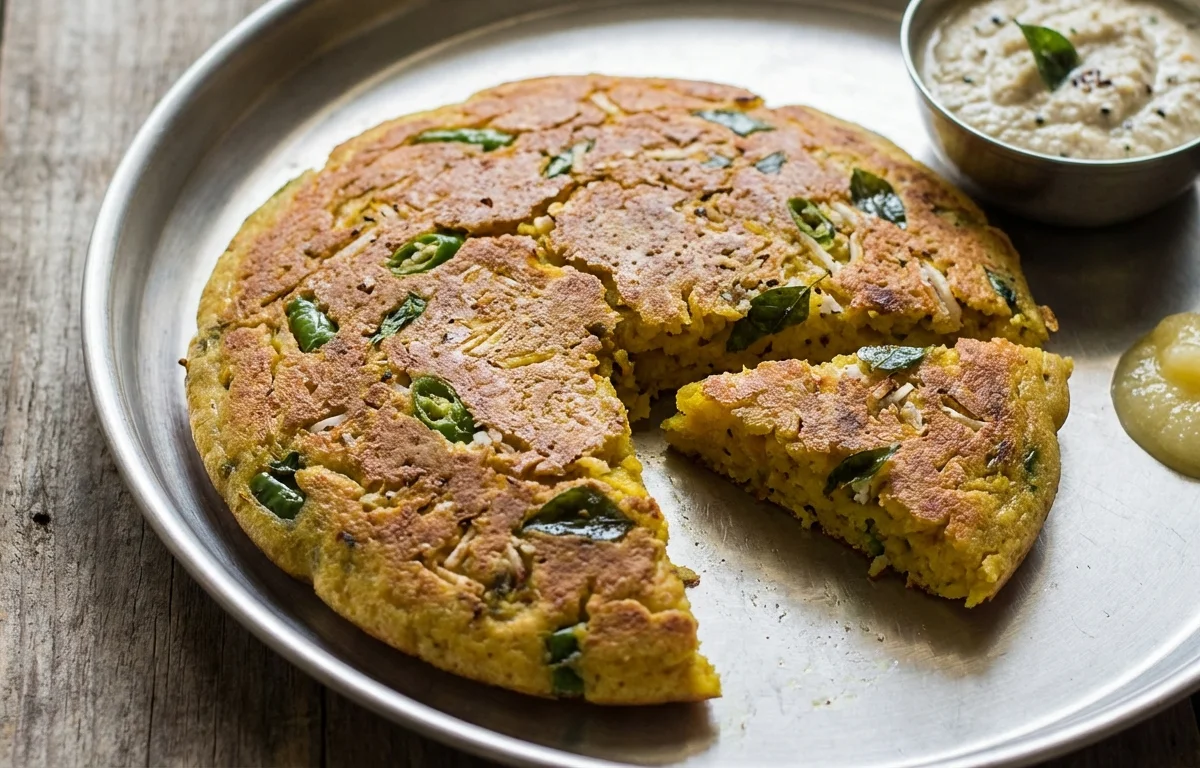
Mooga Gali Polo
A healthy and savory pancake from Konkani cuisine, made with a wholesome blend of moong dal and rice. These soft, protein-packed dosas are quick to prepare as they don't require long fermentation, making them a perfect breakfast choice.
For 4 servings
5 steps. 20 minutes total.
- 1
Step 1
- a.Soak Lentils and Rice
- b.Rinse the moong dal and rice together under running water until the water runs clear.
- c.Place them in a large bowl and add enough water to cover them by at least 2 inches.
- d.Let the mixture soak for a minimum of 3 to 4 hours, or up to 6 hours.
- 2
Step 2
- a.Prepare the Batter
- b.Drain all the water from the soaked dal and rice.
- c.Transfer the mixture to a high-speed blender or wet grinder.
- d.Add the grated coconut, green chillies, and chopped ginger.
- e.Add about 1 cup of water and start grinding. Gradually add more water as needed to achieve a smooth, pourable batter. The consistency should be similar to a pancake batter, not too thick or too thin.
- 3
Step 3
- a.Season and Rest the Batter
- b.Pour the ground batter into a mixing bowl.
- c.Stir in the turmeric powder, asafoetida, and salt until well combined.
- d.If using, fold in the finely chopped onions.
- e.Let the batter rest for 10-15 minutes. This helps the flavors meld together.
- 4
Step 4
- a.Cook the Polo
- b.Heat a non-stick tawa or a seasoned cast-iron skillet over medium heat.
- c.Once hot, lightly grease the surface with oil.
- d.Pour a ladleful of batter onto the center of the tawa. Gently spread it in a circular motion to form a thick pancake (polo), about 5-6 inches in diameter. Do not spread it as thin as a regular dosa.
- e.Drizzle about 1/2 teaspoon of oil around the edges and on top.
- f.Cover with a lid and cook for 1-2 minutes, until the top surface looks set and the bottom is golden brown.
- g.Flip the polo carefully and cook the other side for another minute, uncovered, until light brown spots appear.
- h.Repeat the process with the remaining batter, greasing the tawa lightly for each polo.
- 5
Step 5
- a.Serve
- b.Transfer the hot Mooga Gali Polo to a serving plate.
- c.Serve immediately with coconut chutney, ginger chutney, or a simple pickle.
What to keep in mind.
6 tips from the recipe — small details that make a real difference to the final dish.
- 1The batter consistency is crucial. If it's too thick, the polo will be dense. If too thin, it will be hard to spread and flip.
- 2For the best flavor and digestive benefits, do not skip the asafoetida (hing).
- 3Cook the polo on a consistent medium heat. High heat will brown the outside quickly while the inside remains uncooked.
- 4For a crispier texture, you can add 1 tablespoon of rice flour to the batter.
- 5Using a well-seasoned cast-iron tawa gives the polo a superior taste and texture.
- 6Leftover batter can be stored in an airtight container in the refrigerator for up to 2 days. It may thicken, so stir in a little water to adjust the consistency before use.
Adapt it for your goals.
Vegetable Polo
Add 1/2 cup of finely grated vegetables like carrots, zucchini, or cabbage to the batter for added nutrition and flavor.
Herb infused PoloHerb-infused Polo
Mix 2 tablespoons of finely chopped cilantro (coriander leaves) or curry leaves into the batter for a fresh, aromatic twist.
Spicier VersionSpicier Version
For extra heat, add 1/4 teaspoon of black pepper powder or a pinch of red chilli powder to the batter along with the green chillies.
Why this is on our healthy list.
Rich in Plant-Based Protein
Moong dal is an excellent source of vegetarian protein, which is essential for muscle building, cell repair, and maintaining overall body function.
Aids Digestion
The combination of fiber from lentils and the digestive properties of spices like ginger and asafoetida helps promote healthy digestion, prevent bloating, and improve gut health.
Provides Sustained Energy
The complex carbohydrates from rice and lentils ensure a slow and steady release of energy, which helps in maintaining stable blood sugar levels and keeps you feeling full and energetic for longer.
Frequently asked questions
Yes, it is very healthy. It provides a good balance of plant-based protein from moong dal and complex carbohydrates from rice. It is also rich in fiber, easy to digest, and naturally gluten-free when using a gluten-free asafoetida.