
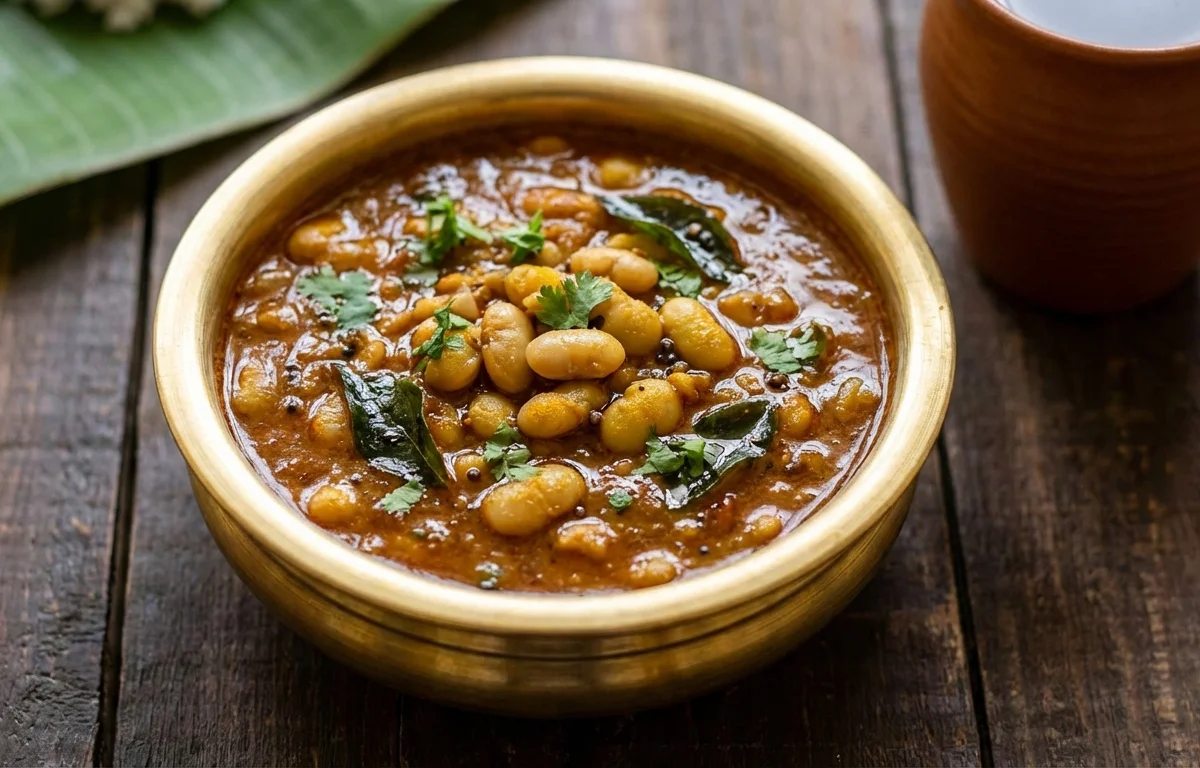
Mochai Kottai Kuzhambu
A hearty and tangy South Indian curry made with fresh field beans simmered in a tamarind-based gravy. This traditional Tamil Nadu dish is packed with flavor and pairs perfectly with hot steamed rice.
For 4 servings
Pressure cook the soaked mochai kottai with 2 cups of water and a pinch of salt for 3-4 whistles until tender but not mushy. Let the pressure release naturally. Drain the beans, reserving the cooked water for the gravy.
While the beans cook, prepare the tamarind water by mixing the tamarind paste in 1 cup of warm water. Squeeze well to extract the juice and set aside.
In a small blender, combine the grated coconut and cumin seeds. Add a few tablespoons of water and grind to a very smooth, fine paste.
Heat gingelly oil in a heavy-bottomed pan or kadai over medium heat. Add the mustard seeds. Once they splutter, add urad dal, fenugreek seeds, and dried red chillies. Sauté for 30 seconds until the dal turns light golden.
Add the curry leaves and hing, followed by the pearl onions and minced garlic. Sauté for 4-5 minutes until the onions turn translucent and fragrant.
Add the chopped tomatoes and cook for 5-6 minutes until they become soft and mushy. Reduce the heat to low, add the turmeric powder and sambar powder. Stir and cook for 1 minute until aromatic.
Pour in the prepared tamarind water and the reserved water from the cooked beans. Add salt and jaggery. Bring the mixture to a boil, then reduce the heat and let it simmer for 8-10 minutes for the flavors to meld.
Stir in the cooked mochai kottai and the ground coconut paste. Mix everything well.
Continue to simmer on low heat for another 5-7 minutes, until the gravy thickens slightly. Do not boil vigorously after adding the coconut paste as it can curdle.
Turn off the heat. Garnish with freshly chopped coriander leaves. Let the kuzhambu rest for 10 minutes before serving hot with steamed rice.
What to keep in mind.
6 tips from the recipe — small details that make a real difference to the final dish.
- 1Using fresh mochai (field beans) is a great alternative. They cook faster and don't require soaking.
- 2Gingelly (sesame) oil is key for the authentic flavor of this kuzhambu.
- 3The small amount of jaggery is crucial to balance the tanginess of the tamarind and the spice from the sambar powder.
- 4For a thicker consistency, you can add 1 teaspoon of rice flour mixed with 2 tablespoons of water along with the coconut paste.
- 5This kuzhambu tastes even better the next day as the flavors have more time to meld together.
- 6To avoid burning the spice powders, always add them on low heat and stir continuously for a minute.
Adapt it for your goals.
Vegetable Addition
Add vegetables like drumsticks (murungakkai), brinjal (kathirikai), or yellow pumpkin (parangikai) along with the tomatoes for a more wholesome curry.
Protein BoostProtein Boost
For a non-vegetarian version, you can add boiled eggs or small pieces of mutton (cooked separately) to the kuzhambu in the final simmering stage.
No CoconutNo Coconut
If you prefer a lighter gravy, you can skip the coconut paste. The kuzhambu will be thinner but still flavorful.
Why this is on our healthy list.
Rich in Plant-Based Protein
Mochai kottai, or field beans, are an excellent source of plant-based protein, essential for muscle repair, growth, and overall body function.
High in Dietary Fiber
The beans provide a significant amount of dietary fiber, which promotes healthy digestion, helps regulate blood sugar levels, and contributes to a feeling of fullness.
Boosts Immunity
Spices like turmeric, cumin, and garlic contain powerful antioxidants and anti-inflammatory compounds that help strengthen the immune system.
Good for Heart Health
The use of gingelly oil, along with fiber-rich beans, can help manage cholesterol levels. The dish is also low in saturated fat, supporting cardiovascular health.
Frequently asked questions
Yes, you can use canned field beans to save time. Drain and rinse them well before adding them to the gravy at step 8. You won't need to pressure cook them.