
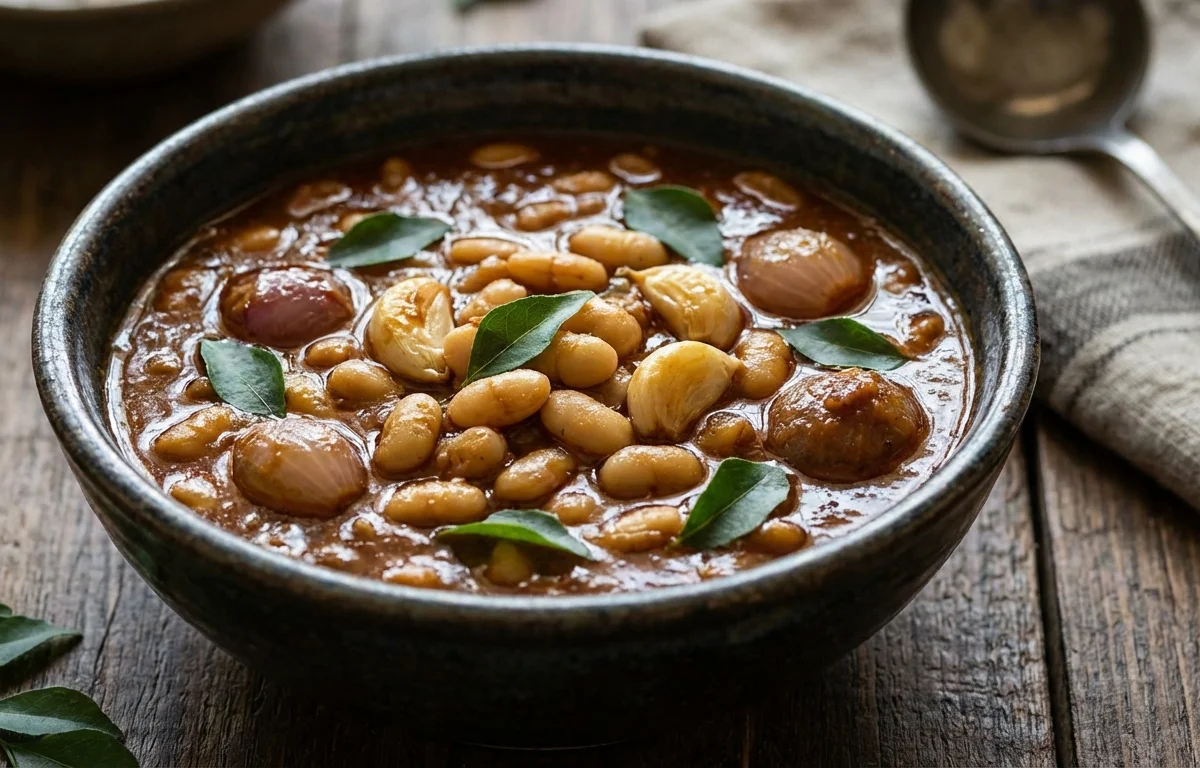
Mochai Kara Kuzhambu
A classic and robust Tamil curry featuring tender field beans (mochai) simmered in a spicy and tangy tamarind gravy. This authentic kuzhambu gets its depth from aromatic spices, sambar powder, and a hint of jaggery, making it a perfect and satisfying partner for hot steamed rice.
For 4 servings
Prepare Beans and Tamarind
- Wash and soak the dried mochai beans in ample water overnight, or for a minimum of 8 hours.
- Drain the soaked beans. Place them in a pressure cooker with 2 cups of fresh water and 0.5 tsp of salt. Cook for 3-4 whistles on medium heat until the beans are soft but still hold their shape. Set aside, reserving the cooked water.
- While the beans cook, soak the tamarind in 1 cup of warm water for 15-20 minutes. Squeeze the pulp thoroughly to extract a thick juice. Strain and discard the solids.
Sauté Aromatics and Temper Spices
- Heat the gingelly oil in a heavy-bottomed pan or kadai over medium heat.
- Add the mustard seeds and wait for them to splutter completely. Then, add the fenugreek seeds and urad dal, sautéing for 30 seconds until the dal turns light golden.
- Add the curry leaves and hing, giving it a quick stir. Immediately add the whole peeled shallots and garlic cloves.
- Sauté for 6-8 minutes until the shallots become translucent and fragrant.
- Add the chopped tomato and cook for another 4-5 minutes until it breaks down and becomes soft and mushy.
Build the Kuzhambu Gravy
- Reduce the heat to low. Add the turmeric powder, sambar powder, and coriander powder. Stir continuously for about 1 minute until the spices are aromatic, being careful not to burn them.
- Pour in the prepared tamarind extract. Add the remaining 1 tsp of salt and the jaggery powder.
- Mix well, increase the heat to medium, and bring the mixture to a boil. Allow it to simmer for 10-12 minutes, until the gravy thickens slightly and the raw smell of the tamarind has completely disappeared.
Combine and Finish the Curry
- Add the pressure-cooked mochai beans along with their cooking water to the simmering tamarind gravy.
- Stir gently to combine and let the kuzhambu simmer for another 5-7 minutes, allowing the beans to absorb the flavors of the gravy.
- If using coconut, grind the grated coconut with a few tablespoons of water to a very fine, smooth paste. Add this paste to the kuzhambu.
- Simmer for just 2-3 more minutes after adding the coconut paste. Do not over-boil. Check the seasoning and adjust salt if needed.
- Turn off the heat and let the kuzhambu rest for at least 15 minutes before serving for the flavors to meld.
What to keep in mind.
6 tips from the recipe — small details that make a real difference to the final dish.
- 1For the most authentic taste, use gingelly (Indian sesame) oil. It imparts a unique nutty aroma and flavor characteristic of Tamil cuisine.
- 2Using whole shallots (sambar onions) is key to the texture and flavor of this dish. They turn sweet and tender when cooked.
- 3Do not skip the jaggery. A small amount is essential to balance the tanginess of the tamarind and the heat from the spices.
- 4Ensure the tamarind pulp is simmered well until the raw smell is gone. This is a crucial step for a delicious kuzhambu.
- 5This kuzhambu thickens as it cools and tastes even better the next day as the flavors deepen and mature.
- 6If short on time, you can use canned lima beans. Rinse them well and add them directly at Step 4, simmering for about 10 minutes.
Adapt it for your goals.
Vegetable Addition
Enhance the kuzhambu by adding vegetables like drumsticks (murungakkai), brinjal (eggplant), or yellow pumpkin. Add them after sautéing the tomatoes and cook until tender before adding the beans.
Creamier GravyCreamier Gravy
For a richer, creamier texture, grind 1 teaspoon of poppy seeds (khus khus) and 5-6 cashews along with the optional coconut to make a fine paste. Add this towards the end of the cooking process.
Different BeansDifferent Beans
This kara kuzhambu base is very versatile. You can replace mochai with other legumes like black-eyed peas (karamani), chickpeas (kondakadalai), or even kidney beans (rajma). Adjust cooking times accordingly.
Why this is on our healthy list.
High in Protein and Fiber
Mochai beans (field beans) are an excellent source of plant-based protein, crucial for muscle repair, and dietary fiber, which aids digestion, promotes satiety, and helps regulate blood sugar levels.
Rich in Antioxidants
The kuzhambu is packed with spices like turmeric, coriander, and fenugreek, along with tamarind and garlic. These ingredients are rich in antioxidants that help combat oxidative stress and inflammation in the body.
Supports Gut Health
The fiber from the beans and the properties of spices like asafoetida (hing) and fenugreek can promote a healthy gut microbiome and aid in smooth digestion.
Frequently asked questions
Yes, it's quite healthy. Mochai beans are a great source of plant-based protein and dietary fiber. The use of various spices like turmeric and fenugreek offers anti-inflammatory benefits. Using gingelly oil provides healthy fats. To make it even healthier, you can control the amount of oil and salt used.