
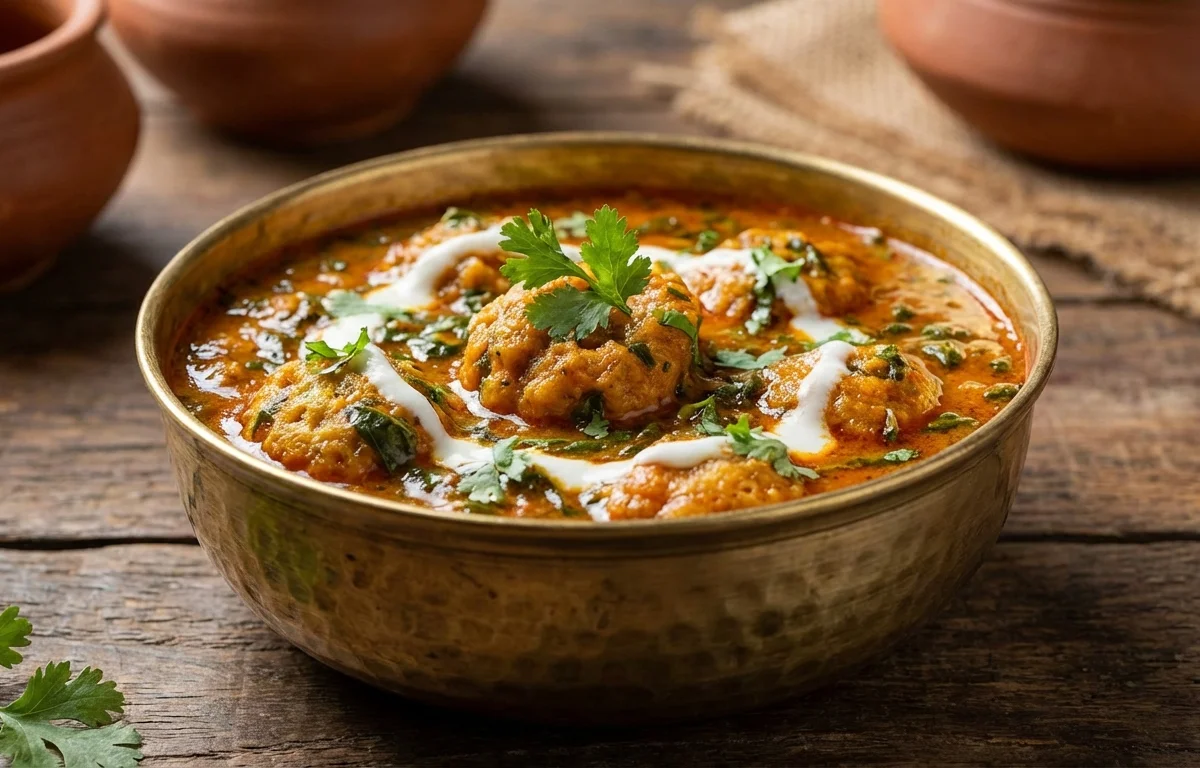
Methi Mangodi Sabzi
A rustic and flavorful Rajasthani curry featuring sun-dried lentil dumplings (mangodi) and fresh fenugreek leaves (methi). The earthy bitterness of methi perfectly complements the savory, nutty mangodi.
For 4 servings
5 steps. 30 minutes total.
- 1
Step 1
- a.Fry the Mangodi
- b.Heat 2 tablespoons of mustard oil in a heavy-bottomed pan or kadai over medium heat.
- c.Add the mangodi and fry, stirring continuously, for 3-4 minutes until they turn a deep golden brown and become aromatic.
- d.Remove the fried mangodi with a slotted spoon and set them aside on a plate.
- 2
Step 2
- a.Prepare the Masala Base
- b.In the same pan, add the remaining 2 tablespoons of oil.
- c.Once the oil is hot, add the cumin seeds and let them splutter. Immediately add the hing and stir for a few seconds.
- d.Add the finely chopped onion and sauté for 5-6 minutes until it becomes soft and translucent.
- e.Add the ginger-garlic paste and slit green chilies. Cook for another minute until the raw aroma disappears.
- 3
Step 3
- a.Cook the Tomatoes and Spices
- b.Add the tomato puree to the pan. Cook for 4-5 minutes, stirring occasionally, until the puree thickens and you see oil separating at the edges of the masala.
- c.Add the turmeric powder, red chili powder, and coriander powder. Mix well and cook for 1-2 minutes, stirring constantly to prevent the spices from burning.
- 4
Step 4
- a.Incorporate Yogurt and Cook Mangodi
- b.Reduce the heat to the lowest setting. Add the whisked curd and stir continuously for 2 minutes. This prevents the curd from splitting.
- c.Once the curd is fully incorporated into the masala, add the fried mangodi, hot water, and salt. Stir gently to combine.
- d.Bring the mixture to a gentle boil, then cover the pan and simmer on low heat for 10-12 minutes, or until the mangodi are tender enough to be easily broken with a spoon.
- 5
Step 5
- a.Add Methi and Finish
- b.Uncover the pan and add the chopped methi leaves. Mix well.
- c.Cook uncovered for 5-7 minutes, stirring occasionally, until the methi leaves wilt completely and the sabzi reaches a semi-dry consistency with the masala coating the ingredients.
- d.Sprinkle the garam masala over the top and give it a final mix.
- e.Garnish with fresh coriander leaves and serve hot.
What to keep in mind.
6 tips from the recipe — small details that make a real difference to the final dish.
- 1To reduce the bitterness of methi, sprinkle a little salt on the chopped leaves, let them rest for 15 minutes, then squeeze out the bitter juices before adding to the curry.
- 2Always add whisked yogurt on low heat and stir constantly to prevent it from curdling, which would ruin the texture of the gravy.
- 3Fry the mangodi on medium-low heat to ensure they cook evenly from the inside out without burning.
- 4Using hot water helps the mangodi soften faster and more uniformly.
- 5Don't overcook the mangodi after they become tender, as they can turn mushy and lose their texture.
- 6This sabzi pairs exceptionally well with Bajra Roti (pearl millet flatbread) or simple Phulkas.
Adapt it for your goals.
Vegan Version
To make this recipe vegan, simply omit the curd (yogurt) or replace it with a plant-based, unsweetened yogurt. You can also add 1 tablespoon of cashew paste for creaminess.
Aloo Methi MangodiAloo Methi Mangodi
Add one medium potato, peeled and diced, along with the onions. Sauté until the potatoes are partially cooked before proceeding with the recipe.
With Peas (Matar)With Peas (Matar)
Add 1/2 cup of fresh or frozen green peas along with the hot water and mangodi in Step 4 for a touch of sweetness and texture.
Creamier GravyCreamier Gravy
For a richer, less rustic version, stir in 2 tablespoons of fresh cream or cashew paste at the end, just before adding the garam masala.
Why this is on our healthy list.
Rich in Plant-Based Protein
Mangodi, made from moong dal, provides a substantial amount of protein, which is essential for muscle repair, growth, and overall body function.
High in Dietary Fiber
Both methi leaves and lentils are excellent sources of fiber, which aids digestion, promotes a feeling of fullness, and helps regulate blood sugar levels.
Good Source of Iron
Fenugreek leaves are a natural source of iron, a mineral vital for preventing anemia and maintaining energy levels by supporting red blood cell production.
Aids in Blood Sugar Management
Fenugreek has properties that may help improve insulin function and lower blood sugar, making this dish a beneficial choice for those managing their glucose levels.
Frequently asked questions
One serving (approximately 1 cup or 210g) of Methi Mangodi Sabzi contains around 280-320 calories, depending on the amount of oil used.