
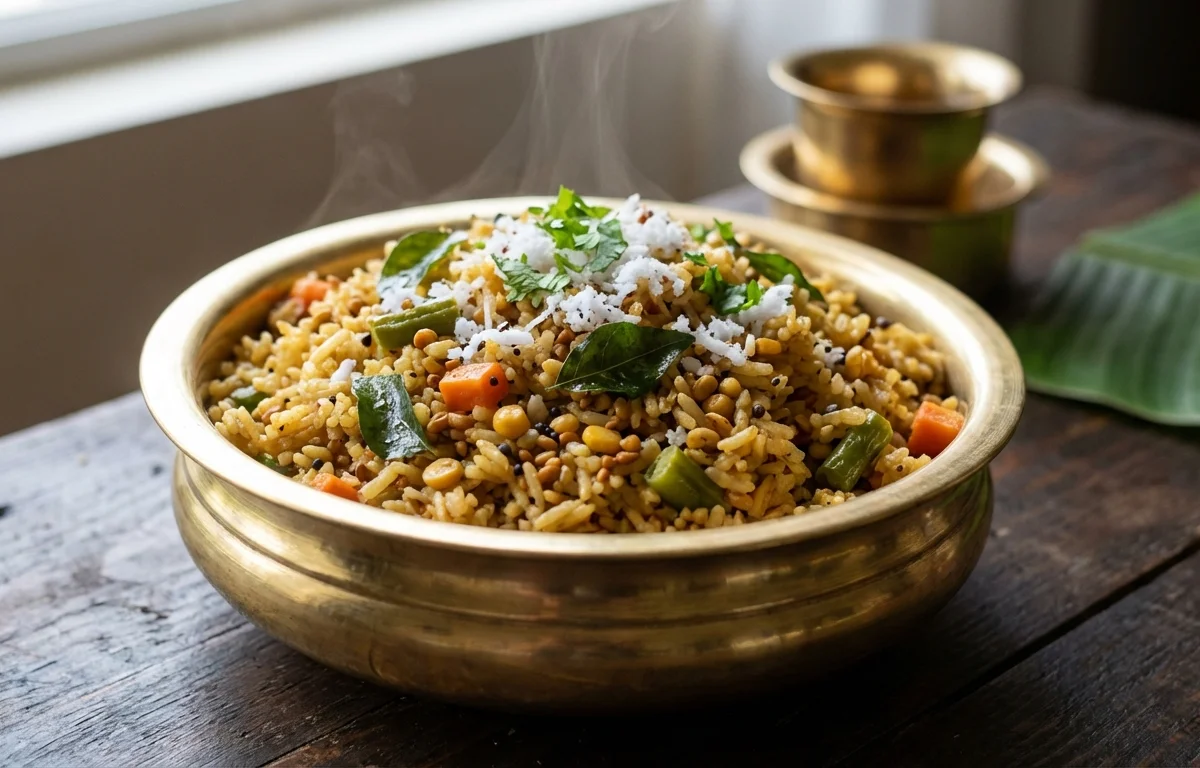
Menthya Bath
A traditional Karnataka rice dish with a unique symphony of flavors. Toasted fenugreek seeds provide a pleasant bitterness, balanced by tangy tamarind and a hint of sweet jaggery, creating a truly aromatic and memorable one-pot meal.
For 4 servings
5 steps. 30 minutes total.
- 1
Step 1
- a.Cook the Rice
- b.Wash the rice thoroughly under running water until the water runs clear. Soak it in water for 20-30 minutes.
- c.Drain the soaked rice. Cook it with 3 cups of fresh water until each grain is cooked yet separate. You can use a pressure cooker (2 whistles on medium heat) or an open pot.
- d.Once cooked, gently fluff the rice with a fork and spread it on a wide plate or tray to cool down. This prevents the grains from clumping together.
- 2
Step 2
- a.Prepare the Menthya Bath Masala Powder
- b.Heat a small, heavy-bottomed pan over low-medium heat. Dry roast the fenugreek seeds, stirring continuously for 1-2 minutes until they turn reddish-brown and aromatic. Be very careful not to burn them, as this will make the dish bitter. Remove from pan.
- c.In the same pan, add chana dal, urad dal, coriander seeds, cumin seeds, and dried red chillies. Roast for 3-4 minutes until the dals turn golden and a rich aroma is released.
- d.Turn off the heat. Add the grated coconut to the hot pan and sauté for about a minute in the residual heat until it's lightly toasted.
- e.Allow the roasted ingredients to cool completely. Transfer to a grinder and blend into a fine powder. This is your Menthya Bath masala.
- 3
Step 3
- a.Prepare the Tempering and Vegetable Base
- b.Heat sesame oil in a large kadai or pan over medium heat. Add the mustard seeds and let them splutter.
- c.Add the raw peanuts and sauté for about a minute until they are lightly browned and crunchy.
- d.Add the curry leaves and asafoetida. Sauté for 30 seconds.
- e.Add the chopped mixed vegetables and turmeric powder. Sauté for 4-5 minutes until the vegetables are tender-crisp.
- f.Pour in the tamarind paste (or tamarind water), add the jaggery and salt. Mix well and let it simmer for 2-3 minutes until the jaggery dissolves and the raw smell of tamarind disappears.
- 4
Step 4
- a.Combine and Finish
- b.Add 3-4 tablespoons of the freshly ground Menthya Bath masala powder to the pan. Stir well to combine with the vegetable base and cook for one minute.
- c.Reduce the heat to low. Add the cooled, cooked rice to the pan.
- d.Gently mix everything together, taking care not to break the rice grains. Ensure the masala coats the rice evenly.
- e.Cover and cook on low heat for 2-3 minutes, allowing the rice to absorb all the wonderful flavors.
- f.Taste and adjust salt if necessary. Turn off the heat.
- 5
Step 5
- a.Garnish and Serve
- b.Garnish generously with freshly chopped coriander leaves.
- c.Serve Menthya Bath hot, traditionally with a side of cooling yogurt raita, sandige (fryums), or potato chips.
What to keep in mind.
5 tips from the recipe — small details that make a real difference to the final dish.
- 1The key to perfect Menthya Bath is roasting the fenugreek seeds correctly. They must be reddish-brown. Under-roasted seeds will be raw, and burnt seeds will make the dish inedibly bitter.
- 2Use day-old leftover rice for the best texture, as it's drier and less likely to become mushy.
- 3For a more authentic flavor, use sesame oil (gingelly oil) for the tempering.
- 4The balance of sour (tamarind), sweet (jaggery), and spicy (red chillies) is crucial. Adjust these three ingredients to suit your palate.
- 5You can make the masala powder in a larger quantity and store it in an airtight container for up to a month for quick meals.
Adapt it for your goals.
Vegetable Addition
Add brinjal (eggplant) along with other vegetables for a traditional 'Vangi Menthya Bath'. You can also add bell peppers or potatoes.
Healthier GrainHealthier Grain
Substitute white rice with brown rice or millets like foxtail millet. Adjust the water quantity and cooking time accordingly.
With OnionsWith Onions
For a different flavor profile, you can add one finely chopped onion and sauté it until golden brown before adding the mixed vegetables.
Nut Free VersionNut-Free Version
Simply omit the peanuts from the tempering if you have a nut allergy. The dish will still be delicious.
Why this is on our healthy list.
Aids Digestion
Fenugreek seeds are well-known for their digestive benefits, helping to soothe the stomach and reduce indigestion. The fiber from lentils and vegetables also promotes healthy gut function.
Good Source of Plant-Based Protein
The inclusion of chana dal and urad dal in the masala powder adds a good amount of plant-based protein, making the meal more balanced and satiating.
Rich in Antioxidants
Spices like turmeric, coriander, and cumin, along with tamarind, are packed with antioxidants that help combat oxidative stress and inflammation in the body.
Helps Regulate Blood Sugar
Fenugreek seeds have been studied for their potential to improve insulin sensitivity and help manage blood sugar levels, making this dish a potentially good choice for those monitoring their glucose levels.
Frequently asked questions
One serving of Menthya Bath (approximately 1.5 cups or 320g) contains around 450-480 calories, depending on the amount of oil and vegetables used.