
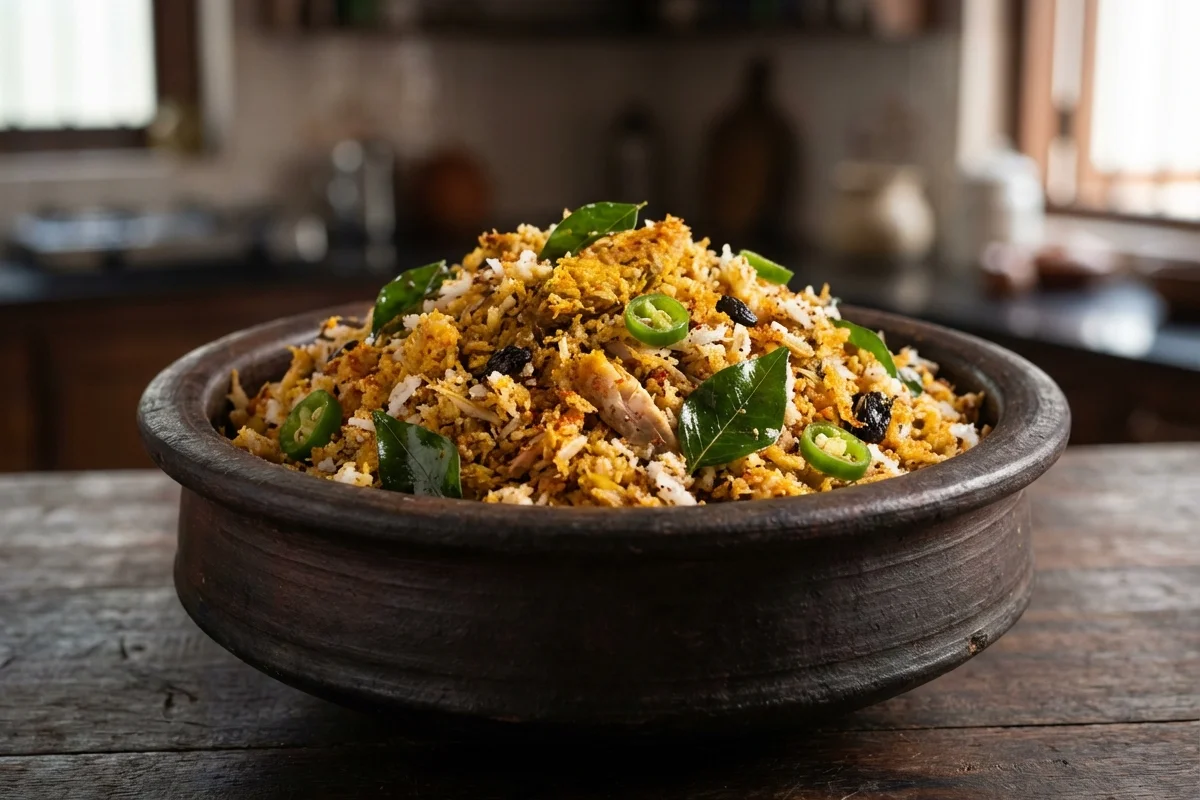
Meen Peera
A classic Kerala dish where small fish like sardines are slow-cooked with a generous amount of grated coconut, shallots, and tangy kodampuli. This semi-dry preparation is a perfect accompaniment to rice.
For 4 servings
Prepare the Coconut Mixture
- Soak the kodampuli pieces in 1/4 cup of warm water for about 15 minutes.
- In a grinder or food processor, combine the grated coconut, shallots, green chillies, ginger, garlic, and turmeric powder.
- Pulse 3-4 times to get a coarse, crumbly mixture. Be careful not to over-grind it into a fine paste; the texture is key.
Combine Ingredients
- In a wide, heavy-bottomed pan or a traditional clay pot (manchatti), place the cleaned small fish.
- Add the coarse coconut mixture, the soaked kodampuli along with its soaking water, salt, and one sprig of curry leaves.
- Gently mix everything with your hands or a spatula, ensuring the fish is evenly coated with the coconut mixture.
Cook the Meen Peera
- Cover the pan and cook on a low to medium flame for 15-20 minutes.
- Instead of stirring with a spoon, gently swirl the pan every 5 minutes to prevent the fish from sticking and breaking apart.
- Continue cooking until the fish is cooked through and most of the moisture has evaporated. The final dish should be semi-dry.
Garnish and Rest
- Once cooked, turn off the heat. Drizzle the virgin coconut oil over the top and scatter the remaining sprig of curry leaves.
- Cover the pan and let the dish rest for at least 10-15 minutes. This step is crucial as it allows the flavors to meld and deepen.
Serve
- Serve the Meen Peera warm as a side dish with steamed rice and other Kerala curries.
What to keep in mind.
6 tips from the recipe — small details that make a real difference to the final dish.
- 1Using a traditional clay pot (manchatti) imparts an authentic, earthy flavor to the dish that is hard to replicate.
- 2Freshly grated coconut is essential for the right texture and moisture. Avoid using desiccated or dry coconut.
- 3The coarseness of the coconut mixture is crucial. Over-grinding will turn it into a paste and change the dish's character.
- 4Always swirl the pan to mix. Using a spoon will break the delicate small fish.
- 5Let the dish rest after cooking. The flavors, especially the raw coconut oil, will infuse beautifully during this time.
- 6Adjust the number of green chillies and kodampuli pieces to balance the spice and sourness to your liking.
Adapt it for your goals.
Ingredient Substitution
If Kodampuli is unavailable, you can use 1/2 teaspoon of concentrated tamarind paste, but the authentic tangy flavor will be slightly different.
Vegetarian VersionVegetarian Version
Create a vegetarian 'Peera' by replacing the fish with finely chopped green beans, winged beans (chathura payar), or bitter gourd. Adjust cooking time accordingly.
Flavor AdditionFlavor Addition
For a slightly different flavor profile, add 1/4 teaspoon of crushed black peppercorns along with the coconut mixture.
Why this is on our healthy list.
Rich in Omega-3 Fatty Acids
Sardines and other small oily fish are excellent sources of Omega-3s, which are crucial for brain health, reducing inflammation, and supporting a healthy heart.
High in Quality Protein
Fish provides high-quality, easily digestible protein that is essential for muscle repair, growth, and maintaining overall body function.
Excellent Source of Calcium
Since small fish like sardines are often eaten whole with their tiny, edible bones, they provide a fantastic natural source of calcium, vital for strong bones and teeth.
Contains Healthy Fats
Both the coconut and the coconut oil used in this dish are sources of medium-chain triglycerides (MCTs), which are considered healthy fats that can provide energy and support metabolism.
Frequently asked questions
Meen Peera is a traditional dish from Kerala, South India. It involves slow-cooking small fish (meen) with a generous amount of grated coconut (peera), shallots, green chillies, and a souring agent called kodampuli.