
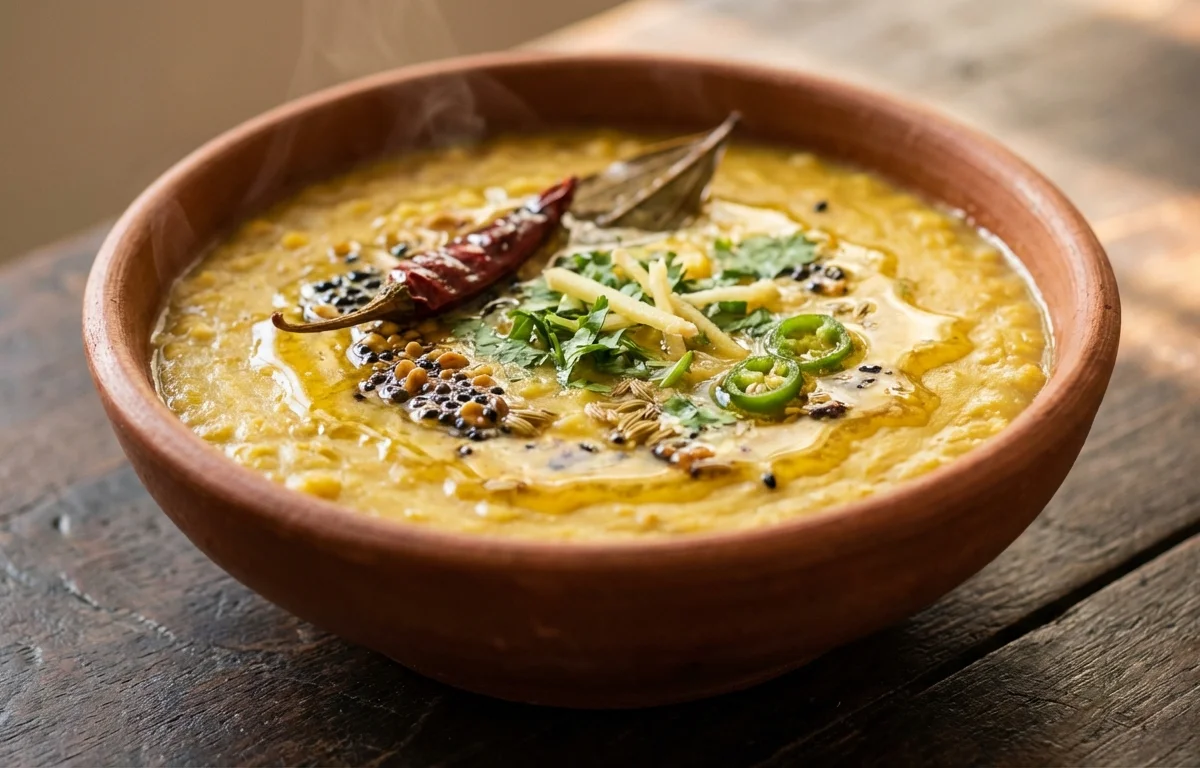
Matir Dal
A classic Bengali comfort food, this simple split pea dal is fragrant with panch phoron and has a lovely balance of sweet and savory flavors. It's a staple in Bengali households, often served with steamed rice.
For 4 servings
7 steps. 25 minutes total.
- 1
Step 1
- a.Prepare the Dal: Rinse the matar dal under cool running water until the water runs clear. Soaking is optional, but for faster cooking, you can soak it in 2 cups of water for 30 minutes, then drain.
- 2
Step 2
- a.Pressure Cook: In a pressure cooker, combine the drained dal, 4 cups of fresh water, turmeric powder, salt, grated ginger, and slit green chilies. Stir to combine.
- 3
Step 3
- a.Cook the Dal: Secure the lid and pressure cook on medium-high heat for 4-5 whistles, which should take about 15-20 minutes. The dal should be completely soft. Allow the pressure to release naturally.
- 4
Check Consistency: Once the pressure has settled, open the cooker
- a.Use a wire whisk to gently mash the dal until it reaches a smooth, creamy consistency. If it's too thick, add 1/2 to 1 cup of hot water to achieve a soupy texture. Stir in the optional sugar at this stage.
- 5
Step 5
- a.Prepare the Tempering (Phoron): Heat the mustard oil in a small pan (tadka pan) over medium heat until it's hot and shimmering. Add the bay leaf, dried red chilies, and panch phoron. Let the spices sizzle and splutter for about 30-40 seconds until they become fragrant. Be careful not to burn them.
- 6
Step 6
- a.Combine and Finish: Immediately pour the hot, aromatic tempering over the cooked dal in the pressure cooker. Stir gently to incorporate the flavors. For extra richness, drizzle the optional ghee on top.
- 7
Garnish and Serve: Garnish with freshly chopped coriander leaves
- a.Serve the Matir Dal hot with steamed rice and a side of fried vegetables (bhaja) for a complete Bengali meal.
What to keep in mind.
5 tips from the recipe — small details that make a real difference to the final dish.
- 1For the most authentic Bengali flavor, use mustard oil for the tempering. Its pungent aroma is characteristic of the cuisine.
- 2The key to a flavorful tempering is to let the panch phoron seeds splutter completely. This releases their essential oils and aroma into the oil.
- 3Don't skip the gentle whisking after pressure cooking. It breaks down the lentils and creates the signature smooth, creamy texture.
- 4The hint of sugar is traditional in Bengali dals to balance the savory and spicy notes. Adjust it to your preference or omit it entirely.
- 5If you don't have a pressure cooker, you can cook the dal in a heavy-bottomed pot. It will take longer, about 45-60 minutes, until the dal is soft.
Adapt it for your goals.
Vegetable Addition
Add diced vegetables like carrots, bottle gourd (lau), or green papaya to the pressure cooker along with the dal for a more nutritious version.
Tomato FlavorTomato Flavor
For a slightly tangy flavor, add one chopped tomato to the pressure cooker with the dal.
Garlic TemperingGarlic Tempering
For a different flavor profile, add 2-3 cloves of thinly sliced garlic to the tempering along with the panch phoron.
Coconut GarnishCoconut Garnish
Garnish with a tablespoon of freshly grated coconut for a touch of sweetness and texture.
Why this is on our healthy list.
Excellent Source of Plant-Based Protein
Matar dal (yellow split peas) is rich in protein, which is essential for muscle repair, cell generation, and overall body function, making it a great choice for vegetarians and vegans.
High in Dietary Fiber
The high fiber content in this dal aids in digestion, promotes gut health, helps maintain stable blood sugar levels, and contributes to a feeling of fullness, which can help with weight management.
Rich in Essential Minerals
This dal is a good source of important minerals like iron, which prevents anemia; magnesium, crucial for bone health and nerve function; and potassium, which helps regulate blood pressure.
Anti-inflammatory Properties
Ingredients like turmeric (containing curcumin) and ginger have natural anti-inflammatory and antioxidant properties that can help reduce inflammation in the body.
Frequently asked questions
Yes, Matir Dal is very healthy. It is an excellent source of plant-based protein, dietary fiber, and essential minerals like iron and magnesium. It is naturally low in fat and cholesterol, making it a heart-healthy choice.