
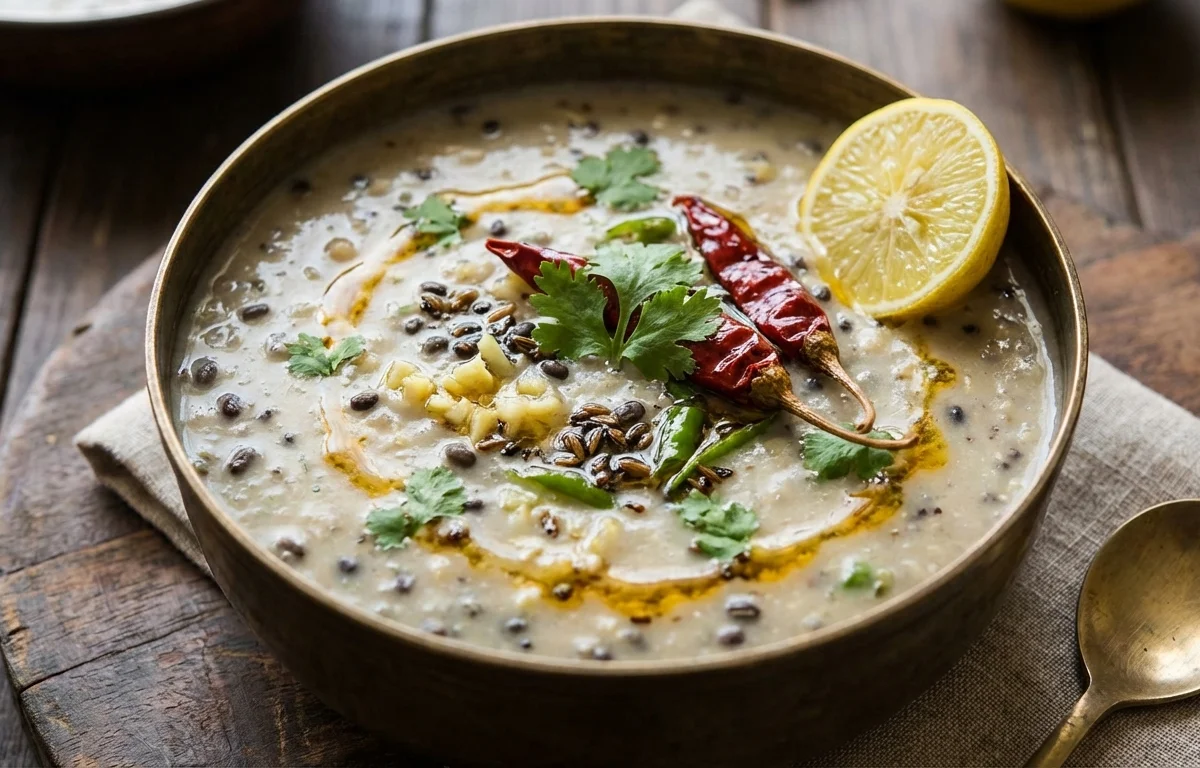
Matimahor Dal
A rustic and creamy black lentil dal from Assam, slow-cooked to perfection. Flavored with ginger and a hint of mustard oil, this comforting dish is a staple in Assamese cuisine, best enjoyed with steamed rice.
For 4 servings
8 steps. 45 minutes total.
- 1
Step 1
- a.Prepare the Lentils: Rinse the whole urad dal under running water until the water runs clear. Place it in a large bowl and cover with 4 cups of water. Let it soak for at least 8 hours or overnight.
- 2
Pressure Cook the Dal: Drain the soaked dal completely
- a.Transfer it to a pressure cooker. Add 4 cups of fresh water, grated ginger, minced garlic, slit green chilies, turmeric powder, salt, and the pinch of baking soda. Stir well to combine.
- 3
Cook Until Tender: Secure the lid of the pressure cooker
- a.Cook on medium-high heat for 6-7 whistles, or for about 25 minutes. Once done, turn off the heat and allow the pressure to release naturally. This is crucial for tender lentils.
- 4
Create a Creamy Texture: Carefully open the cooker
- a.The dal should be very soft. Using the back of a sturdy ladle, mash about one-third of the dal against the side of the pot. This process releases starches and creates the signature thick, creamy consistency. If the dal seems too thick, add 1/2 cup of hot water and simmer for 5 minutes, stirring occasionally.
- 5
Step 5
- a.Prepare the Tempering (Tadka): In a small pan or tadka pan, heat the mustard oil on medium-high heat until it just begins to smoke. Immediately lower the heat to low.
- 6
Step 6
- a.Sizzle the Spices: Add the bay leaf, dried red chilies, and panch phoron to the hot oil. Let them splutter for about 30 seconds until fragrant. Be careful not to burn them. Add the hing and swirl the pan for another 10 seconds.
- 7
Step 7
- a.Combine and Finish: Immediately pour the hot, sizzling tempering over the cooked dal in the pressure cooker. Mix well to incorporate the flavors. Stir in the fresh lemon juice.
- 8
Garnish and Serve: Garnish with freshly chopped coriander leaves
- a.Serve Matimahor Dal hot with steamed rice (Joha rice is traditional) and a side of pitika (Assamese mashed potatoes).
What to keep in mind.
5 tips from the recipe — small details that make a real difference to the final dish.
- 1Soaking the dal overnight is non-negotiable for achieving the perfect creamy texture and ensuring even cooking.
- 2Using mustard oil for tempering is key to the authentic Assamese flavor. Heat it until it's lightly smoking to reduce its pungency.
- 3Don't skip mashing the dal. This simple step is the secret to its thick, luscious consistency without adding any cream.
- 4The pinch of baking soda helps soften the lentils faster, mimicking the effect of traditional Assamese 'khar'.
- 5Always let the pressure release naturally from the cooker. A forced release can result in undercooked, tough lentils.
Adapt it for your goals.
Authentic Assamese
For a truly authentic flavor, use 1/2 teaspoon of 'khar' instead of baking soda. You can find it in specialty Indian or Assamese grocery stores.
With TomatoesWith Tomatoes
Add one finely chopped tomato along with the ginger and garlic before pressure cooking for a slightly tangy flavor profile.
Jain VersionJain Version
To make it without onion and garlic, simply omit the garlic. The flavor of ginger, hing, and panch phoron is strong enough to create a delicious dal.
Creamier TextureCreamier Texture
For an even richer and creamier dal, you can stir in a tablespoon of ghee at the end, just before serving.
Why this is on our healthy list.
Rich in Plant-Based Protein
Whole urad dal is an excellent source of protein, crucial for muscle repair, growth, and overall body function, making this dish ideal for vegetarians and vegans.
High in Dietary Fiber
The black lentils are packed with dietary fiber, which aids digestion, promotes gut health, helps regulate blood sugar levels, and contributes to a feeling of fullness.
Source of Essential Minerals
This dal is a good source of iron, which is vital for preventing anemia, and magnesium, which supports bone health and nerve function.
Boosts Energy Levels
Being rich in iron and complex carbohydrates, Matimahor Dal provides a sustained release of energy, helping to combat fatigue.
Frequently asked questions
Yes, it's very healthy. It's packed with plant-based protein, dietary fiber, and essential minerals like iron and magnesium from the whole urad dal. The use of spices like ginger and garlic adds anti-inflammatory properties. It's a wholesome and nutritious dish.