
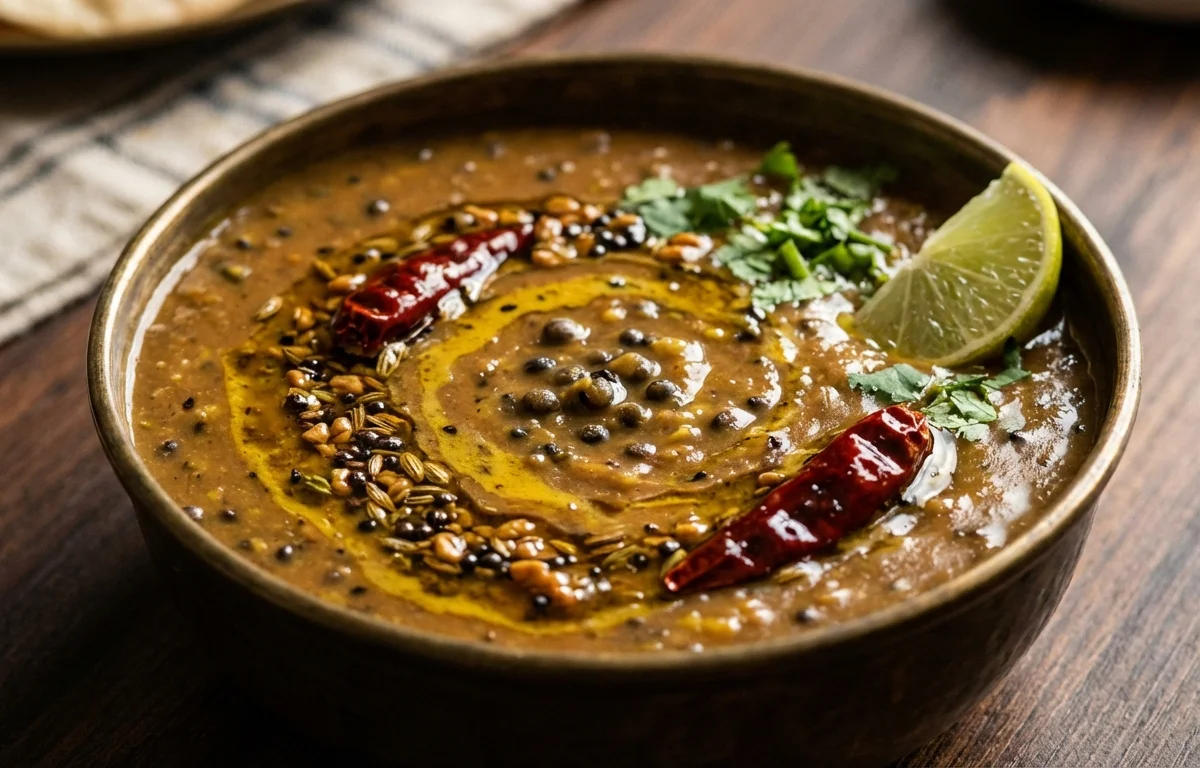
Mati Dal
A classic Assamese comfort food, this dal is made with whole black gram lentils cooked to a creamy, rich consistency. Its simple, earthy flavor from ginger and a light tempering makes it a perfect companion to steamed rice.
For 4 servings
5 steps. 30 minutes total.
- 1
Step 1
- a.Prepare the Lentils
- b.Rinse the whole black gram (mati dal) under cold running water until the water runs clear.
- c.Soak the lentils in 3-4 cups of water for at least 6 hours, or preferably overnight. This step is crucial for a creamy texture and faster cooking.
- d.After soaking, drain the water completely and give the lentils one final rinse.
- 2
Step 2
- a.Pressure Cook the Dal
- b.Place the soaked and drained lentils in a pressure cooker.
- c.Add 4 cups of fresh water, turmeric powder, and salt. Stir to combine.
- d.Secure the lid and cook on medium-high heat. After the first whistle, reduce the heat to low and let it cook for 20-25 minutes.
- e.Turn off the heat and allow the pressure to release naturally. Do not force open the cooker.
- f.Once the pressure has subsided, open the lid. The dal should be completely soft and mushy. Use a whisk or the back of a ladle to mash the dal against the side of the cooker until it reaches a smooth, creamy consistency.
- 3
Step 3
- a.Prepare the Tempering (Tadka)
- b.In a small pan (tadka pan), heat the mustard oil over medium-high heat until it is fragrant and just begins to smoke lightly. This removes its raw pungency.
- c.Reduce the heat to medium, then add the dried red chilies and panch phoron. Allow the seeds to crackle and splutter for about 30 seconds.
- d.Add the minced ginger, minced garlic, slit green chilies, and asafoetida. Sauté for 45-60 seconds until the garlic is fragrant and lightly golden. Be careful not to burn it.
- 4
Step 4
- a.Combine and Simmer
- b.Carefully pour the hot tempering into the cooked dal. Be cautious as it will sizzle and splutter.
- c.Stir everything together gently. Place the dal back on low heat and let it simmer for 3-5 minutes, allowing the flavors of the tempering to infuse into the dal.
- d.Check the consistency. If it's too thick, add a splash of hot water to reach your desired thickness.
- 5
Step 5
- a.Garnish and Serve
- b.Turn off the heat and stir in the freshly chopped coriander leaves.
- c.Serve the Mati Dal hot with steamed rice (Joha rice is traditional), a side of Aloo Pitika (mashed potatoes), and a wedge of lime.
What to keep in mind.
5 tips from the recipe — small details that make a real difference to the final dish.
- 1Soaking the dal overnight is non-negotiable for achieving the authentic creamy texture.
- 2For the most authentic Assamese flavor, do not substitute mustard oil with any other oil.
- 3The dal thickens significantly as it cools. Add a little hot water to adjust the consistency when reheating.
- 4Whisking the dal vigorously after pressure cooking is the key to its characteristic smooth, slightly thick consistency.
- 5If you don't have panch phoron, you can use a mix of 1/4 tsp each of cumin seeds, fenugreek seeds, fennel seeds, and nigella seeds.
Adapt it for your goals.
No Onion/Garlic Version
For a Sattvic or Jain version, simply omit the garlic. The flavor will be slightly different but still delicious due to the ginger and panch phoron.
With VegetablesWith Vegetables
Add 1/2 cup of diced pumpkin (kumra) or bottle gourd (lauki) to the pressure cooker along with the dal for added nutrition and a slightly sweet flavor.
Richer FlavorRicher Flavor
For a richer finish, stir in a tablespoon of ghee just before serving. This adds a wonderful aroma and flavor.
Spicier VersionSpicier Version
Increase the number of green chilies or add a pinch of red chili powder along with the turmeric powder during pressure cooking.
Why this is on our healthy list.
Rich in Plant-Based Protein
Whole black gram is a protein powerhouse, crucial for muscle repair, cell regeneration, and providing sustained energy.
High in Dietary Fiber
The high fiber content aids digestion, prevents constipation, and helps maintain stable blood sugar levels, promoting gut health.
Excellent Source of Iron
This dal is rich in iron, which is vital for forming hemoglobin, transporting oxygen in the blood, and combating fatigue and anemia.
Supports Heart Health
Packed with potassium and magnesium, Mati Dal helps regulate blood pressure and supports overall cardiovascular function.
Frequently asked questions
Mati Dal is the Assamese name for whole black gram lentils (Vigna mungo), also known as Sabut Urad Dal in Hindi. It is a staple lentil in Assamese cuisine, prized for its earthy flavor and creamy texture when cooked.