
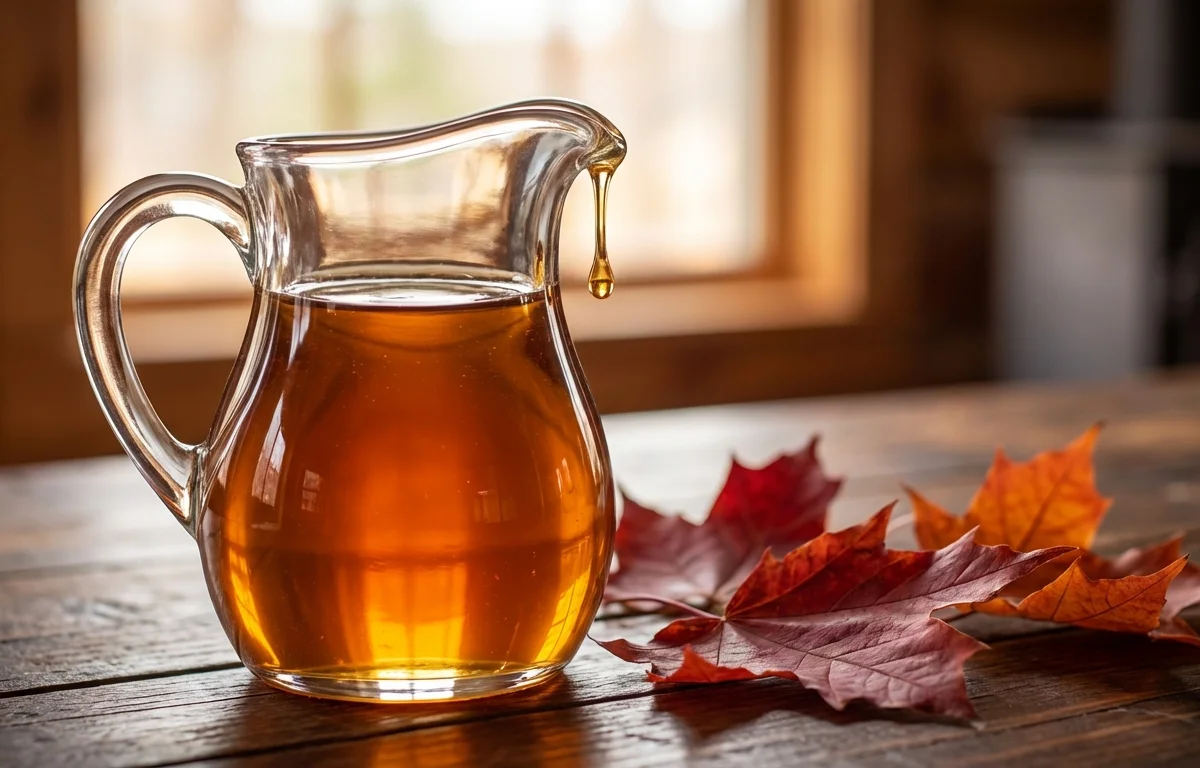
Maple Syrup
A comprehensive guide to the classic New England tradition of transforming raw maple sap into rich, sweet, pure maple syrup. This small-batch recipe walks you through the rewarding process of boiling, filtering, and bottling your own liquid gold, capturing the authentic taste of spring.
For 16 servings
5 steps. 300 minutes total.
- 1
Initial Sap Filtering (Approx
- a.15 minutes)
- b.Pour the collected raw sap through a fine-mesh sieve or several layers of cheesecloth into a large, food-grade container. This initial filter removes any bark, insects, or other large debris.
- c.For the clearest final product, repeat the filtering process 2-3 times.
- 2
The Outdoor Boil (Approx
- a.4-6 hours)
- b.Set up a large, wide, shallow pot or evaporator pan on a stable outdoor heat source, like a propane burner or a well-ventilated fire pit. NEVER boil large quantities of sap indoors.
- c.Fill the pan about three-quarters full with the filtered sap and bring it to a strong, rolling boil.
- d.As the water evaporates and the sap level drops, gradually add more sap. Pre-warming the next batch of sap before adding it helps maintain a continuous boil and speeds up the process.
- 3
Step 3
- a.Monitor the Reduction (Ongoing)
- b.Continue boiling for several hours. The sap will gradually darken to a light amber color and thicken slightly. The general ratio is 40 parts sap to 1 part syrup.
- c.As it gets closer, check for 'aproning': dip a spoon in the liquid and pull it out. If it drips off in a sheet or wide apron rather than a thin stream, it's nearly ready.
- d.Skim off any foam that forms on the surface throughout the boil.
- 4
Finishing the Syrup Indoors (Approx
- a.30 minutes)
- b.Once the sap has reduced by about 90% and is noticeably thicker, transfer it to a smaller, heavy-bottomed pot and move indoors to a stovetop for precise temperature control.
- c.First, measure the boiling point of water with a candy thermometer; this changes daily with barometric pressure. The target temperature for syrup is exactly 7.1°F (4°C) above the boiling point of water.
- d.Insert the candy thermometer into the concentrating sap. Boil gently, watching constantly. The temperature will rise slowly at first, then very quickly at the end.
- e.Once the syrup reaches the target temperature, remove it from the heat immediately to prevent it from turning into maple sugar.
- 5
Final Filtering and Bottling (Approx
- a.15 minutes)
- b.While the syrup is still piping hot (above 185°F / 85°C), carefully pour it through a cone-shaped syrup filter or multiple layers of new, clean felt or cheesecloth. This is crucial for removing 'sugar sand' (niter), a fine mineral sediment.
- c.Pour the hot, filtered syrup into sterilized glass jars or bottles, leaving about a half-inch of headspace.
- d.Seal the containers immediately. The heat from the syrup will create a vacuum seal, making it shelf-stable. Store in a cool, dark place. Refrigerate after opening.
What to keep in mind.
6 tips from the recipe — small details that make a real difference to the final dish.
- 1Always boil sap outdoors. The evaporation process releases a huge amount of sticky steam that you don't want inside your house.
- 2Use the widest, shallowest pan you have. More surface area means faster evaporation and a shorter boiling time.
- 3Know the exact boiling point of water on the day you cook. It changes with barometric pressure. Your syrup's finishing point is relative to this temperature.
- 4Filtering the syrup while it is piping hot is crucial for removing the fine 'sugar sand' sediment.
- 5Keep raw sap cold (below 38°F / 3°C) to prevent spoilage. Treat it like milk; it can go bad quickly.
- 6Don't scrape the bottom of the finishing pan, as this is where most of the 'sugar sand' settles.
Adapt it for your goals.
Infusion
Add a cinnamon stick, a split vanilla bean, or a strip of orange peel to the syrup during the final 10 minutes of boiling indoors. Remove the infusion element before bottling for a subtly flavored syrup.
Maple CreamMaple Cream
To make maple cream, continue heating the finished syrup to about 235°F (112°C), cool it rapidly in an ice bath to 100°F (38°C), and then stir continuously until it thickens and lightens in color to a spreadable consistency.
Why this is on our healthy list.
Rich in Antioxidants
Pure maple syrup is a source of numerous antioxidants, including phenolic compounds, which help combat oxidative stress and inflammation in the body.
Contains Essential Minerals
It provides important minerals like manganese, which is crucial for bone health and metabolism, as well as zinc, which supports immune function.
A Better Alternative to Refined Sugar
While still a sugar, maple syrup has a lower glycemic index than white sugar and contains beneficial nutrients, making it a slightly healthier choice for a natural sweetener.
Frequently asked questions
A 1/4 cup (60ml) serving of pure maple syrup contains approximately 210 calories, almost entirely from natural sugars.