
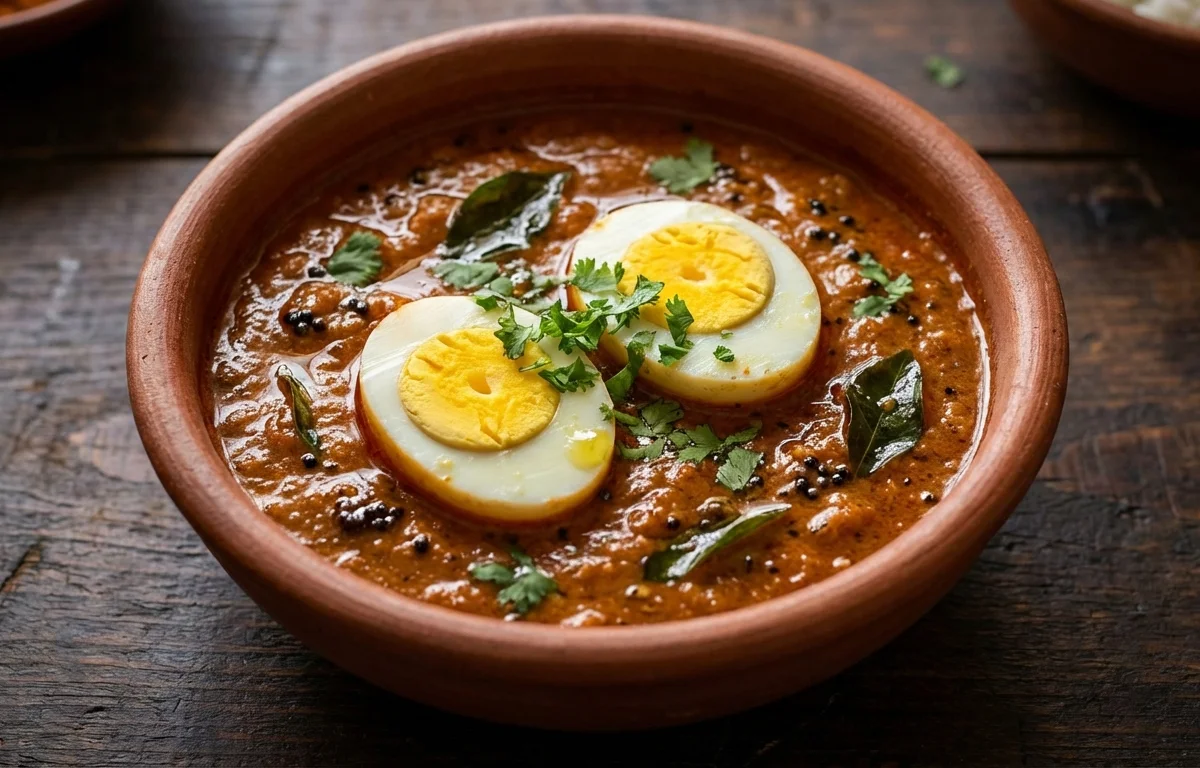
Mangalorean Egg Curry
A rich and aromatic egg curry from the coastal region of Mangalore. This dish features a unique roasted spice blend, creamy coconut, and a tangy tamarind finish, perfect with rice or neer dosa.
For 4 servings
Prepare the eggs by making a few shallow slits on the hard-boiled eggs; this helps them absorb the curry flavors. Set aside.
In a dry pan over low-medium heat, roast the whole spices: coriander seeds, cumin seeds, fennel seeds, black peppercorns, fenugreek seeds, and dried red chilies. Stir for 2-3 minutes until they become aromatic.
Add the roughly chopped small onion, garlic, and ginger to the pan. Sauté for 3-4 minutes until the onion softens slightly.
Add the grated coconut and continue to roast on low heat, stirring continuously for 5-7 minutes until the coconut turns a deep golden brown. Be careful not to burn it. Remove from heat and allow the mixture to cool completely.
Once cooled, transfer the roasted mixture to a grinder. Add the turmeric powder and about 1/4 cup of water. Grind to a very smooth, thick paste. Set aside.
Heat coconut oil in a wide pan or kadai over medium heat. Add the curry leaves and let them splutter. Add the finely chopped medium onion and sauté for 7-8 minutes until it turns golden brown.
Add the ground masala paste to the pan. Cook on low-medium heat for 8-10 minutes, stirring frequently, until the paste darkens, the raw aroma disappears, and oil begins to separate from the edges.
Stir in the tamarind paste, salt, and 2 cups of water. Mix well to combine. Bring the curry to a boil, then reduce the heat to low and let it simmer, partially covered, for 10-12 minutes until the gravy thickens.
Gently slide the slit hard-boiled eggs into the simmering curry. Let them cook in the gravy for 2-3 minutes to absorb the flavors. Avoid stirring vigorously to prevent the eggs from breaking.
Turn off the heat and garnish with freshly chopped coriander leaves. Let the curry rest for 10 minutes before serving hot with neer dosa, steamed rice, or appams.
What to keep in mind.
6 tips from the recipe — small details that make a real difference to the final dish.
- 1Roasting the spices and coconut on a low flame is crucial for developing a deep, nutty flavor without burning them.
- 2For the smoothest paste, use a high-powered blender or a traditional stone grinder. Add water little by little as needed.
- 3Using Byadgi or Kashmiri red chilies will impart a vibrant red color to the curry without making it excessively spicy.
- 4For an authentic taste, do not skip the coconut oil, as it is characteristic of Mangalorean cuisine.
- 5The curry's flavor deepens over time. It often tastes even better the next day.
- 6Adjust the amount of tamarind paste to control the tanginess of the curry.
Adapt it for your goals.
Protein Swap
The same gravy base can be used to make a delicious curry with chicken, prawns, or fish. Adjust cooking times accordingly.
Vegetarian/VeganVegetarian/Vegan
For a vegetarian version, replace eggs with boiled potatoes, chickpeas, or firm tofu. The base is naturally vegan.
Creamier GravyCreamier Gravy
For a richer, creamier texture, you can add a splash of thick coconut milk at the end of the cooking process. Do not boil after adding it.
Why this is on our healthy list.
Excellent Source of Protein
Eggs are a complete protein source, providing all the essential amino acids necessary for muscle repair, immune function, and overall body maintenance.
Rich in Anti-inflammatory Spices
The curry is loaded with spices like turmeric (containing curcumin), ginger, and garlic, which are known for their powerful anti-inflammatory and antioxidant properties, helping to combat oxidative stress.
Provides Healthy Fats
Coconut and coconut oil are key ingredients that provide medium-chain triglycerides (MCTs), a type of fat that is easily digested and can be a quick source of energy.
Frequently asked questions
A single serving of Mangalorean Egg Curry contains approximately 350-400 calories. This can vary based on the size of the eggs and the amount of coconut and oil used.