
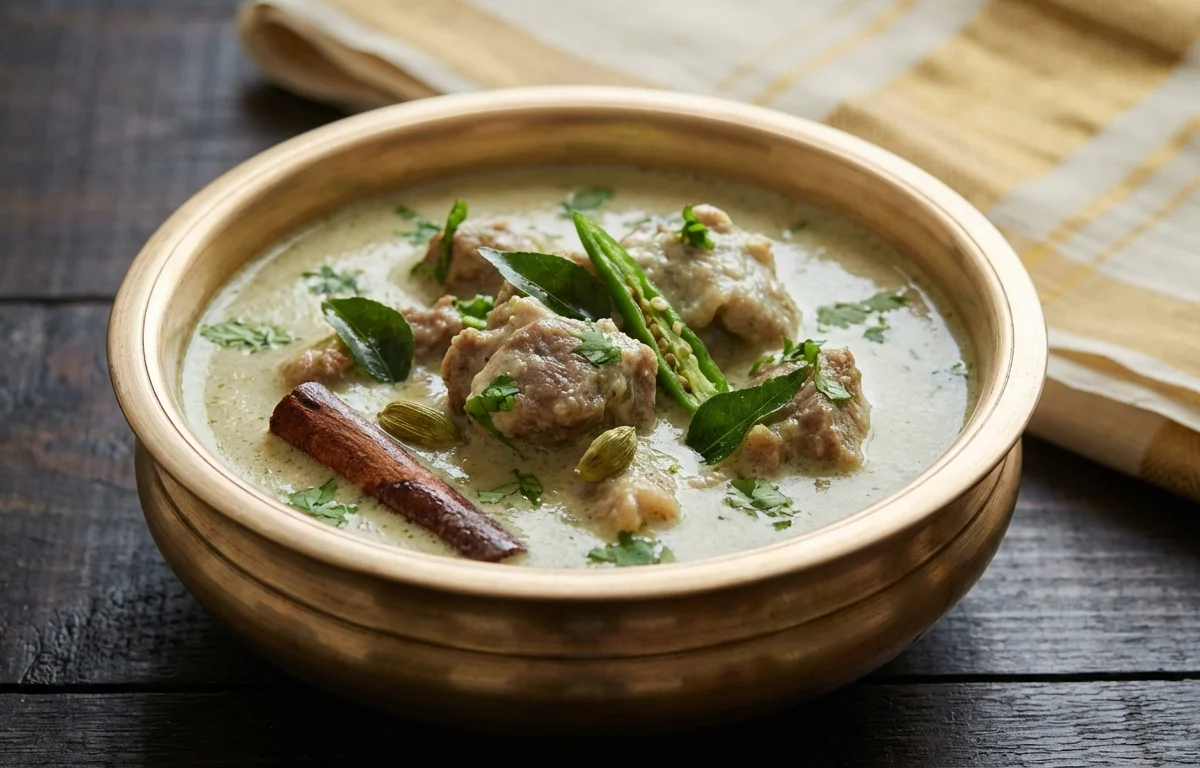
Malabari Mutton Kurma
Tender mutton pieces simmered in a rich, creamy white gravy made from coconut, cashews, and aromatic spices. This classic Kerala dish is mildly spiced and pairs perfectly with appam, parotta, or ghee rice.
For 4 servings
Pressure Cook the Mutton
- In a pressure cooker, combine the mutton pieces, 1/4 tsp of turmeric powder, 3/4 tsp of salt, and 1.5 cups of water.
- Mix well, secure the lid, and cook on medium-high heat for 5-6 whistles, or for about 20-25 minutes, until the mutton is tender and falls off the bone easily.
- Turn off the heat and allow the pressure to release naturally. Set aside the cooked mutton and its stock; do not discard the stock.
Prepare the Coconut-Cashew Paste
- While the mutton cooks, soak the cashew nuts and poppy seeds in 1/4 cup of warm water for at least 15 minutes to soften them.
- In a blender, combine the soaked cashews and poppy seeds (with their soaking water), fresh grated coconut, and fennel seeds.
- Grind to a very smooth, thick paste. Add a tablespoon or two of extra water if needed to facilitate grinding, but keep the paste thick.
Build the Gravy Base
- Heat coconut oil in a heavy-bottomed pan or kadai over medium heat. Add the whole spices: cinnamon stick, cloves, and green cardamom. Sauté for 30-40 seconds until fragrant.
- Add the thinly sliced onions and sauté for 8-10 minutes, stirring occasionally, until they are soft and translucent with light golden edges.
- Add the ginger-garlic paste and slit green chilies. Sauté for another 1-2 minutes until the raw aroma disappears.
- Add the chopped tomato and cook for 4-5 minutes, until it becomes soft and mushy.
Combine and Simmer the Kurma
- Reduce the heat to low. Add the spice powders: the remaining 1/4 tsp turmeric powder, coriander powder, and garam masala. Stir for 1 minute until aromatic.
- Pour in the cooked mutton along with all of its stock. Mix everything together.
- Stir in the ground coconut-cashew paste and the remaining 3/4 tsp of salt. Combine thoroughly. If the gravy is too thick, add up to 1/2 cup of hot water to reach your desired consistency.
- Bring the curry to a gentle simmer. Immediately reduce the heat to the lowest setting, cover the pan, and let it simmer for 8-10 minutes. Do not boil vigorously, as this can cause the coconut paste to split.
Garnish and Serve
- Turn off the heat. Stir in the fresh curry leaves and chopped coriander leaves.
- Let the kurma rest, covered, for at least 10 minutes to allow the flavors to deepen.
- Serve hot with appam, Kerala parotta, idiyappam, or ghee rice.
What to keep in mind.
6 tips from the recipe — small details that make a real difference to the final dish.
- 1For the most authentic flavor, use fresh grated coconut. Desiccated or frozen coconut will alter the texture and taste.
- 2Using bone-in mutton is highly recommended as the bones release collagen and marrow, creating a richer, more flavorful stock.
- 3Soaking the cashews and poppy seeds is a crucial step for achieving a silky-smooth, creamy gravy without any graininess.
- 4After adding the coconut paste, maintain a very gentle simmer. Boiling the kurma on high heat can cause the gravy to curdle or separate.
- 5The flavor of the kurma deepens over time. It often tastes even better the next day.
- 6This kurma is traditionally mild and aromatic. Adjust the number of green chilies to control the spice level to your preference.
Adapt it for your goals.
Chicken Kurma
Replace mutton with 500g of bone-in chicken. Reduce the pressure cooking time to 2-3 whistles (about 10-12 minutes).
Vegetable KurmaVegetable Kurma
Make it vegetarian by using 3-4 cups of mixed vegetables like potatoes, carrots, green beans, and peas. Skip the pressure cooking step and add the vegetables after sautéing the tomatoes, cooking them until tender before adding the coconut paste.
Richer GravyRicher Gravy
For an even creamier texture, stir in 1/4 cup of thick coconut milk (first press) at the very end, after turning off the heat.
Why this is on our healthy list.
Excellent Source of Protein
Mutton is a high-quality protein source, essential for building and repairing tissues, muscle growth, and overall body function.
Rich in Iron
This dish provides heme iron from mutton, a form that is easily absorbed by the body, helping to prevent iron-deficiency anemia and boost energy levels.
Contains Healthy Fats
Coconut and cashew nuts contribute healthy fats, including Medium-Chain Triglycerides (MCTs) and monounsaturated fats, which can support brain health and provide sustained energy.
Anti-Inflammatory Spices
The blend of spices like turmeric, cinnamon, cloves, and fennel seeds contains powerful antioxidants and compounds with anti-inflammatory properties, which can help combat oxidative stress.
Frequently asked questions
One serving of Malabari Mutton Kurma contains approximately 480-550 calories, depending on the fat content of the mutton and the amount of oil used.