
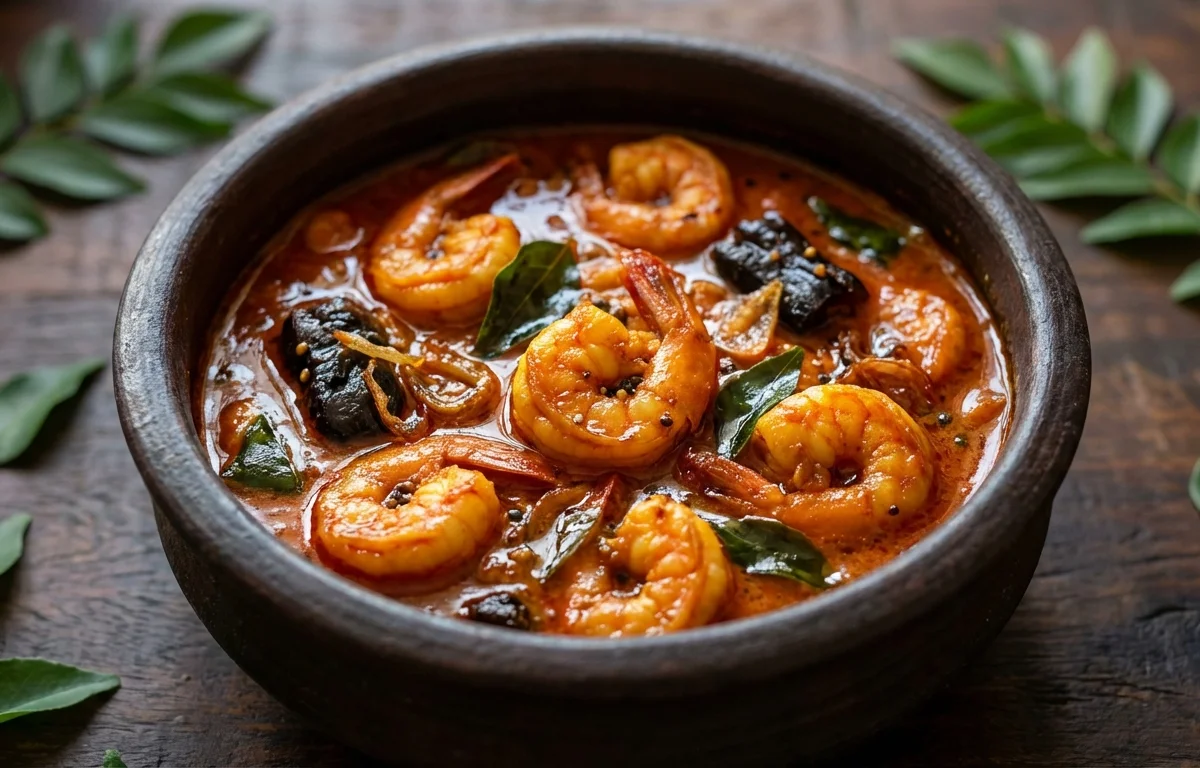
Malabar Prawn Curry
A creamy, tangy prawn curry from the coast of Kerala, made with a fresh-ground coconut masala and tart kudampuli. This authentic dish, known as Chemmeen Curry, pairs beautifully with steamed rice or appam.
For 4 servings
5 steps. 25 minutes total.
- 1
Step 1
- a.Prepare the Masala Paste
- b.In a blender, combine the grated coconut, shallots, ginger, garlic, green chillies, turmeric powder, coriander powder, Kashmiri red chilli powder, and fennel seeds.
- c.Add 1/4 cup of water and grind to a very smooth, thick paste. Set aside.
- 2
Step 2
- a.Prepare the Curry Base
- b.Heat coconut oil in a traditional clay pot (manchatti) or a wide pan over medium heat.
- c.Add the mustard seeds. Once they begin to splutter (about 30 seconds), add the fenugreek seeds, dried red chillies, and curry leaves. Sauté for another 30 seconds until fragrant.
- d.Add the sliced onion and sauté for 5-6 minutes until soft and translucent.
- e.Add the chopped tomato and cook for 3-4 minutes until it becomes soft and mushy.
- 3
Step 3
- a.Cook the Masala and Simmer
- b.Reduce the heat to low and add the ground coconut masala paste to the pan.
- c.Sauté for 5-7 minutes, stirring frequently, until the raw smell disappears and you see oil separating from the masala.
- d.Add the soaked kudampuli along with its water. Pour in the thin coconut milk and add salt. Stir well.
- e.Bring the curry to a gentle simmer and let it cook for 4-5 minutes for the flavors to meld.
- 4
Step 4
- a.Add Prawns and Finish with Coconut Milk
- b.Gently add the cleaned and deveined prawns to the simmering curry.
- c.Cook for 5-6 minutes, or just until the prawns turn pink and curl. Avoid overcooking to keep them tender.
- d.Reduce the heat to the absolute lowest setting. Stir in the thick coconut milk.
- e.Warm the curry through for 1-2 minutes. Do not let it boil, as this can cause the coconut milk to split.
- 5
Step 5
- a.Rest and Serve
- b.Turn off the heat, garnish with a few fresh curry leaves, and cover the pot.
- c.Let the curry rest for at least 15-20 minutes before serving. This step is crucial for the flavors to deepen.
- d.Serve hot with steamed rice, appam (rice hoppers), or idiyappam (string hoppers).
What to keep in mind.
5 tips from the recipe — small details that make a real difference to the final dish.
- 1For the most authentic flavor, use coconut oil and a traditional clay pot (manchatti).
- 2Do not overcook the prawns. They cook very quickly, and overcooking will make them rubbery.
- 3If you cannot find kudampuli (Malabar tamarind), you can substitute it with 1 tablespoon of thick tamarind paste.
- 4Never boil the curry after adding the thick coconut milk, as it can split and ruin the texture.
- 5This curry tastes even better the next day as the flavors have more time to infuse.
Adapt it for your goals.
Vegetarian
Replace prawns with firm tofu, paneer, or mixed vegetables like drumsticks, raw mango, and potatoes. Adjust cooking time accordingly.
Different SeafoodDifferent Seafood
This curry base is excellent with firm-fleshed fish like kingfish (surmai), pomfret, or snapper. Add fish pieces in the last 6-8 minutes of cooking.
Creamier CurryCreamier Curry
For a richer, more indulgent curry, use 1.5 cups of thick coconut milk instead of the combination of thin and thick milk.
Spicier VersionSpicier Version
Increase the number of green chillies to 4-5 or add 1/2 teaspoon of black pepper powder along with the other spices for extra heat.
Why this is on our healthy list.
Rich in Lean Protein
Prawns are a fantastic source of high-quality, low-fat protein, which is essential for muscle repair, growth, and overall body function.
Anti-Inflammatory Properties
The curry is rich in spices like turmeric (containing curcumin), ginger, and garlic, which are known for their potent anti-inflammatory and antioxidant effects.
Source of Healthy Fats
Coconut milk contains Medium-Chain Triglycerides (MCTs), a type of fat that is more easily digested and converted into energy by the body compared to other saturated fats.
Frequently asked questions
A single serving of Malabar Prawn Curry contains approximately 400-450 calories, primarily depending on the fat content of the coconut milk and the amount of oil used.