
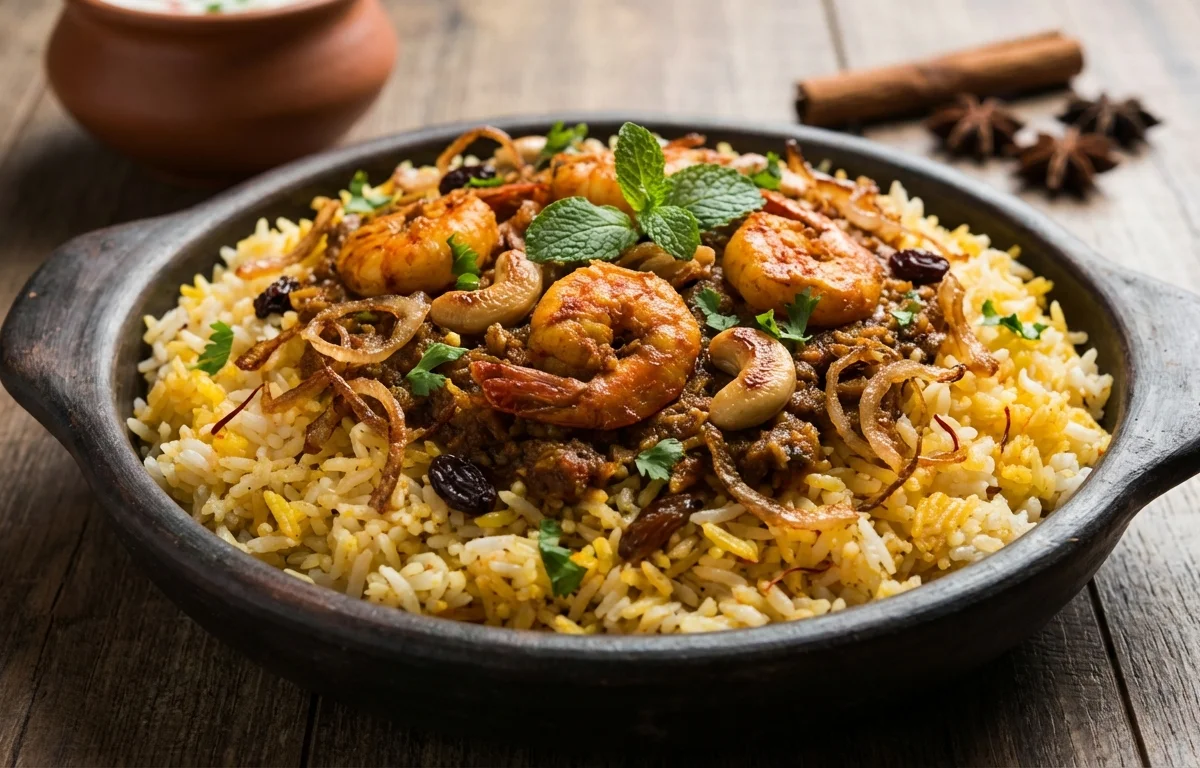
Malabar Prawn Biryani
A fragrant and spicy layered rice dish from Kerala, featuring succulent prawns cooked in a rich masala and layered with short-grain Jeerakasala rice. Garnished with fried onions, cashews, and raisins for a touch of sweetness.
For 4 servings
Marinate the Prawns
- In a mixing bowl, combine the cleaned prawns with 0.5 tsp turmeric powder, 1 tsp red chili powder, 1 tbsp lemon juice, 1 tbsp ginger-garlic paste, and 0.5 tsp salt.
- Mix thoroughly to ensure each prawn is well-coated.
- Cover and let it marinate in the refrigerator for at least 30 minutes.
Prepare the Rice
- Gently wash the Jeerakasala rice in a few changes of water until the water runs clear. Soak the rice in water for 20-30 minutes, then drain completely.
- In a large pot, bring 8 cups of water to a rolling boil. Add the whole spices (cinnamon, cloves, cardamom, bay leaf), 1 tbsp of ghee, and 2 tsp of salt.
- Add the drained rice to the boiling water. Cook for 5-7 minutes, or until the rice is 90% cooked. The grain should be firm to the bite but not raw.
- Immediately drain the rice in a colander and spread it on a plate to cool slightly and prevent further cooking. Set aside.
Prepare the Garnish (Birista)
- Heat 1 cup of vegetable oil in a deep pan or kadai over medium-high heat.
- Add the thinly sliced large onion and fry, stirring occasionally, for 10-12 minutes until it turns a deep golden brown and crispy. Be careful not to burn it.
- Remove the fried onions (birista) with a slotted spoon and drain on a paper towel. They will become crispier as they cool.
- In the same hot oil, fry the cashews until golden, then fry the raisins until they puff up. Remove and set aside with the birista. Reserve the flavorful oil.
Cook the Prawn Masala
- In a heavy-bottomed pot (biryani handi), heat 3 tbsp of coconut oil (or the reserved oil from frying onions for extra flavor).
- Add the 3 sliced onions and slit green chilies. Sauté on medium heat for 10-15 minutes, until the onions are soft and golden brown.
- Add 1.5 tbsp of ginger-garlic paste and cook for 2 minutes until the raw aroma disappears.
- Add the chopped tomatoes and cook for 5-7 minutes until they turn soft and mushy, and oil starts to separate from the masala.
- Lower the heat and add the spice powders: 0.5 tsp turmeric, 1 tsp Kashmiri red chili, 1.5 tsp coriander, and 1 tsp garam masala. Sauté for 1-2 minutes until fragrant.
- Reduce the heat to the lowest setting, add the whisked curd and 1.5 tsp salt. Stir continuously for a minute to prevent curdling.
- Add the marinated prawns and cook for 4-5 minutes, just until they turn pink and curl up. Do not overcook them at this stage.
- Stir in half of the chopped mint and coriander leaves. Turn off the heat. The masala should be thick, not watery.
Layer and 'Dum' Cook the Biryani
- In the same pot with the prawn masala, spread half of the cooked rice evenly over the masala layer.
- Sprinkle half of the birista, fried cashews, raisins, and remaining chopped mint and coriander leaves.
- Spread the remaining rice as the top layer.
- Garnish with the rest of the birista, cashews, and raisins.
- Drizzle the remaining 3 tbsp of melted ghee over the top layer of rice.
- Cover the pot with a tight-fitting lid. To create a perfect seal, you can place a clean kitchen towel under the lid or seal the edges with atta dough.
- Place the pot on a tawa (flat griddle) over the lowest possible heat. Cook on 'dum' for 15-20 minutes. This allows the flavors to meld beautifully.
- Turn off the heat and let the biryani rest, unopened, for at least 15 minutes.
Serve
- Open the lid and enjoy the fragrant aroma.
- Gently fluff the biryani from the sides of the pot using a fork or a flat spatula, ensuring you get a mix of rice and masala in each serving.
- Serve hot with a side of cooling raita, papad, and a simple lime pickle.
What to keep in mind.
6 tips from the recipe — small details that make a real difference to the final dish.
- 1For the most authentic flavor, use Jeerakasala rice. If unavailable, aged basmati rice is a good substitute, but adjust cooking time.
- 2Do not overcook the prawns in the masala; they will cook further during the 'dum' process and can become rubbery.
- 3Ensure your rice is only 90% cooked before layering. It will absorb moisture from the masala and steam to perfection.
- 4Frying the onions to a deep golden brown without burning them is key to a good birista, which adds a sweet, crunchy element.
- 5The 'dum' process is crucial. A heavy-bottomed pot and a tight seal ensure that the flavors meld together beautifully.
- 6For extra flavor, use the oil left over from frying the onions (birista) to cook the prawn masala.
Adapt it for your goals.
Vegetarian
Replace prawns with an equal amount of mixed vegetables like carrots, beans, peas, and potatoes, or with paneer cubes. Par-boil the vegetables before adding to the masala.
ChickenChicken
Substitute prawns with 500g of bone-in chicken pieces. Marinate the chicken for at least an hour and increase the cooking time for the masala to ensure the chicken is fully cooked before layering.
Rice VarietyRice Variety
While Jeerakasala rice is traditional, you can use aged long-grain Basmati rice. Adjust the water and cooking time accordingly as Basmati cooks differently.
Why this is on our healthy list.
Rich in Lean Protein
Prawns are an excellent source of high-quality, lean protein, which is essential for muscle repair, growth, and overall body function.
Boosts Metabolism
The spices used, such as chili powder and turmeric, contain compounds like capsaicin and curcumin that can help boost metabolism and offer anti-inflammatory benefits.
Source of Omega-3 Fatty Acids
Prawns provide Omega-3 fatty acids, which are beneficial for heart health and brain function, helping to reduce inflammation and support cognitive health.
Provides Essential Minerals
This dish contains key minerals like selenium and zinc from prawns, and iron from cashews and raisins, which are vital for immune function and energy production.
Frequently asked questions
Jeerakasala (or Kaima) is a short-grain, aromatic rice from Kerala, prized for its ability to absorb flavors without becoming mushy. It's key to the authentic taste of Malabar biryani. If you can't find it, aged long-grain Basmati rice is the best substitute.