
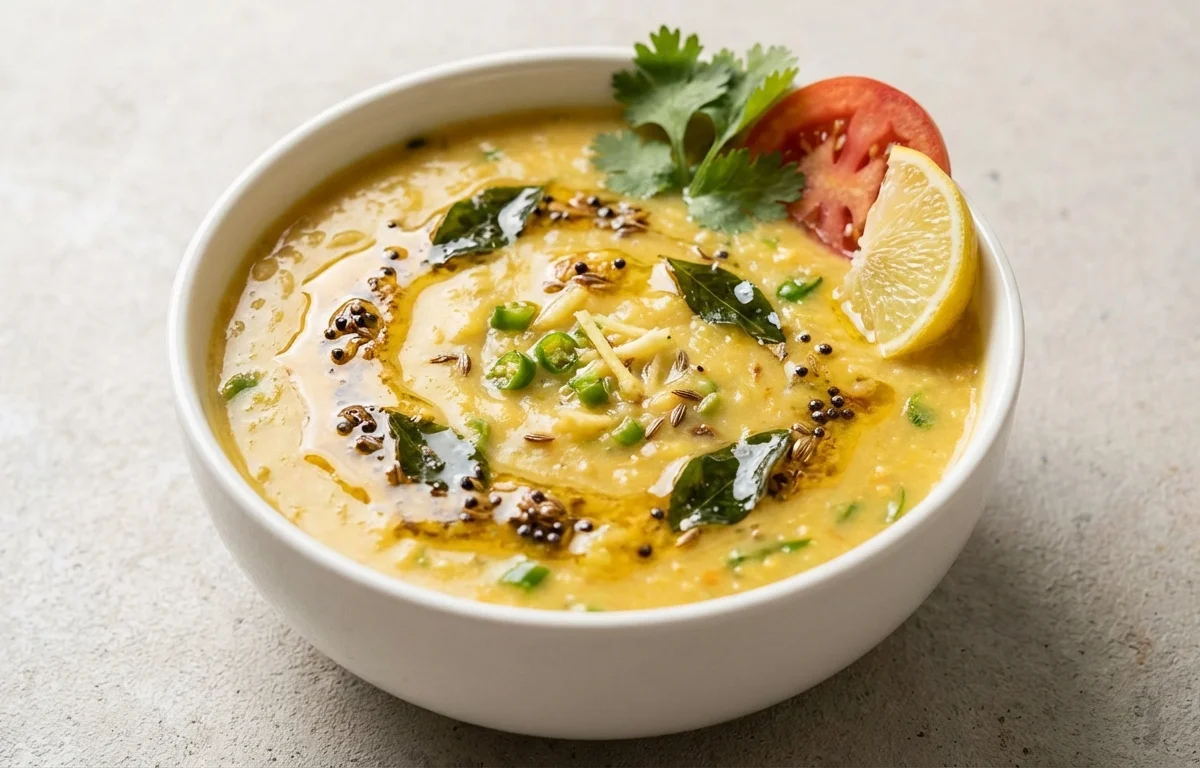
Mag ni Dal
A light and comforting Gujarati dal made from split yellow moong lentils. It's soupy, mildly spiced, and finished with a zesty squeeze of lemon, making it a perfect everyday meal with rice or rotli.
For 4 servings
8 steps. 20 minutes total.
- 1
Rinse the yellow moong dal under running water until the water runs clear
- a.Soaking for 30 minutes is recommended to reduce cooking time, but not essential for this type of dal.
- 2
Drain the dal and transfer it to a 3-liter pressure cooker
- a.Add 3.5 cups of fresh water, the chopped tomato, grated ginger, slit green chilies, turmeric powder, and salt.
- 3
Step 3
- a.Secure the lid and pressure cook on medium heat for 3-4 whistles, which takes about 10-12 minutes. Allow the pressure to release naturally. For an Instant Pot, cook on high pressure for 6 minutes, followed by a natural pressure release.
- 4
Once the pressure has fully released, open the cooker
- a.Use a wire whisk to gently blend the dal until it is creamy but still retains some texture. If the dal seems too thick, add 1/2 to 1 cup of hot water to achieve a soupy consistency.
- 5
Prepare the tempering (vaghar)
- a.Heat ghee in a small pan over medium heat. Once hot, add the mustard seeds and let them splutter completely (about 30 seconds).
- 6
Add the cumin seeds and let them sizzle for 20 seconds
- a.Then, add the hing and curry leaves, and sauté for another 10-15 seconds until the leaves are crisp and fragrant. If using, add the optional red chili powder at the very end and immediately turn off the heat.
- 7
Carefully pour the hot tempering over the cooked dal
- a.It will sizzle. Stir well to combine.
- 8
Step 8
- a.Bring the dal to a gentle simmer and cook for 2-3 minutes to allow the flavors to meld together. Turn off the heat, stir in the fresh lemon juice, and garnish with chopped coriander leaves. Serve hot with steamed rice or rotli.
What to keep in mind.
4 tips from the recipe — small details that make a real difference to the final dish.
- 1For the best flavor, use ghee for the tempering, but a neutral oil can be used for a vegan version.
- 2Always add lemon juice after turning off the heat to preserve its fresh flavor and vitamin C content.
- 3Gujarati dal is characteristically thin and soupy. Don't hesitate to add hot water to adjust the consistency to your preference.
- 4Store leftovers in an airtight container in the refrigerator for up to 3 days. The dal will thicken upon cooling; simply add a splash of hot water when reheating.
Adapt it for your goals.
With Vegetables
Add 1/2 cup of finely chopped vegetables like carrots, bottle gourd (dudhi), or spinach to the pressure cooker along with the dal for a more nutritious meal.
Khatti Meethi (Sweet & Sour)Khatti Meethi (Sweet & Sour)
For a classic sweet and sour Gujarati flavor, add a 1-inch piece of jaggery (or 1 tsp sugar) and 2-3 kokum petals while pressure cooking the dal.
Spicier VersionSpicier Version
Add a whole dried red chili to the tempering along with the mustard seeds. You can also increase the amount of green chilies for more heat.
No Onion No GarlicNo Onion No Garlic
This recipe is naturally free of onion and garlic, making it suitable for Jain and Sattvic diets.
Why this is on our healthy list.
Rich in Plant-Based Protein
Yellow moong dal is an excellent source of vegetarian protein, which is essential for muscle repair, cell growth, and maintaining overall body function.
Easy to Digest
Compared to other lentils, moong dal is light on the stomach and easy to digest, making it a perfect food for all ages, including during recovery from illness.
High in Fiber
The high dietary fiber content aids in healthy digestion, promotes gut health, helps maintain stable blood sugar levels, and contributes to a feeling of fullness, which can help with weight management.
Packed with Nutrients
This dal is a good source of essential micronutrients like potassium, magnesium, iron, and B vitamins, which support heart health, energy production, and prevent anemia.
Frequently asked questions
Yes, Mag ni Dal is exceptionally healthy. It is rich in plant-based protein, high in dietary fiber, and low in fat. Yellow moong dal is known for being very easy to digest, making it an excellent choice for a light, nutritious meal.