
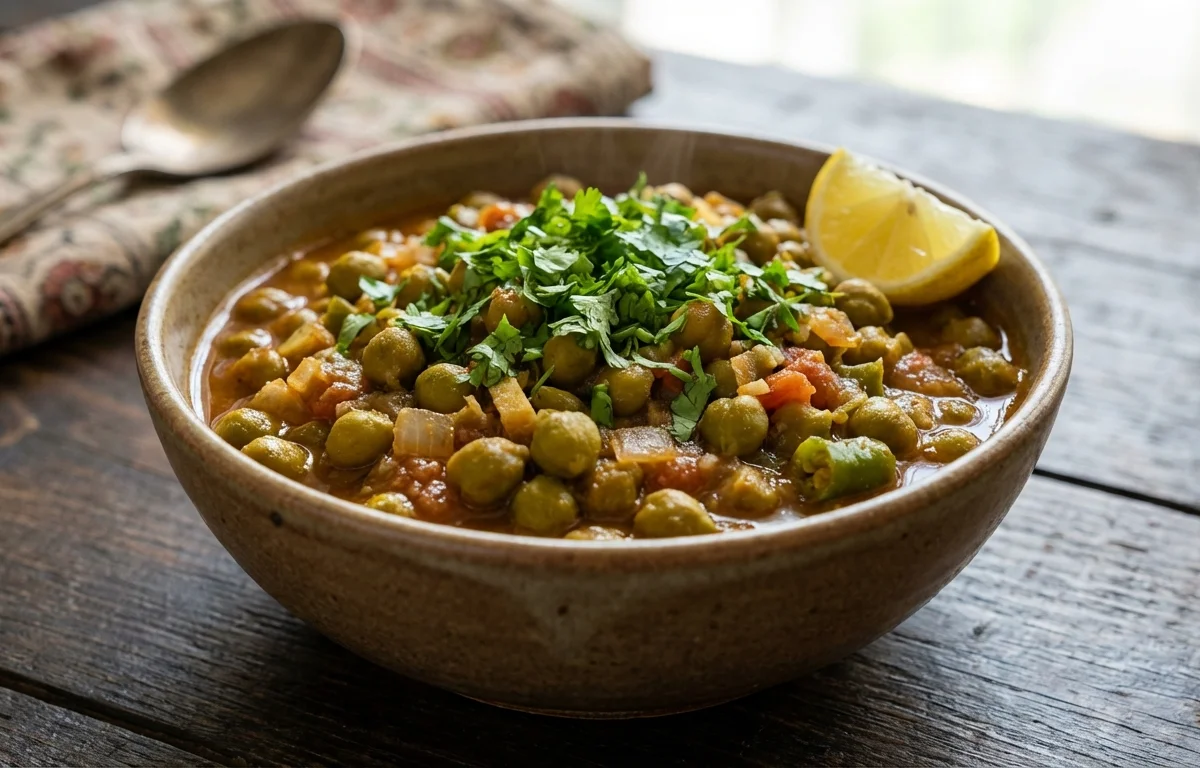
Lila Chana nu Shaak
A delightful Gujarati winter specialty made with fresh green chickpeas. This semi-dry curry has a tangy and savory flavor profile, perfect to enjoy with hot rotis or phulkas. A simple and wholesome meal ready in minutes.
For 4 servings
Prepare the Tempering (Vaghar)
- Heat oil in a heavy-bottomed pan or kadai over medium heat.
- Once the oil is hot, add mustard seeds and cumin seeds. Allow them to crackle for about 30 seconds.
- Add the asafoetida and sauté for a few seconds until fragrant.
Sauté Aromatics and Build Masala Base
- Add the finely chopped onion and sauté for 3-4 minutes until it becomes soft and translucent.
- Stir in the ginger-garlic paste and green chilies. Cook for another minute until the raw aroma disappears.
- Add the tomato puree and cook for 5-6 minutes, stirring occasionally, until the mixture thickens and oil begins to separate from the sides.
Add Spices and Green Chickpeas
- Add all the dry spice powders: turmeric, red chili, coriander, cumin, and salt. Mix well and cook for 1 minute.
- Add the shelled green chickpeas (lila chana) to the pan. Stir to coat them evenly with the masala.
- Pour in 1/2 cup of water, mix, and bring the mixture to a simmer.
Cook the Shaak
- Cover the pan with a lid and reduce the heat to low-medium.
- Let it cook for 10-12 minutes, or until the chickpeas are tender but still hold their shape. Stir once or twice in between to prevent sticking.
Finish and Garnish
- Reduce the heat to the lowest setting. Slowly pour in the whisked curd while stirring continuously to prevent it from curdling.
- Add the sugar (if using) and mix well. Allow it to simmer gently for 2-3 minutes for the flavors to meld.
- Turn off the heat. Stir in the garam masala and fresh lemon juice.
- Garnish with freshly chopped coriander leaves.
Serve
- Serve the Lila Chana nu Shaak hot with phulka, roti, or paratha.
What to keep in mind.
5 tips from the recipe — small details that make a real difference to the final dish.
- 1Use fresh, tender green chickpeas for the best flavor. If unavailable, frozen ones are a good substitute.
- 2To prevent the curd from curdling, ensure it's at room temperature, whisked well, and added on very low heat while stirring constantly.
- 3For an authentic Gujarati flavor, use jaggery (gud) instead of sugar.
- 4Do not overcook the green chickpeas, as they can become mushy and lose their delicate texture.
- 5For a richer gravy, you can add a tablespoon of besan (gram flour) after sautéing the onions and cook it for a minute before adding tomatoes.
Adapt it for your goals.
Vegan
To make this dish vegan, simply omit the curd or replace it with a plant-based yogurt like cashew or coconut yogurt.
With PotatoesWith Potatoes
Add one small, diced potato along with the green chickpeas for a more filling curry. You may need to add a little extra water and cook for a few more minutes.
Jain VersionJain Version
For a no-onion, no-garlic version, skip the onion and ginger-garlic paste. You can add a pinch more asafoetida for flavor.
SpicierSpicier
Increase the amount of green chilies and red chili powder, or add a pinch of black pepper along with the garam masala at the end.
Why this is on our healthy list.
Excellent Source of Plant-Based Protein
Green chickpeas are packed with protein, which is essential for muscle repair, growth, and overall body function, making this dish a great option for vegetarians and vegans.
High in Dietary Fiber
The high fiber content from the chickpeas aids in digestion, promotes a feeling of fullness, helps regulate blood sugar levels, and supports a healthy gut microbiome.
Rich in Vitamins and Minerals
This dish provides essential nutrients like folate, iron, magnesium, and phosphorus, which are vital for energy production, bone health, and preventing anemia.
Gut-Friendly Probiotics
The addition of curd introduces beneficial probiotics to the dish, which can improve gut health, enhance digestion, and boost the immune system.
Frequently asked questions
Lila Chana are fresh, young, green chickpeas. They are a seasonal delicacy, typically available during the winter months in India. They are softer and have a sweeter, more delicate flavor than mature, dried chickpeas.