
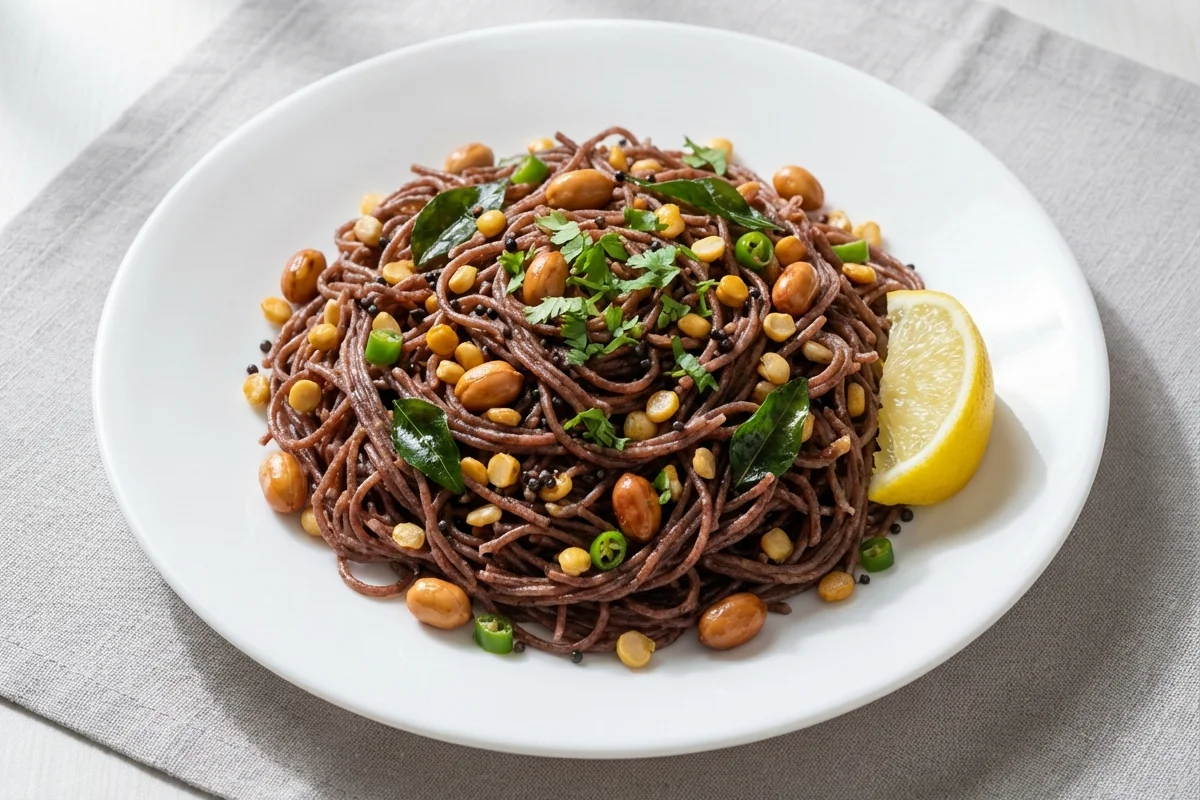
Lemon Ragi Sevai
A healthy and tangy South Indian breakfast made with finger millet vermicelli. This quick and easy dish is packed with flavor from a classic tempering of mustard seeds, lentils, and fresh lemon juice.
For 4 servings
9 steps. 15 minutes total.
- 1
Prepare the ragi sevai according to the package instructions
- a.This typically involves soaking the sevai in hot, salted water for 3-5 minutes, then draining it completely in a colander. Gently fluff with a fork to separate the strands and prevent clumping. Set aside.
- 2
Heat sesame oil in a wide pan or kadai over medium heat
- a.Once hot, add the mustard seeds and allow them to splutter.
- 3
Add the urad dal, chana dal, and raw peanuts
- a.Sauté for 1-2 minutes, stirring continuously, until the dals turn a light golden brown and the peanuts are crisp.
- 4
Add the slit green chilies, curry leaves, grated ginger, and a pinch of hing
- a.Sauté for another 30 seconds until the curry leaves are crisp and the mixture is fragrant.
- 5
Step 5
- a.Add the finely chopped onion and sauté for 3-4 minutes until it becomes soft and translucent.
- 6
Stir in the turmeric powder and salt
- a.Mix well to combine with the onions.
- 7
Add the prepared ragi sevai to the pan
- a.Gently toss everything together, ensuring the sevai is evenly coated with the tempering mixture. Cook for 2-3 minutes, allowing the flavors to meld together.
- 8
Turn off the heat
- a.Drizzle the fresh lemon juice over the sevai and garnish with chopped coriander leaves. Give it a final, gentle mix.
- 9
Step 9
- a.Serve the Lemon Ragi Sevai immediately while it's hot and fresh.
What to keep in mind.
6 tips from the recipe — small details that make a real difference to the final dish.
- 1Do not overcook or over-soak the ragi sevai, as it can become mushy. Follow the package instructions carefully.
- 2Always add lemon juice after turning off the heat to preserve its fresh flavor and vitamin C content.
- 3Fluff the cooked sevai with a fork to separate the strands and ensure a non-sticky texture.
- 4For extra crunch and flavor, you can add a tablespoon of roasted cashews along with the peanuts.
- 5For a richer flavor, use ghee instead of sesame oil for the tempering.
- 6Feel free to add finely grated vegetables like carrots or boiled green peas along with the onions for added nutrition.
Adapt it for your goals.
Vegetable Lemon Sevai
Add 1/2 cup of mixed vegetables like finely chopped carrots, bell peppers, and boiled green peas along with the onions for a more nutritious and colorful dish.
Coconut Lemon SevaiCoconut Lemon Sevai
Add 2-3 tablespoons of freshly grated coconut along with the coriander leaves at the end for a classic South Indian flavor and texture.
Spicy Lemon SevaiSpicy Lemon Sevai
For extra heat, add 1 dried red chili (broken) along with the mustard seeds during tempering.
Why this is on our healthy list.
Rich in Calcium & Iron
Ragi is one of the best non-dairy sources of calcium, crucial for bone health. It is also packed with iron, which helps prevent anemia and boosts energy levels.
Excellent for Diabetics
The high fiber content in ragi helps in managing blood sugar levels by slowing down the absorption of carbohydrates, making it a great choice for people with diabetes.
Naturally Gluten-Free
Ragi is a naturally gluten-free grain, making this dish an excellent and safe option for individuals with celiac disease or gluten sensitivity.
Aids in Digestion
The dietary fiber in ragi promotes healthy digestion, prevents constipation, and keeps you feeling full for longer, which can aid in weight management.
Frequently asked questions
Yes, it's very healthy. Ragi (finger millet) is a gluten-free whole grain rich in calcium, iron, and fiber. The dish is lightly spiced and uses minimal oil, making it a nutritious breakfast or light meal.