
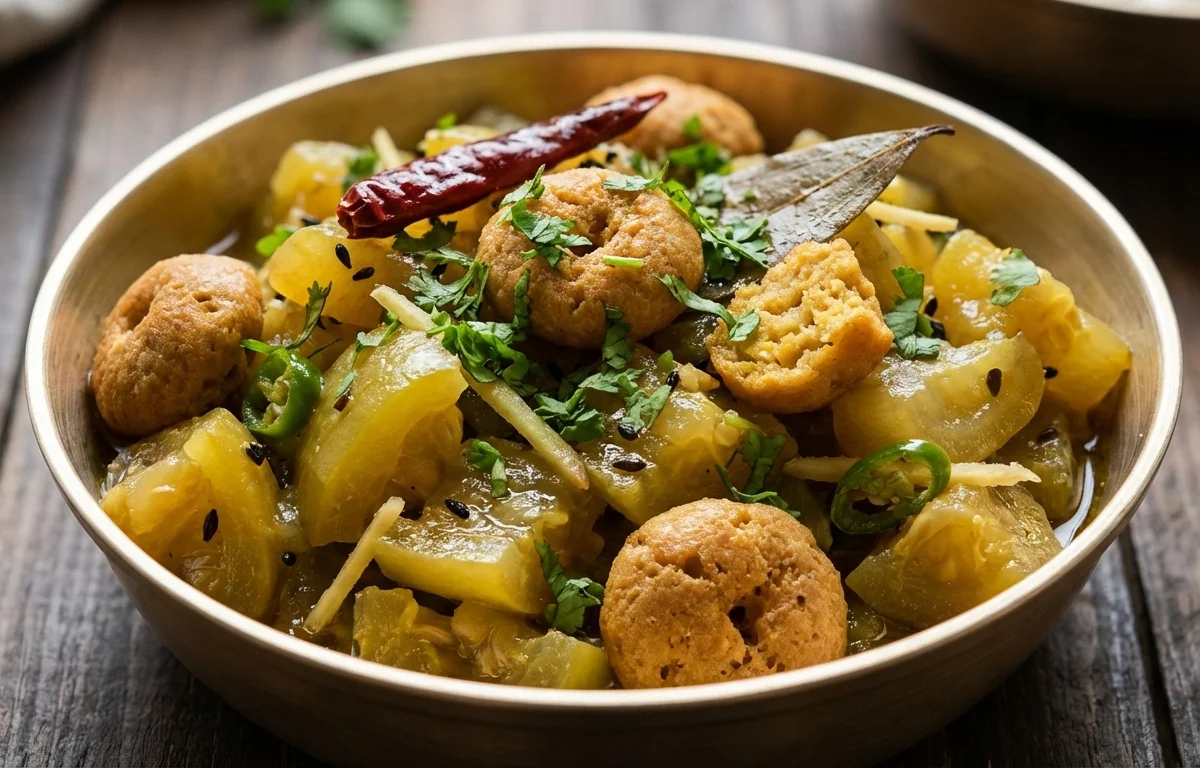
Lau Torkari
A light and comforting Bengali curry made with tender bottle gourd, simmered in its own juices with a hint of ginger and fragrant spices. This simple, everyday dish is a staple in Bengali households and pairs perfectly with steamed rice and dal.
For 4 servings
Prepare the bottle gourd by peeling the skin, removing any tough seeds, and chopping it into small, half-inch cubes. Finely grate the ginger and slit the green chilies lengthwise.
Heat mustard oil in a kadai or heavy-bottomed pan over medium heat until it's fragrant and just begins to smoke (about 1-2 minutes). Reduce the heat to low.
Add the panch phoron, broken dried red chilies, and bay leaf to the hot oil. Let them splutter for about 30 seconds until aromatic. This is the 'phoron' or tempering.
Add the grated ginger and slit green chilies. Sauté for another 30 seconds, being careful not to let the ginger burn.
Add the cubed bottle gourd, turmeric powder, and salt. Stir everything together thoroughly to coat the gourd with the oil and spices.
Cover the pan and cook on low to medium heat for 15-20 minutes. The bottle gourd will release its own water. Stir every 5 minutes to prevent it from sticking to the bottom. Cook until the gourd is completely soft and translucent.
If the mixture looks too dry during cooking, add a splash of hot water. Once the gourd is tender, add the cumin powder and sugar. Mix well and cook uncovered for 2-3 minutes, allowing any excess water to evaporate.
Turn off the heat. Drizzle the ghee over the curry and garnish with freshly chopped coriander leaves. Give it a final gentle mix.
Let the Lau Torkari rest, covered, for 5 minutes to allow the flavors to meld beautifully. Serve hot with steamed rice and dal.
What to keep in mind.
5 tips from the recipe — small details that make a real difference to the final dish.
- 1Select a young, tender bottle gourd with smooth, pale green skin. It will be sweeter and cook faster.
- 2Avoid adding water at the beginning. The gourd has high water content and will cook in its own juices.
- 3The small amount of sugar is a hallmark of Bengali cooking; it balances the flavors and enhances the natural sweetness of the gourd. Don't skip it for an authentic taste.
- 4For the most authentic flavor, use mustard oil. If unavailable, you can substitute with a neutral vegetable oil.
- 5For a slightly mushier texture, gently mash a few pieces of the cooked gourd with the back of your spoon before adding the ghee.
Adapt it for your goals.
With Lentil Dumplings
Add fried 'bori' (sun-dried lentil dumplings) towards the end of cooking for a delightful crunch. This is a very traditional addition.
With Shrimp (Lau Chingri)With Shrimp (Lau Chingri)
For a non-vegetarian version, sauté 150g of small shrimp (chingri) after the tempering, then proceed with the recipe. This is a classic Bengali delicacy.
With Milk (Doodh Lau)With Milk (Doodh Lau)
For a richer, creamier curry, add 1/4 cup of milk along with the sugar and cumin powder and simmer for a few minutes.
Sattvic (Niramish)Sattvic (Niramish)
This recipe is naturally 'niramish' (made without onion or garlic), making it suitable for religious occasions and sattvic diets.
Why this is on our healthy list.
Hydrating and Cooling
Bottle gourd is composed of over 90% water, making this dish excellent for maintaining hydration and providing a cooling effect on the body, especially in warm weather.
Aids Digestion
Rich in both soluble and insoluble dietary fiber, bottle gourd promotes healthy digestion, prevents constipation, and supports overall gut health. It is light on the stomach and easy to digest.
Supports Weight Management
This dish is exceptionally low in calories and fat, making it an ideal choice for those on a weight management journey. The high fiber content also promotes a feeling of fullness.
Heart Healthy
With negligible cholesterol and saturated fat, Lau Torkari is beneficial for cardiovascular health. Bottle gourd is also known to help in maintaining healthy blood pressure levels.
Frequently asked questions
One serving of Lau Torkari (approximately 1 cup or 190g) contains around 90-110 calories, making it a very light and low-calorie dish.