
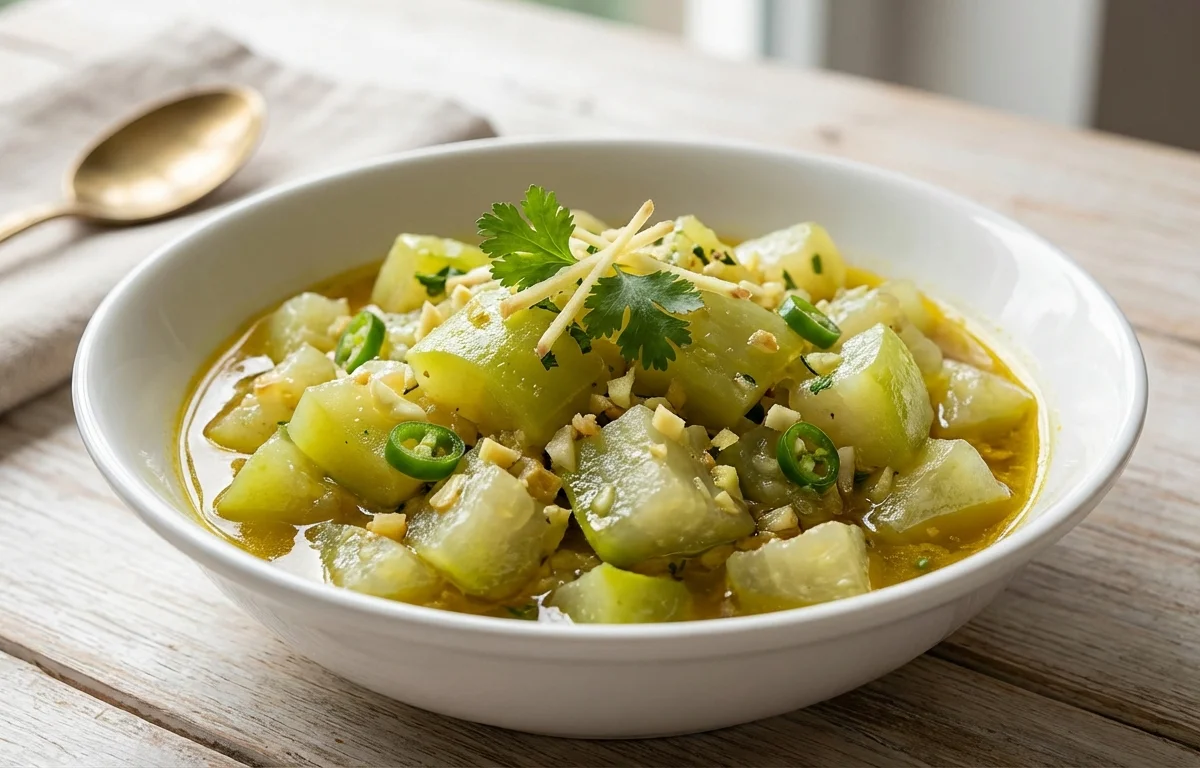
Lau Khar
A unique and traditional Assamese dish featuring tender bottle gourd cooked in an alkaline base. This simple, savory preparation has a distinct flavor and is a staple in Assamese cuisine, often enjoyed with rice to cleanse the palate.
For 4 servings
8 steps. 20 minutes total.
- 1
Prepare the ingredients: Peel the bottle gourd and cut it into 1-inch cubes
- a.Finely mince the garlic, grate the ginger, and slit the green chilies lengthwise.
- 2
Heat the mustard oil in a heavy-bottomed pan or kadai over medium-high heat
- a.Allow it to heat until it turns pale yellow and just begins to smoke, which tempers the oil and mellows its pungent flavor. This should take about 1-2 minutes.
- 3
Reduce the heat to medium
- a.Carefully add the minced garlic, grated ginger, and slit green chilies. Sauté for about 30 seconds until fragrant, ensuring the garlic does not burn.
- 4
Add the cubed bottle gourd and salt
- a.Stir well to coat the gourd with the oil and aromatics. Continue to sauté for 2-3 minutes.
- 5
Pour in 1/2 cup of water and bring the mixture to a simmer
- a.Cover the pan, reduce the heat to low, and let it cook for 12-15 minutes. The bottle gourd should be very tender and easily mashable with a spoon.
- 6
In a small bowl, dissolve the baking soda in 2 tablespoons of water
- a.Uncover the pan and pour this alkaline mixture over the cooked gourd.
- 7
Increase the heat to medium and stir continuously for 2-3 minutes
- a.You will notice the mixture frothing slightly as the gourd breaks down further into a semi-mushy, integrated consistency. This is the characteristic texture of the dish.
- 8
Step 8
- a.Turn off the heat and let the Lau Khar rest for a couple of minutes before serving. It is traditionally served hot as the first course with steamed rice.
What to keep in mind.
4 tips from the recipe — small details that make a real difference to the final dish.
- 1For the most authentic flavor, do not skip the step of heating the mustard oil until it smokes. This process removes its raw pungency.
- 2Be precise with the baking soda measurement. Adding too much can result in a soapy or bitter taste.
- 3The final texture should be soft and almost mushy, not chunky. Don't be afraid to let the bottle gourd break down during the final stage of cooking.
- 4Lau Khar is meant to be a simple dish. Avoid adding other spices like turmeric or cumin, as they will overpower its unique, subtle flavor.
Adapt it for your goals.
With Pulses
For a protein boost, add 2-3 tablespoons of soaked 'matimah' (split black gram) or masoor dal (red lentils) along with the bottle gourd. You may need to add more water and cook longer until the dal is soft.
With Other VegetablesWith Other Vegetables
This recipe works wonderfully with raw papaya (omita), which is another traditional choice for khar. You can also use a mix of vegetables like squash, pumpkin, or add spinach towards the end.
Authentic KharAuthentic Khar
If you can source authentic 'kola khar' (liquid or powdered banana ash alkali), use about 1-2 teaspoons instead of baking soda for the most traditional and nuanced flavor.
Why this is on our healthy list.
Promotes Healthy Digestion
The alkaline nature of 'khar' (or its substitute, baking soda) is traditionally believed to soothe the stomach. Combined with the high fiber and water content of bottle gourd, this dish can aid digestion and promote gut health.
Hydrating and Cooling
Bottle gourd consists of over 90% water, making this dish incredibly hydrating and cooling for the body. It's an excellent choice for hot weather as it helps replenish lost fluids and prevent dehydration.
Low in Calories
Lau Khar is a light and low-calorie dish, making it ideal for weight management. It provides essential vitamins and minerals without adding excessive calories, helping you feel full and satisfied.
Frequently asked questions
Khar is a unique alkaline liquid prepared by filtering water through the ashes of sun-dried banana peels. It has a distinct taste and is a cornerstone of Assamese cuisine. Since traditional khar is not widely available, baking soda (sodium bicarbonate) is a common and effective substitute that mimics its alkaline properties.