
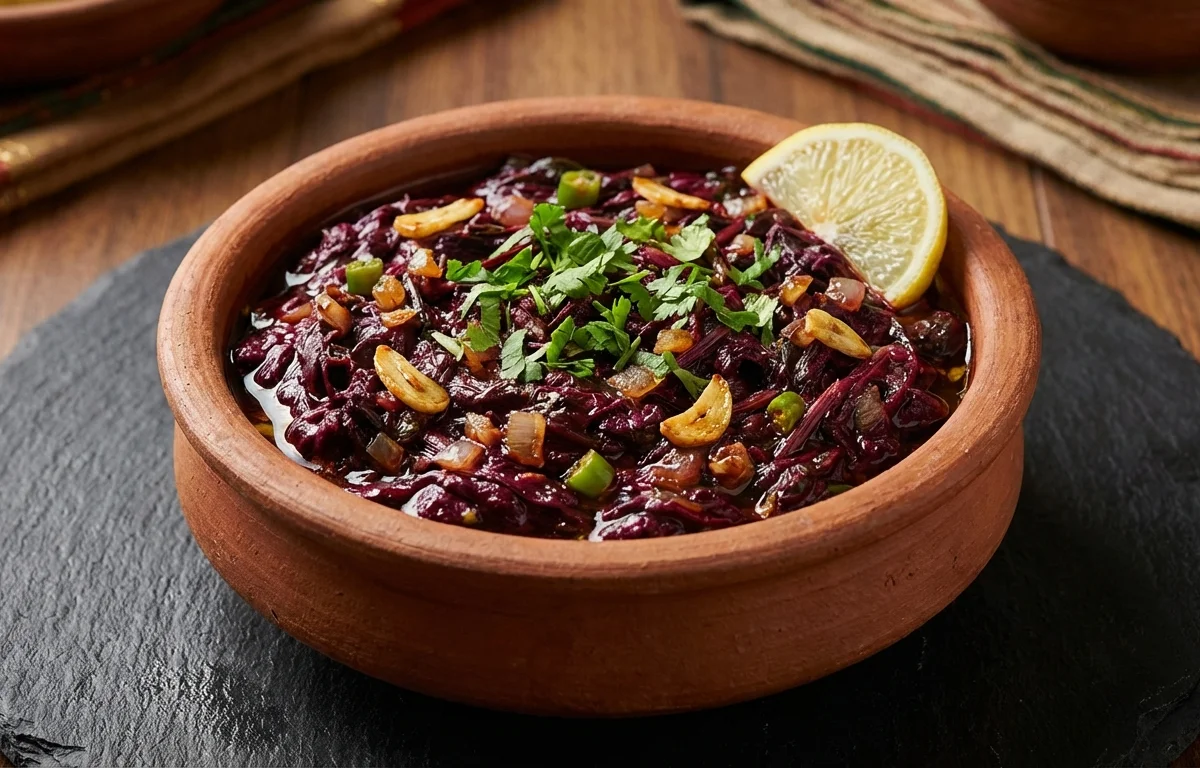
Lal Saag
A simple and nutritious North Indian stir-fry made with fresh red amaranth leaves. This quick and easy sabzi, tempered with garlic, chillies, and spices, is a vibrant and healthy dish that pairs perfectly with roti or dal rice.
For 4 servings
6 steps. 15 minutes total.
- 1
Prepare the amaranth leaves: Separate the leaves from any thick, tough stems
- a.Place the leaves in a large bowl of cold water and swish them around to dislodge any dirt. Let them sit for 5 minutes for the grit to settle. Carefully lift the leaves out, discard the water, and repeat this process 2-3 times until the water is clear. Drain well and roughly chop the leaves.
- 2
Step 2
- a.Prepare the tempering: Heat mustard oil in a kadai or a wide pan over medium heat until it's lightly smoking. Reduce the heat slightly and add the cumin seeds. Once they begin to crackle (about 30 seconds), add the broken dry red chillies and hing. Sauté for another 15-20 seconds.
- 3
Step 3
- a.Sauté aromatics: Add the finely chopped garlic and slit green chillies to the pan. Sauté for about a minute until the raw smell of garlic disappears and it becomes fragrant. Then, add the finely chopped onion and cook for 3-4 minutes until it turns soft and translucent.
- 4
Step 4
- a.Cook the saag: Add the chopped red amaranth leaves to the kadai along with the turmeric powder. The pan will seem very full, but the leaves will wilt down quickly. Toss everything gently to coat the leaves with the tempering.
- 5
Step 5
- a.Simmer until tender: Cover the kadai and cook on low to medium heat for 7-10 minutes. The leaves will release their own moisture, so no extra water is needed. Stir occasionally to prevent sticking. Cook until the leaves are tender and cooked through.
- 6
Finish and serve: Uncover the pan
- a.Add salt to taste and the fresh lemon juice. Mix well and cook for another 1-2 minutes on high heat to evaporate any excess moisture. Serve hot with fresh rotis, parathas, or as a side dish with dal and rice.
What to keep in mind.
5 tips from the recipe — small details that make a real difference to the final dish.
- 1Washing the saag properly is the most crucial step. Always submerge the leaves in a large pot of water and lift them out, rather than draining through a colander, to leave the grit behind.
- 2Add salt only after the leaves have wilted completely. This prevents over-salting, as the volume reduces drastically during cooking.
- 3For an authentic flavor, heat the mustard oil until it just begins to smoke. This mellows its pungent flavor.
- 4Do not overcook the leaves, as they can become mushy and lose their vibrant color and nutritional value.
- 5If the amaranth stems are young and tender, you can finely chop them and add them along with the onions to cook them through.
Adapt it for your goals.
With Potatoes (Aloo Lal Saag)
Add one small potato, finely diced, along with the onions. Cook until the potatoes are almost tender before adding the amaranth leaves.
With Lentils (Dal Saag)With Lentils (Dal Saag)
Add 2-3 tablespoons of soaked moong dal or masoor dal with the onions. This adds extra protein and a lovely texture to the dish.
Bengali StyleBengali Style
Use panch phoron (Bengali five-spice mix) instead of cumin seeds for tempering and add a pinch of sugar at the end to balance the flavors.
South Indian StyleSouth Indian Style
Temper with mustard seeds, urad dal, and curry leaves in coconut oil. Finish the dish with a garnish of fresh grated coconut.
Why this is on our healthy list.
Rich in Iron
Red amaranth leaves are an excellent plant-based source of iron, which is crucial for producing hemoglobin, transporting oxygen, and preventing anemia.
Boosts Immunity
Packed with Vitamin C and antioxidants, Lal Saag helps strengthen the immune system, fight free radicals, and protect the body against common infections.
High in Fiber
The high dietary fiber content aids in digestion, prevents constipation, promotes a healthy gut microbiome, and helps in managing weight by providing a feeling of fullness.
Good for Vision
Lal Saag is a great source of Vitamin A and carotenoids, which are essential for maintaining healthy eyesight and protecting against age-related macular degeneration.
Frequently asked questions
Lal Saag, also known as Red Amaranth, is a leafy green vegetable with vibrant red and green leaves. It is popular in Indian cuisine for its earthy flavor and high nutritional content. It's typically cooked as a simple stir-fry or 'sabzi'.