
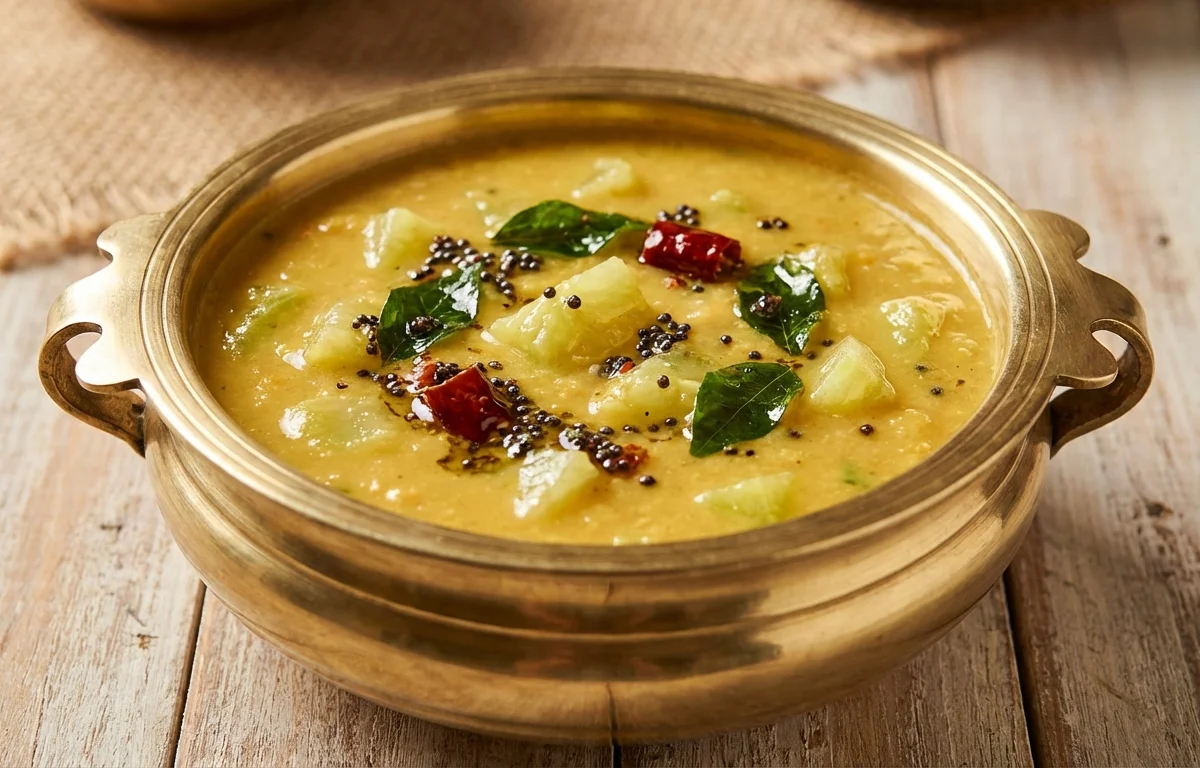
Kudla Southekai Koddel
A tangy and mildly sweet curry from Mangalore made with yellow cucumber, lentils, and a freshly ground coconut masala. This traditional Udupi-style koddel is a perfect comfort food when served with hot steamed rice.
For 4 servings
5 steps. 30 minutes total.
- 1
Step 1
- a.Pressure Cook Dal and Cucumber
- b.Rinse the toor dal thoroughly under running water. In a 3-liter pressure cooker, combine the rinsed dal, cubed Mangalore cucumber, turmeric powder, and 2 cups of water.
- c.Secure the lid and pressure cook on medium heat for 3-4 whistles, or for about 12 minutes, until the dal is completely soft and mushy.
- d.Let the pressure release naturally. Once safe, open the cooker. Gently mash the dal with the back of a ladle, being careful to keep the cucumber pieces mostly intact.
- 2
Step 2
- a.Roast Spices and Prepare Masala Paste
- b.While the dal is cooking, heat 1 teaspoon of coconut oil in a small pan over low heat. Add the coriander seeds, cumin seeds, urad dal, and fenugreek seeds. Roast for 1-2 minutes until they become aromatic and the urad dal turns light golden.
- c.Add the dried Byadgi red chillies and roast for another 30-40 seconds until they puff up slightly. Be careful not to burn the spices.
- d.Turn off the heat and transfer the roasted spices to a grinder jar. Allow them to cool down completely for about 5 minutes.
- e.Once cooled, add the fresh grated coconut to the jar. Add 1/4 to 1/2 cup of water and grind to a very smooth, fine paste.
- 3
Step 3
- a.Combine and Simmer the Koddel
- b.Place the pressure cooker with the cooked dal and cucumber mixture back on the stove over medium heat.
- c.Squeeze the soaked tamarind to extract its pulp into a small bowl, discarding the fibrous solids. Add this tamarind extract to the cooker.
- d.Add the ground coconut masala paste, grated jaggery, and salt to the cooker. Stir everything gently to combine.
- e.Pour in about 1 cup of water, or as needed, to achieve a thick sambar-like consistency. The koddel will thicken as it cools.
- f.Bring the mixture to a gentle boil, then reduce the heat to low and let it simmer for 8-10 minutes, allowing all the flavors to meld together beautifully. Stir occasionally to prevent it from sticking.
- 4
Step 4
- a.Prepare and Add the Tempering (Tadka)
- b.In a small tadka pan, heat the remaining coconut oil (about 2 teaspoons) over medium-high heat.
- c.Once the oil is hot, add the mustard seeds and let them splutter completely.
- d.Add the curry leaves (be careful, they will pop) and the asafoetida. Sauté for a few seconds until the curry leaves are crisp.
- e.Immediately pour this sizzling tempering over the simmering koddel. Stir well to incorporate.
- 5
Step 5
- a.Serve
- b.Turn off the heat. Let the koddel rest for 5 minutes before serving.
- c.Serve the hot Kudla Southekai Koddel with steamed rice, papad, and a dollop of ghee for a complete, comforting meal.
What to keep in mind.
5 tips from the recipe — small details that make a real difference to the final dish.
- 1For the most authentic flavor, use firm, yellow Mangalore cucumber (also known as Madras or field cucumber).
- 2Roasting the spices on low heat is crucial. This releases their essential oils and aroma without making the curry bitter.
- 3The consistency of the ground masala paste should be very smooth for a silky texture in the final curry.
- 4Don't skip the jaggery; it balances the tanginess of the tamarind and the spice from the chillies, which is characteristic of Udupi cuisine.
- 5If the koddel becomes too thick upon cooling, you can adjust the consistency by adding a little hot water before reheating.
Adapt it for your goals.
Vegetable Swap
You can make this koddel with other vegetables like ash gourd (winter melon), pumpkin, or a mix of vegetables like carrots and drumsticks.
Lentil VariationLentil Variation
While toor dal is traditional, you can also make this with a mix of toor dal and moong dal for a different texture and flavor.
No Onion/GarlicNo Onion/Garlic
This recipe is naturally free of onion and garlic, making it suitable for those who avoid them. It follows the traditional sattvic style of Udupi cooking.
Why this is on our healthy list.
Rich in Plant-Based Protein
Toor dal is an excellent source of plant-based protein, which is essential for muscle repair, growth, and overall body function.
High in Dietary Fiber
The combination of lentils and Mangalore cucumber provides a significant amount of dietary fiber, which aids in digestion, promotes gut health, and helps in maintaining stable blood sugar levels.
Aids Digestion
Spices like cumin, coriander, and asafoetida are well-known in traditional medicine for their digestive properties, helping to reduce bloating and improve nutrient absorption.
Provides Healthy Fats
Fresh coconut and coconut oil are sources of medium-chain triglycerides (MCTs), a type of healthy fat that can provide a quick source of energy.
Frequently asked questions
Mangalore Cucumber (Southekai) is a yellow, round variety of cucumber with a mild, slightly sweet taste and firm texture that holds its shape well when cooked. If you can't find it, you can substitute it with chayote squash (chow chow) or ash gourd, though the taste will be slightly different.