
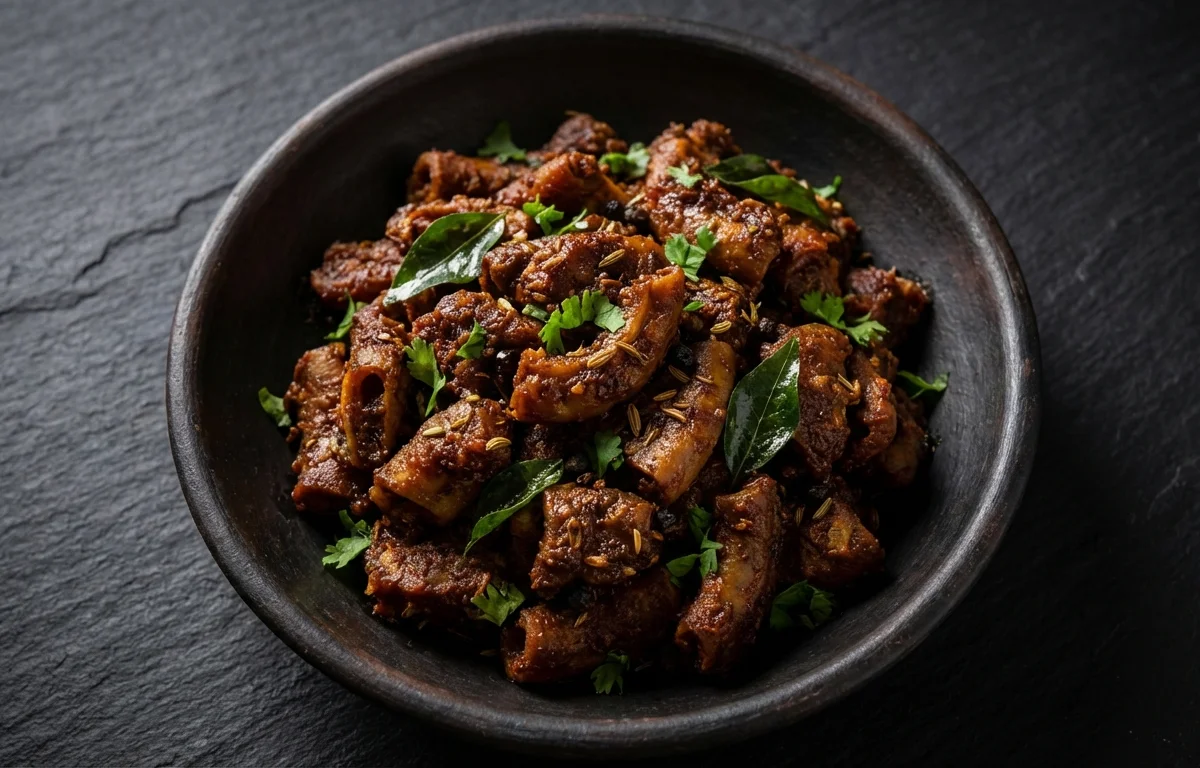
Kudal Varuval
A classic Chettinad delicacy, this spicy goat intestine fry is packed with aromatic spices. Tender pieces of kudal are pressure cooked and then pan-fried to create a rich, flavorful, and semi-dry dish that is a true testament to the bold flavors of Tamil Nadu.
For 4 servings
5 steps. 45 minutes total.
- 1
Step 1
- a.Thoroughly Clean the Kudal
- b.This is the most critical step. Turn the goat intestines inside out. Gently scrape the inner layer with the back of a knife to remove any impurities.
- c.In a large bowl, add the intestines, 1 tbsp of turmeric powder, and 1 tbsp of salt. Rub them together vigorously for 5 minutes. This disinfects and removes any strong odors.
- d.Rinse under cold running water multiple times until the water runs completely clear. This may take 5-10 minutes.
- e.Once clean, chop the kudal into small, 1-inch bite-sized pieces.
- 2
Step 2
- a.Pressure Cook for Tenderness
- b.Place the chopped kudal in a pressure cooker. Add 2 cups of water, 0.5 tsp of the cooking turmeric powder, and 0.5 tsp of the cooking salt.
- c.Secure the lid and pressure cook on medium-high heat for 10-12 whistles, or approximately 20-25 minutes, until the kudal is completely soft and tender.
- d.Allow the pressure to release naturally. Open the cooker, drain the kudal, and set it aside. The cooking liquid can be discarded or saved for other gravies.
- 3
Step 3
- a.Prepare the Fresh Chettinad Masala
- b.While the kudal is cooking, heat a small, dry pan over low heat.
- c.Add the coriander seeds, cumin seeds, fennel seeds, black peppercorns, and dried red chillies.
- d.Dry roast for 2-3 minutes, stirring constantly, until they become fragrant and slightly darker. Do not let them burn.
- e.Remove from heat and let the spices cool completely. Grind them into a fine powder using a spice grinder or blender.
- 4
Step 4
- a.Create the Varuval Base
- b.Heat the sesame oil in a wide, heavy-bottomed pan or kadai over medium heat. Once hot, add the curry leaves and let them splutter.
- c.Add the finely chopped onions and sauté for 6-8 minutes until they turn soft and golden brown.
- d.Add the ginger-garlic paste and cook for another 2 minutes until the raw aroma disappears.
- e.Stir in the slit green chillies and chopped tomatoes. Cook for 5-6 minutes, mashing the tomatoes with your spoon, until they break down and the oil begins to separate from the mixture.
- 5
Step 5
- a.Fry and Finish the Dish
- b.Lower the heat and add the freshly ground Chettinad masala powder, the remaining 0.5 tsp turmeric powder, 1 tsp red chilli powder, and the remaining 1 tsp salt. Sauté for 2 minutes until the spices are fragrant.
- c.Add the pressure-cooked kudal to the pan. Mix thoroughly to coat each piece evenly with the masala.
- d.Continue to cook on medium-low heat for 10-15 minutes, stirring every few minutes. This roasting step is key to developing the 'varuval' texture. The masala will thicken and cling to the kudal pieces.
- e.Sprinkle the garam masala over the top, give it a final stir, and cook for one more minute.
- f.Garnish with freshly chopped coriander leaves and serve hot.
What to keep in mind.
6 tips from the recipe — small details that make a real difference to the final dish.
- 1The cleaning process cannot be rushed. Be patient and thorough to ensure the best taste and hygiene.
- 2For an even more authentic Chettinad flavor, use small onions (shallots or chinna vengayam) instead of regular onions.
- 3Using gingelly (Indian sesame) oil is highly recommended for its distinctive nutty flavor that defines Chettinad cuisine.
- 4The final roasting on low heat is crucial. It dries out excess moisture and allows the masala to caramelize onto the meat, creating the signature 'varuval' texture.
- 5Adjust the number of dried red chillies and black peppercorns to customize the spice level to your preference.
- 6Ensure the kudal is cooked until very tender in the pressure cooker. If it's chewy, it won't be pleasant to eat.
Adapt it for your goals.
Protein Swap
This same masala base can be used to make Mutton Varuval (using boneless mutton pieces) or Eeral Varuval (using mutton liver). Adjust pressure cooking times accordingly.
Gravy VersionGravy Version
To make a gravy, add 1/2 cup of thin coconut milk or the reserved kudal stock at the end and simmer for 5-7 minutes until the gravy thickens slightly.
Flavor AdditionFlavor Addition
For a slightly different flavor profile, add a small piece of cinnamon stick and 2 cloves while dry roasting the spices for the masala powder.
Why this is on our healthy list.
Rich in Protein and Collagen
Goat intestine is an excellent source of high-quality protein, essential for muscle repair and growth. It is also rich in collagen, which supports joint health, skin elasticity, and gut lining integrity.
Source of Essential Minerals
This dish provides important minerals like iron, which is vital for preventing anemia and maintaining energy levels, and zinc, which plays a key role in immune function and wound healing.
Digestive-Aiding Spices
The Chettinad spices used, such as cumin, fennel, and black pepper, are known for their digestive properties. They can help stimulate digestive enzymes and improve overall gut health.
Frequently asked questions
The key signs of properly cleaned kudal are the absence of any foul odor and the water running completely clear after rinsing. The inner membrane should be scraped off, and rubbing with turmeric and salt is a crucial step for disinfection.