
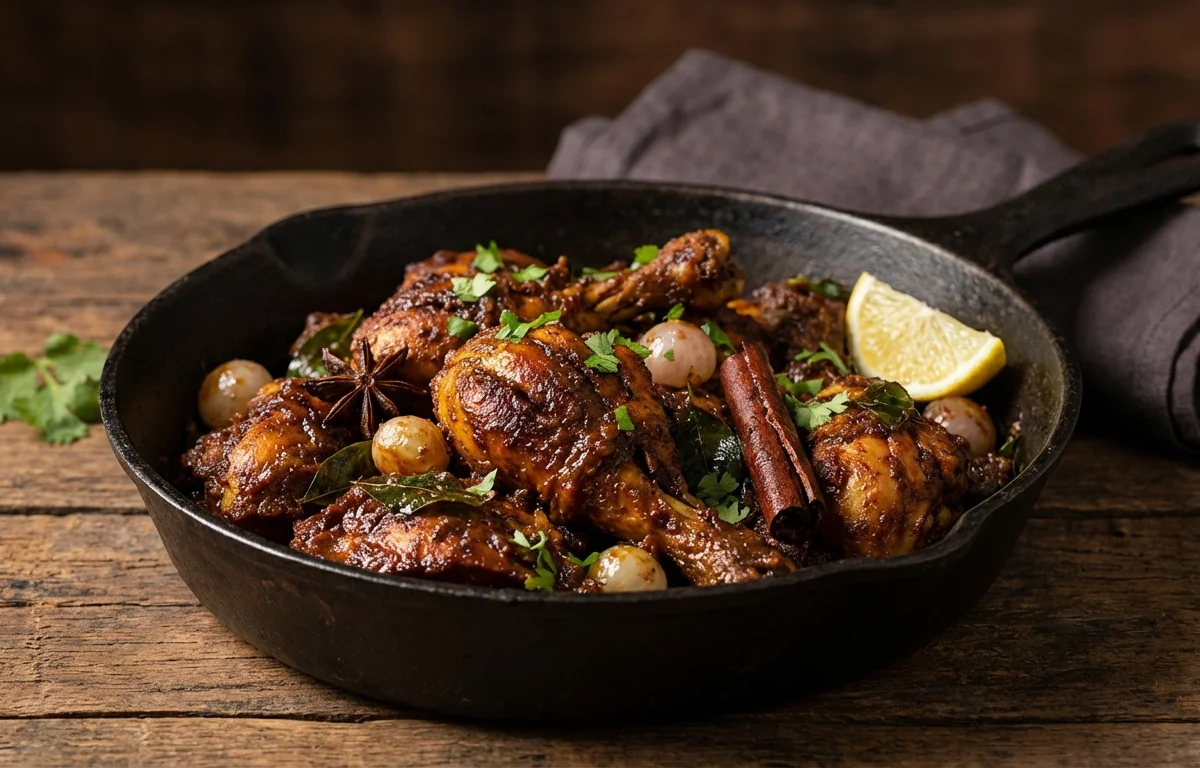
Kozhi Varuval
A fiery and aromatic Chettinad chicken fry made with freshly roasted spices. Tender chicken pieces are pan-roasted until perfectly browned and coated in a rich, spicy masala. This classic South Indian dish is a true explosion of flavor.
For 4 servings
Prepare the Chettinad Masala Powder
- In a dry, heavy-bottomed pan over low heat, add coriander seeds, cumin seeds, fennel seeds, black peppercorns, dried red chilies, cinnamon stick, cloves, and star anise.
- Dry roast for 2-3 minutes, stirring constantly, until the spices become highly aromatic and slightly darker. Be careful not to burn them.
- Transfer the roasted spices to a plate and let them cool down completely.
- Once cooled, grind them into a fine powder using a spice grinder or a blender jar. Set aside.
Sauté Aromatics and Chicken
- Heat gingelly oil in the same pan (or a kadai) over medium heat. Once hot, add the mustard seeds and let them splutter.
- Add the curry leaves and sauté for 30 seconds until they turn crisp.
- Add the pearl onions and cook for 6-8 minutes, stirring occasionally, until they are soft and golden brown.
- Add the ginger-garlic paste and sauté for 2 minutes until the raw aroma disappears.
- Add the chicken pieces, turmeric powder, and salt. Increase the heat to high and sear the chicken for 4-5 minutes, until it's lightly browned on all sides.
Cook the Chicken
- Reduce the heat to medium-low. Add 1/4 cup of water, stir well, and cover the pan with a lid.
- Let the chicken cook for 10-12 minutes, stirring once or twice in between, until it is about 80% cooked through and tender.
Roast with Masala (Varuval)
- Uncover the pan. Most of the water should have evaporated. Add the freshly ground Chettinad masala powder.
- Mix thoroughly, ensuring every piece of chicken is well-coated with the masala.
- Continue to cook uncovered on low to medium-low heat for 10-12 minutes. Stir every few minutes to prevent burning.
- This slow roasting step is crucial. Continue until the masala darkens to a deep brown, the oil separates from the masala, and the chicken becomes dry and beautifully roasted.
Garnish and Serve
- Turn off the heat. Garnish with freshly chopped coriander leaves and a squeeze of lemon juice (if using).
- Toss everything together one last time.
- Serve hot as a side dish with sambar rice, rasam rice, or as an appetizer.
What to keep in mind.
6 tips from the recipe — small details that make a real difference to the final dish.
- 1For the most authentic flavor, use freshly ground masala. Pre-made powders won't have the same aromatic punch.
- 2Using a heavy-bottomed pan or cast-iron kadai ensures even heat distribution and prevents the masala from burning during the final roasting stage.
- 3Gingelly (Indian sesame) oil is key to the traditional Chettinad taste. If unavailable, groundnut oil is the next best substitute.
- 4Be patient during the final 'varuval' (roasting) step. Slow roasting on low heat is what develops the deep color and intense flavor.
- 5Using bone-in chicken adds more flavor and keeps the meat moist. If using boneless chicken, reduce the cooking time slightly to avoid drying it out.
- 6Pearl onions (sambar onions) provide a unique sweetness. If you can't find them, one large red onion, finely chopped, will also work well.
Adapt it for your goals.
Protein
This recipe works wonderfully with mutton (Mutton Varuval). You will need to pressure cook the mutton first until tender before proceeding with the roasting step.
ConsistencyConsistency
For a semi-gravy version, add 1/2 cup of thin coconut milk or tomato puree along with the masala powder and simmer until the gravy thickens.
Spice LevelSpice Level
To make it milder, reduce the number of dried red chilies and black peppercorns. You can use less pungent Kashmiri red chilies for color without excessive heat.
VegetarianVegetarian
Create a vegetarian version using mushrooms, paneer, or baby potatoes. Adjust cooking times accordingly.
Why this is on our healthy list.
Rich in Protein
Chicken is an excellent source of high-quality lean protein, which is essential for muscle growth, repair, and overall body function.
Boosts Metabolism
The blend of spices like black pepper, cumin, and chilies contains compounds like piperine and capsaicin, which can help boost metabolism and aid in digestion.
Anti-inflammatory Properties
Spices like turmeric (containing curcumin), cloves, and cinnamon are renowned for their powerful anti-inflammatory and antioxidant properties, which help combat oxidative stress in the body.
Immunity Support
Ingredients like ginger, garlic, and various spices have antimicrobial and antiviral properties that can help strengthen the immune system.
Frequently asked questions
A typical serving of Kozhi Varuval (around 200g) contains approximately 350-450 calories, depending on the amount of oil used and the cut of chicken.