
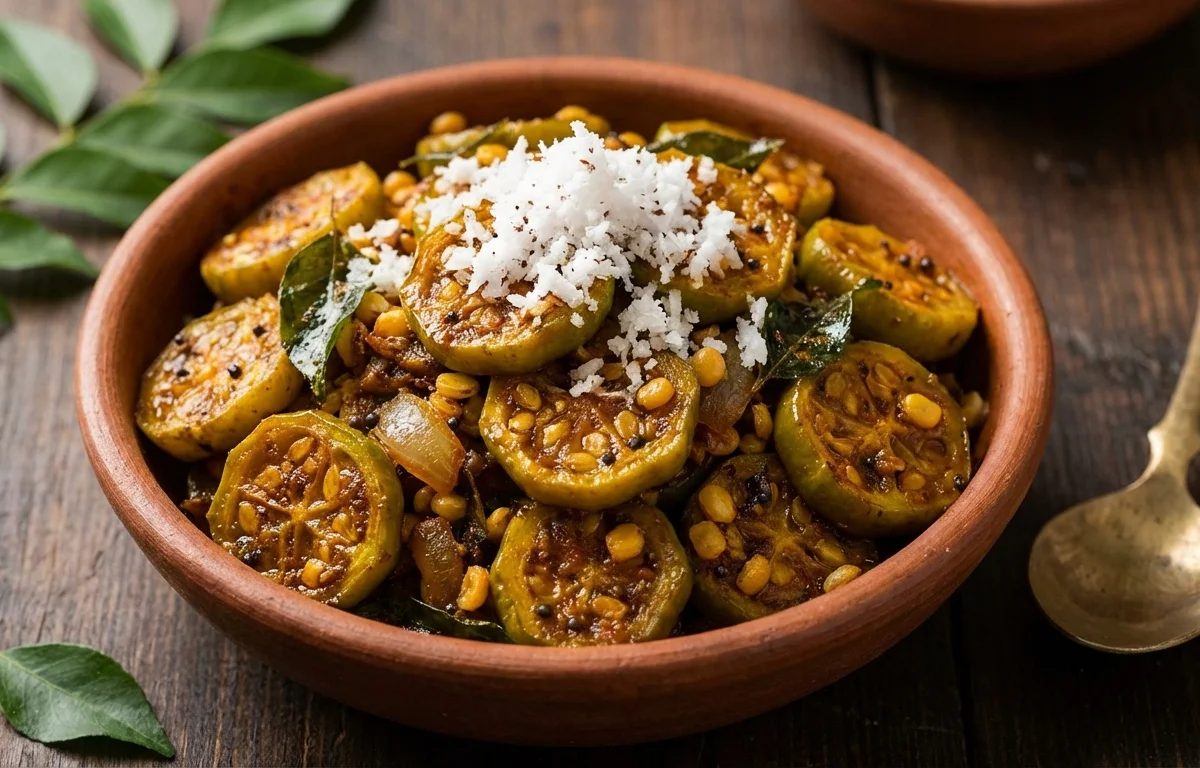
Kovakkai Fry
A simple and delicious South Indian stir-fry made with ivy gourd, sautéed until tender-crisp and seasoned with aromatic spices. This classic side dish, also known as Tindora Fry, pairs perfectly with rice and sambar or rasam.
For 4 servings
Prepare the Kovakkai
- Wash the kovakkai (ivy gourd) thoroughly under running water and pat them dry.
- Trim off both ends. Slice them into thin, uniform rounds about 2-3 mm thick. Uniform slicing is key for even cooking.
Temper the Spices
- Heat coconut oil in a heavy-bottomed pan or kadai over medium heat.
- Once the oil is hot, add the mustard seeds and allow them to splutter completely, which should take about 30 seconds.
- Add the urad dal and sauté for about a minute until it turns a light golden brown. Be careful not to burn it.
- Add the broken dried red chillies, hing, and fresh curry leaves. Sauté for another 30 seconds until the curry leaves are crisp and aromatic.
Sauté Onions and Cook Kovakkai
- Add the finely chopped onion to the pan and sauté for 3-4 minutes until it becomes soft and translucent.
- Add the sliced kovakkai and turmeric powder. Mix everything well to ensure the kovakkai is evenly coated with the oil and spices.
- Cover the pan with a lid and cook on a medium-low flame for 15-18 minutes. Stir every 4-5 minutes to prevent sticking and ensure even cooking.
- The kovakkai is cooked when it's tender and has shrunken in size. You can test this by easily cutting a piece with your spatula.
Add Spices and Finish
- Once the kovakkai is tender, remove the lid. Add the red chili powder, sambar powder (if using), and salt.
- Mix gently to combine. Continue to cook uncovered for another 3-5 minutes, stirring occasionally. This step helps the raw spice flavors to cook out and makes the fry slightly crispier.
- Turn off the heat and stir in the freshly grated coconut. Mix well.
Serve
- Let the Kovakkai Fry rest for a few minutes before serving.
- Serve hot as a side dish with steamed rice and sambar, rasam, or curd rice.
What to keep in mind.
5 tips from the recipe — small details that make a real difference to the final dish.
- 1For a crispier fry, cook uncovered during the last 5-7 minutes, stirring frequently.
- 2Ensure you pick tender, green kovakkai. Ripe ones that are turning red can be slightly sour and mushy when cooked.
- 3Slicing the kovakkai uniformly is crucial for even cooking.
- 4Do not add any water while cooking. The kovakkai will cook in its own moisture, which results in a better texture and flavor.
- 5This dish can be stored in an airtight container in the refrigerator for up to 3 days.
Adapt it for your goals.
With Garlic
Add 3-4 cloves of crushed garlic along with the onions for a pungent, aromatic flavor.
Andhra StyleAndhra Style
Add a tablespoon of roasted peanut powder or sesame powder along with the coconut for a nutty flavor and texture.
With PotatoesWith Potatoes
Add one small potato, thinly sliced, along with the kovakkai for a more filling dish. You may need to adjust cooking time slightly.
No OnionNo Onion
For a simpler, traditional version, you can skip the onions entirely. The dish will still be delicious.
Why this is on our healthy list.
Rich in Fiber
Ivy gourd is an excellent source of dietary fiber, which aids in digestion, promotes gut health, and helps maintain stable blood sugar levels.
Supports Blood Sugar Control
Traditionally used in Ayurvedic medicine, ivy gourd contains compounds that may help regulate blood glucose levels, making it a beneficial vegetable for individuals managing diabetes.
Boosts Immunity
Packed with vitamins like Vitamin C and beta-carotene, kovakkai helps strengthen the immune system and protect the body against infections.
Good for Digestion
The combination of fiber from the vegetable and digestive-friendly spices like hing (asafoetida) can help prevent indigestion and bloating.
Frequently asked questions
Kovakkai, also known as Tindora or Ivy Gourd, is a tropical vine grown for its edible green fruit. It's popular in South Indian cuisine and is known for its crisp texture and slightly tangy taste.