
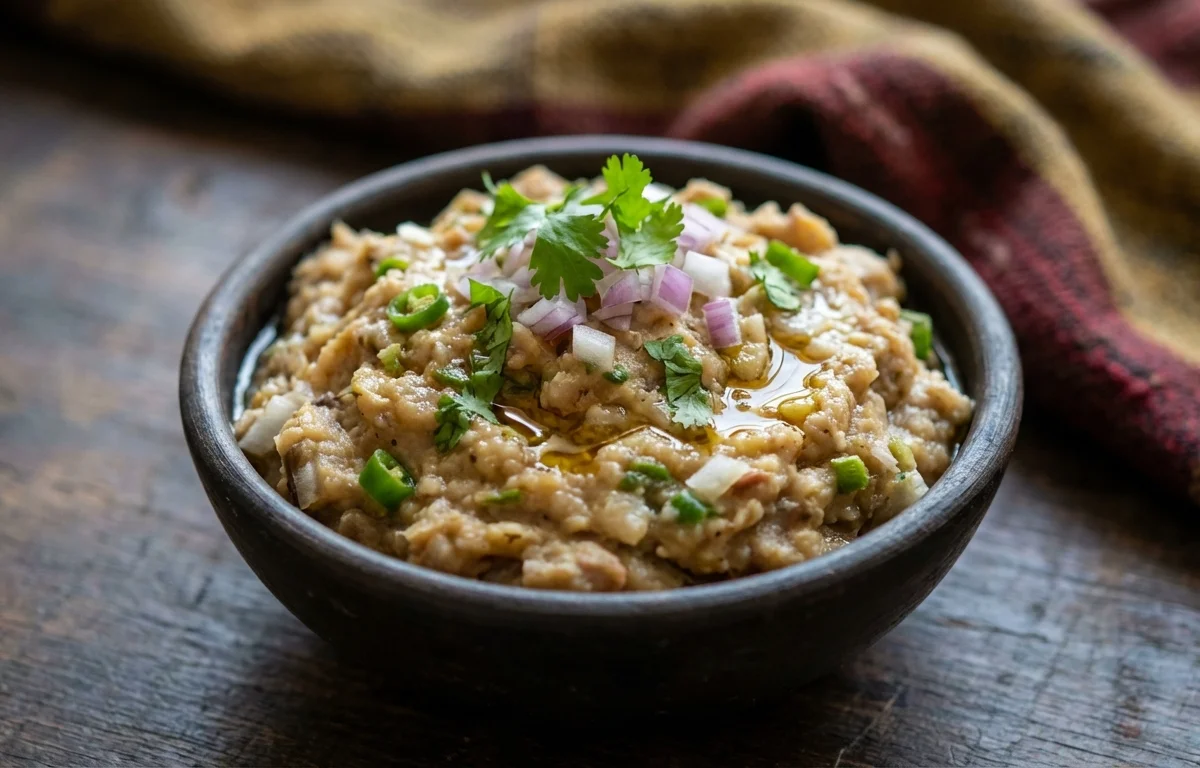
Kothalguti Pitika
A rustic and flavorful Assamese mash made from boiled jackfruit seeds, pungent mustard oil, and fresh herbs. This simple side dish is packed with unique flavors and is a traditional comfort food.
For 4 servings
Boil the Jackfruit Seeds
- Wash the jackfruit seeds thoroughly under running water to remove any sticky residue.
- Place the seeds in a pressure cooker with 3 cups of water and 1/2 tsp of salt.
- Pressure cook on medium heat for 4-5 whistles, or for about 15 minutes, until the seeds are very tender.
- Alternatively, boil them in an open pot for 25-30 minutes until a knife can be inserted easily.
- Once cooked, drain the water completely and let the seeds cool down just enough to handle.
Peel and Mash the Seeds
- While the seeds are still warm, peel off the tough, white outer skin. It comes off more easily when warm.
- Next, carefully peel off the thin, paper-like brown inner skin. This step is crucial for a smooth texture.
- Place the peeled seeds in a mixing bowl and mash them thoroughly with a potato masher or the back of a fork until you achieve a coarse, crumbly texture.
Combine and Season
- To the mashed jackfruit seeds, add the finely chopped red onion, green chilies, and fresh coriander leaves.
- Drizzle the pungent mustard oil over the mixture and add the remaining 1/4 tsp of salt, or to your taste.
- Using your hands or a spoon, mix everything together vigorously until all the ingredients are well combined and the flavors have melded.
- Taste and adjust the salt or chili if needed. The pitika is ready to be served.
Serve
- Serve the Kothalguti Pitika immediately at room temperature.
- It pairs traditionally and beautifully with hot steamed rice, masoor dal (red lentil soup), and a side of Khar (an Assamese alkaline dish).
What to keep in mind.
5 tips from the recipe — small details that make a real difference to the final dish.
- 1For the most authentic flavor, use high-quality, pungent (ghani) mustard oil. It's the soul of the dish.
- 2Peeling the seeds while they are still warm makes the process much easier.
- 3For a smoky flavor, you can roast the green chilies and a clove of garlic on an open flame before chopping and adding them to the mash.
- 4Mixing the pitika with your hands is the traditional method and helps to release the flavors of the onion and herbs more effectively.
- 5This dish is best enjoyed fresh, as the raw onion can become pungent upon storing.
Adapt it for your goals.
Smoky Flavor
Instead of boiling, roast the jackfruit seeds in hot embers or on a dry cast-iron skillet until the outer skin is charred. Peel and proceed with the recipe for a deep, smoky taste.
Garlic TwistGarlic Twist
Add 1-2 cloves of raw, finely minced garlic along with the onion for a sharper, more pungent flavor.
Herby FreshnessHerby Freshness
Incorporate 1 tablespoon of finely chopped mint leaves along with the coriander for a refreshing variation.
Spicy KickSpicy Kick
For those who love heat, add a tiny drop of ghost pepper (Bhut Jolokia) pickle oil, a staple in Assamese cuisine.
Why this is on our healthy list.
Rich in Dietary Fiber
Jackfruit seeds are an excellent source of dietary fiber, which promotes healthy digestion, aids in regular bowel movements, and helps maintain a healthy gut microbiome.
Good Source of Plant-Based Protein
This dish provides a valuable amount of plant-based protein from jackfruit seeds, contributing to muscle maintenance, repair, and overall body function.
Packed with Minerals
Jackfruit seeds contain essential minerals like potassium and magnesium, which are vital for regulating blood pressure, supporting heart health, and ensuring proper nerve function.
Boosts Immunity
The antioxidants and vitamins in jackfruit seeds, combined with the anti-inflammatory properties of mustard oil and fresh herbs, can help strengthen the immune system.
Frequently asked questions
Kothalguti Pitika is a traditional Assamese side dish. 'Kothalguti' means jackfruit seeds and 'Pitika' refers to any mashed item. It's a simple, rustic mash of boiled jackfruit seeds with raw onion, chilies, coriander, and pungent mustard oil.