
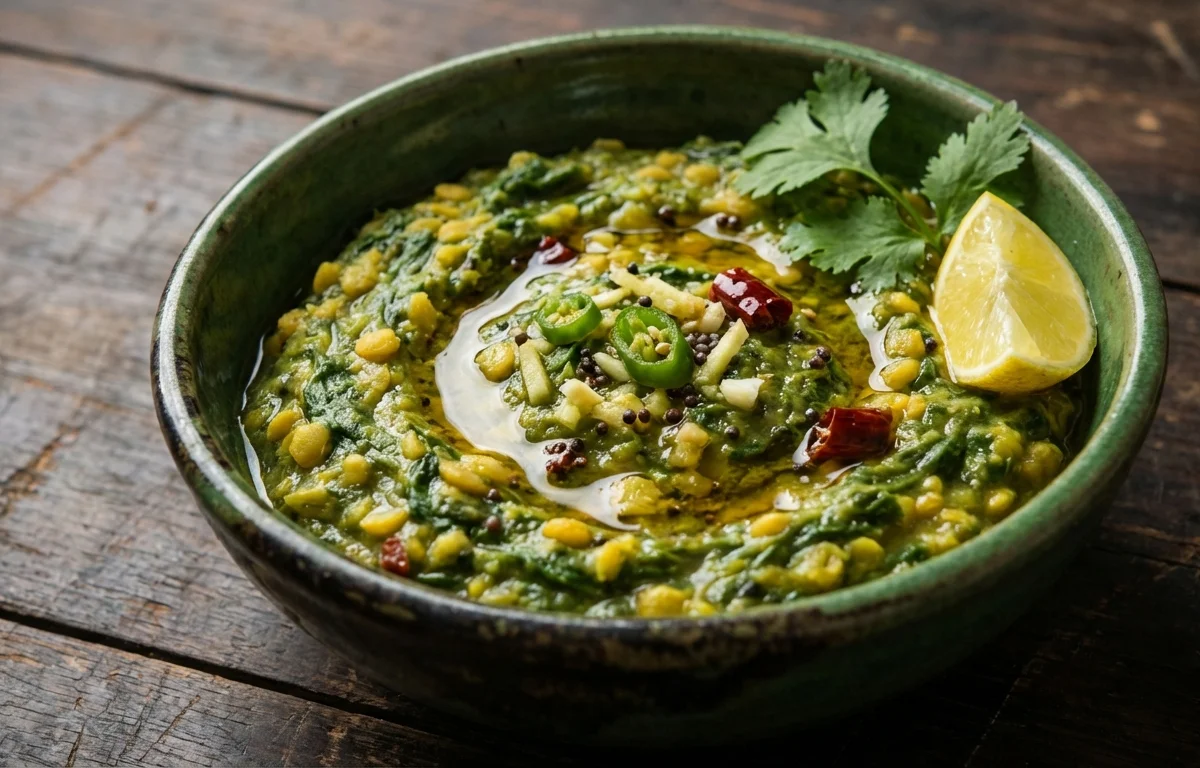
Kosu Xaak
A rustic and flavorful Assamese dish made from tender taro leaves and stems, simmered with garlic, ginger, and a hint of sourness. This traditional green preparation is a simple, healthy, and authentic taste of Assam.
For 4 servings
Prepare the Taro (Kosu Xaak)
- Important: Wear gloves while handling raw taro to prevent skin irritation from calcium oxalate crystals.
- Thoroughly wash the taro leaves and stems under cold running water.
- Peel the thin, fibrous outer layer from the stems and discard it.
- Finely chop the leaves and cut the peeled stems into small, 1/4-inch pieces. Keep them aside.
Cook the Taro and Lentils
- Rinse the masoor dal in water until the water runs clear.
- In a pressure cooker, combine the chopped taro leaves and stems, rinsed masoor dal, turmeric powder, and 1 cup of water.
- Pressure cook on medium heat for 3-4 whistles, or for about 10-12 minutes, until the taro and dal are completely soft and mushy.
- Alternatively, in a deep pot, bring the mixture to a boil, then cover, reduce heat to low, and simmer for 20-25 minutes until tender. You may need to add a little more water if using a pot.
- Once cooked, let the pressure release naturally. Open the cooker and gently mash the mixture with the back of a spoon to break it down slightly.
Prepare the Tempering (Tadka)
- Heat the mustard oil in a kadhai or heavy-bottomed pan over high heat until it just begins to smoke. This removes its pungent raw smell.
- Immediately reduce the heat to medium-low and let the oil cool slightly for 30 seconds.
- Add the finely chopped garlic and grated ginger. Sauté for about 1 minute until they turn light golden and fragrant.
- Add the slit green chilies and sauté for another 30 seconds.
Combine and Finish the Dish
- Carefully transfer the cooked taro and dal mixture into the kadhai with the tempering.
- Add salt and mix everything thoroughly to combine.
- Increase the heat to medium and cook for 5-7 minutes, stirring frequently, allowing any excess water to evaporate. The final consistency should be thick and semi-dry.
- Turn off the heat. Stir in the fresh lemon juice. This not only adds flavor but is crucial for neutralizing any remaining itch-causing compounds.
Serve
- Let the Kosu Xaak rest for a few minutes before serving.
- Serve hot as a side dish with steamed rice and a simple dal.
What to keep in mind.
6 tips from the recipe — small details that make a real difference to the final dish.
- 1Always wear gloves when chopping raw taro to prevent itching caused by calcium oxalate crystals.
- 2Cooking the taro thoroughly is crucial to break down the compounds that cause throat irritation.
- 3Do not skip the souring agent (lemon juice or tamarind). It is essential for neutralizing any residual acridity.
- 4Using mustard oil is key to achieving the authentic Assamese flavor. Ensure you heat it until it smokes lightly before adding other ingredients.
- 5For a creamier texture, you can use black gram lentils (urad dal) instead of red lentils.
- 6Mash the cooked greens gently to your desired consistency; some prefer it chunky, while others like it smoother.
Adapt it for your goals.
Lentil Variation
Replace masoor dal with split black gram (mati maah or urad dal) for a slightly different, creamier texture and flavor profile.
Souring AgentSouring Agent
Use tamarind pulp (1 tbsp) instead of lemon juice for a deeper, tangier flavor. Add it along with the salt and cook for a few minutes.
Add Fermented FlavorAdd Fermented Flavor
For a truly traditional taste, add 1 tablespoon of Assamese fermented bamboo shoot (khorisa) along with the garlic and ginger.
Non Vegetarian VersionNon-Vegetarian Version
Incorporate a handful of small dried fish (xukan maas), fried until crispy, and add them at the end for a savory, umami-rich twist.
Why this is on our healthy list.
Promotes Digestive Health
Taro leaves and lentils are excellent sources of dietary fiber, which aids digestion, prevents constipation, and supports a healthy gut microbiome.
Rich in Vitamins and Minerals
Taro leaves are packed with Vitamin A and C, which boost immunity, and minerals like potassium and iron, which are vital for blood pressure regulation and oxygen transport.
Good Source of Plant Protein
The addition of masoor dal provides a good amount of plant-based protein, which is essential for building and repairing tissues and maintaining muscle mass.
Supports Vision Health
Being a rich source of Vitamin A, taro leaves contribute to maintaining healthy vision and preventing age-related macular degeneration.
Frequently asked questions
Yes, Kosu Xaak is very healthy. It is rich in dietary fiber from both taro and lentils, packed with vitamins A and C, and provides plant-based protein. It is a low-calorie, nutrient-dense dish.