
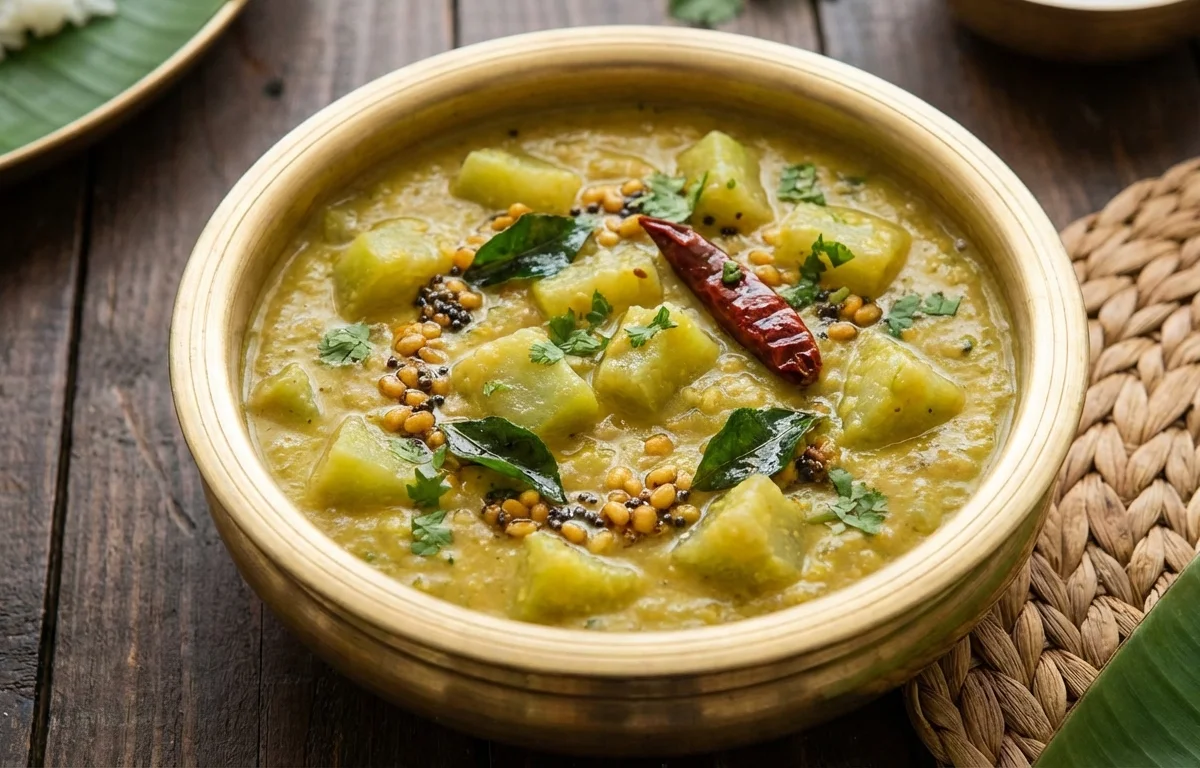
Kootu
A wholesome South Indian stew made with tender lentils and vegetables, simmered in a creamy coconut-cumin paste. This comforting dish is a perfect mix-in for rice and a staple in Tamil households.
For 4 servings
Cook Lentils and Vegetable
- Rinse the toor dal and moong dal under running water until the water runs clear.
- In a pressure cooker, combine the rinsed dals, cubed chow chow, turmeric powder, and 2.5 cups of water.
- Secure the lid and pressure cook on medium heat for 3-4 whistles, or for about 12-15 minutes, until the dal is completely soft and mushy.
- Allow the pressure to release naturally before opening the cooker.
Prepare Coconut Paste
- While the dal is cooking, place the grated coconut, cumin seeds, green chilies, and rice flour into a small blender jar.
- Add approximately 1/4 cup of water and grind to a very smooth, fine paste. Set aside.
Combine and Simmer
- Once the pressure has released, open the cooker. Use the back of a ladle to gently mash the cooked dal and vegetable mixture. The chow chow should be soft but still hold some shape.
- Add the ground coconut paste and salt to the cooker. Stir everything together until well combined.
- If the kootu seems too thick, add the remaining 0.5 cup of water (or more) to achieve your desired stew-like consistency.
- Return the cooker to the stove and let it simmer on low heat for 5-7 minutes. Stir occasionally to prevent it from sticking. This step cooks the raw flavor out of the paste.
Prepare the Tempering (Tadka)
- In a small pan (tadka pan), heat the coconut oil over medium heat.
- Once the oil is hot, add the mustard seeds and wait for them to splutter completely.
- Add the urad dal and sauté until it turns a light golden brown.
- Immediately add the broken dried red chili, curry leaves, and hing. Sauté for another 20-30 seconds until the curry leaves are crisp and fragrant.
Finish and Serve
- Pour the hot tempering directly over the simmering kootu. Mix well to incorporate the flavors.
- Turn off the heat, garnish with freshly chopped coriander leaves.
- Serve hot with steamed rice, a dollop of ghee, and a side of appalam (papad).
What to keep in mind.
5 tips from the recipe — small details that make a real difference to the final dish.
- 1For the most authentic flavor, use fresh coconut and coconut oil for tempering.
- 2Do not let the kootu boil vigorously after adding the coconut paste, as it can cause it to curdle. A gentle simmer is sufficient.
- 3The consistency should be like a thick stew, not too watery or too dry. Adjust water as needed.
- 4Ensure the urad dal in the tempering is golden brown for a nice crunch and nutty flavor; don't let it burn.
- 5If you don't have a pressure cooker, you can cook the dal and vegetables in a covered pot on the stovetop until soft, which may take 45-60 minutes.
Adapt it for your goals.
Vegetable Variations
This recipe works wonderfully with other vegetables like ash gourd (white pumpkin), bottle gourd, snake gourd, cabbage, or a mix of carrots and beans.
Lentil VariationsLentil Variations
For a lighter kootu, you can use only moong dal. Adding a tablespoon of chana dal along with the other lentils provides a different texture.
Poricha KootuPoricha Kootu
For a nuttier, more aromatic version, dry roast 1 tsp of urad dal and 4-5 black peppercorns along with the cumin seeds before grinding them with coconut.
Why this is on our healthy list.
Rich in Plant-Based Protein
The combination of toor and moong dal provides a high-quality source of plant-based protein, which is essential for muscle building, tissue repair, and overall body function.
High in Dietary Fiber
Lentils and chow chow are excellent sources of dietary fiber, which aids in digestion, helps maintain stable blood sugar levels, and promotes a feeling of fullness, supporting weight management.
Supports Gut Health
The fiber from lentils and vegetables acts as a prebiotic, feeding beneficial gut bacteria. Spices like cumin and hing (asafoetida) are traditionally known to aid digestion and reduce bloating.
Provides Healthy Fats
Coconut is a source of medium-chain triglycerides (MCTs), a type of fat that is easily digested and converted into energy by the body, providing a quick and efficient fuel source.
Frequently asked questions
Yes, Kootu is a very healthy and balanced dish. It is rich in plant-based protein from lentils, packed with fiber and vitamins from vegetables, and contains healthy fats from coconut. It's a wholesome, everyday meal.