
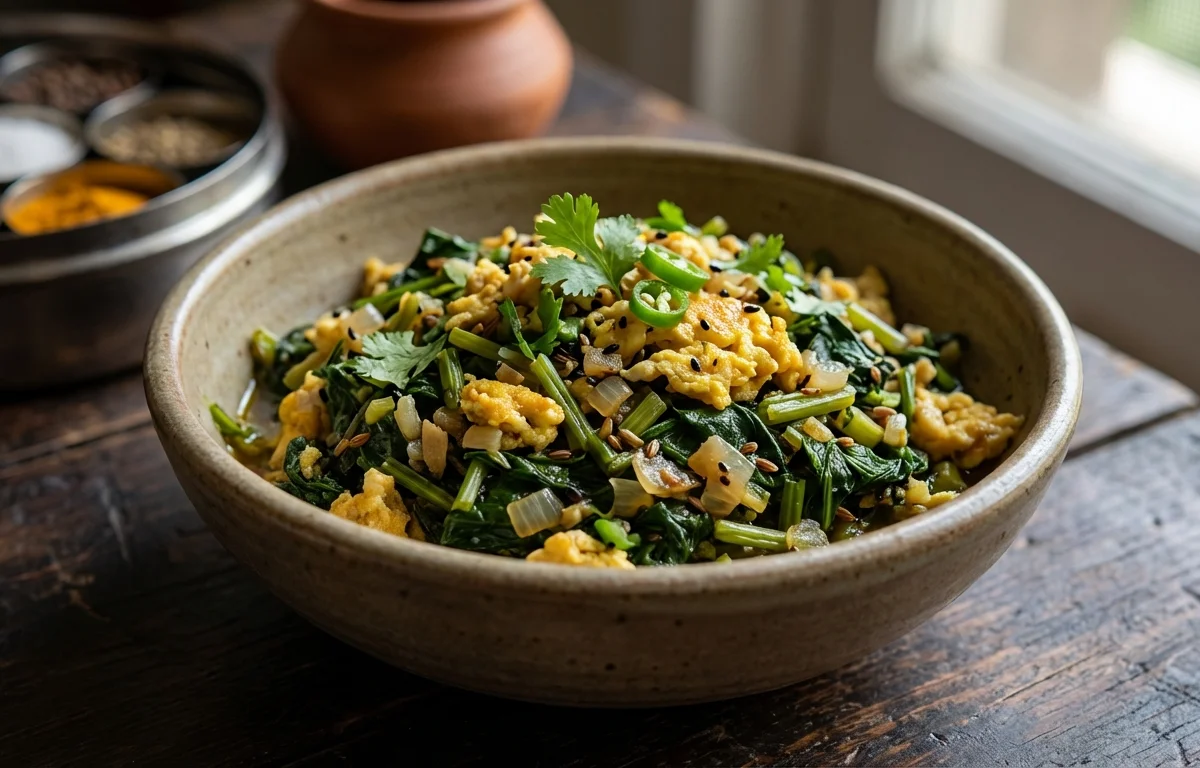
Koni aru Kosu Xaak Bhaji
A traditional Assamese stir-fry featuring tender taro leaves and fluffy scrambled eggs. This rustic and flavorful dish gets its unique taste from mustard oil and simple spices, making it a comforting meal.
For 4 servings
5 steps. 25 minutes total.
- 1
Step 1
- a.Prepare the Taro Leaves
- b.Thoroughly wash the taro leaves (kosu xaak) and their tender stems under cold running water.
- c.In a large pot, bring 8 cups of water to a rolling boil. Add the taro leaves and stems and cook for 10-12 minutes, or until they are completely soft and tender. This step is crucial to remove the compounds that can cause throat irritation.
- d.Drain the boiled leaves in a colander and immediately rinse with cold water to stop the cooking process.
- e.Once cool enough to handle, firmly squeeze the leaves in batches to remove as much excess water as possible. This prevents a mushy texture.
- f.Finely chop the squeezed leaves and stems and set aside.
- 2
Step 2
- a.Sauté Aromatics
- b.Heat the mustard oil in a kadai or a wide pan over medium-high heat until it is fragrant and just begins to smoke lightly.
- c.Carefully add the panch phoron seeds. Allow them to splutter for about 30 seconds to release their aroma.
- d.Add the finely chopped onion, minced garlic, grated ginger, and slit green chilies to the pan.
- e.Sauté for 3-4 minutes, stirring frequently, until the onions soften and become translucent.
- 3
Step 3
- a.Cook the Bhaji
- b.Add the chopped, boiled taro leaves to the pan with the sautéed aromatics.
- c.Sprinkle the turmeric powder and salt over the leaves. Stir everything together until well combined.
- d.Cook for 6-8 minutes, stirring occasionally, to allow the leaves to absorb the flavors of the spices.
- 4
Step 4
- a.Incorporate the Eggs
- b.Use your spatula to push the cooked taro leaves to the sides of the pan, creating a clear space or 'well' in the center.
- c.Crack the 4 eggs directly into this well. Let them sit for about 30-45 seconds without stirring to set slightly.
- d.Gently scramble the eggs in the center. Once they are about 80% cooked (still slightly soft), begin to mix them into the surrounding taro leaves.
- e.Continue to stir-fry the entire mixture for another 2-3 minutes until the eggs are fully cooked and evenly distributed throughout the bhaji.
- 5
Step 5
- a.Serve
- b.Taste and adjust the salt if necessary.
- c.Serve the Koni aru Kosu Xaak Bhaji hot, traditionally paired with steamed rice for a complete and comforting meal.
What to keep in mind.
5 tips from the recipe — small details that make a real difference to the final dish.
- 1The most critical step is to boil the taro leaves until they are completely tender. This neutralizes the calcium oxalate crystals that cause throat irritation.
- 2Squeezing out all excess water from the boiled leaves is key to achieving a good texture and preventing the final dish from being watery.
- 3For the most authentic Assamese flavor, use mustard oil and heat it properly until it's aromatic before adding spices.
- 4When adding the eggs, scramble them in the center of the pan before mixing to ensure they cook evenly and have a pleasant, fluffy texture.
- 5Select young, tender taro leaves and stems for the best flavor and texture.
Adapt it for your goals.
Vegan
Replace the eggs with 200g of crumbled firm tofu or paneer. Add it in the final step and cook until heated through.
With FishWith Fish
For a non-vegetarian variation common in Assam, add a handful of small, fried freshwater fish (like 'moruwa maas') along with the eggs.
With PotatoesWith Potatoes
Add one medium-sized potato, boiled, peeled, and cubed. Add the potato cubes along with the cooked taro leaves in Step 3 to add more substance to the dish.
Why this is on our healthy list.
Rich in Vitamins and Minerals
Taro leaves are an excellent source of Vitamin A and Vitamin C, which are crucial for maintaining good vision, boosting the immune system, and promoting healthy skin. They also provide a good amount of iron.
Excellent Source of Protein
The addition of four large eggs makes this dish rich in high-quality protein, which is essential for muscle building, tissue repair, and overall body function.
Promotes Digestive Health
This dish is high in dietary fiber from the taro leaves, which aids digestion, helps prevent constipation, and supports a healthy gut microbiome.
Frequently asked questions
Kosu Xaak is the Assamese name for Taro Leaves, also known as Colocasia leaves. They are large, heart-shaped leaves that are a popular green vegetable in many parts of Asia and Africa.