
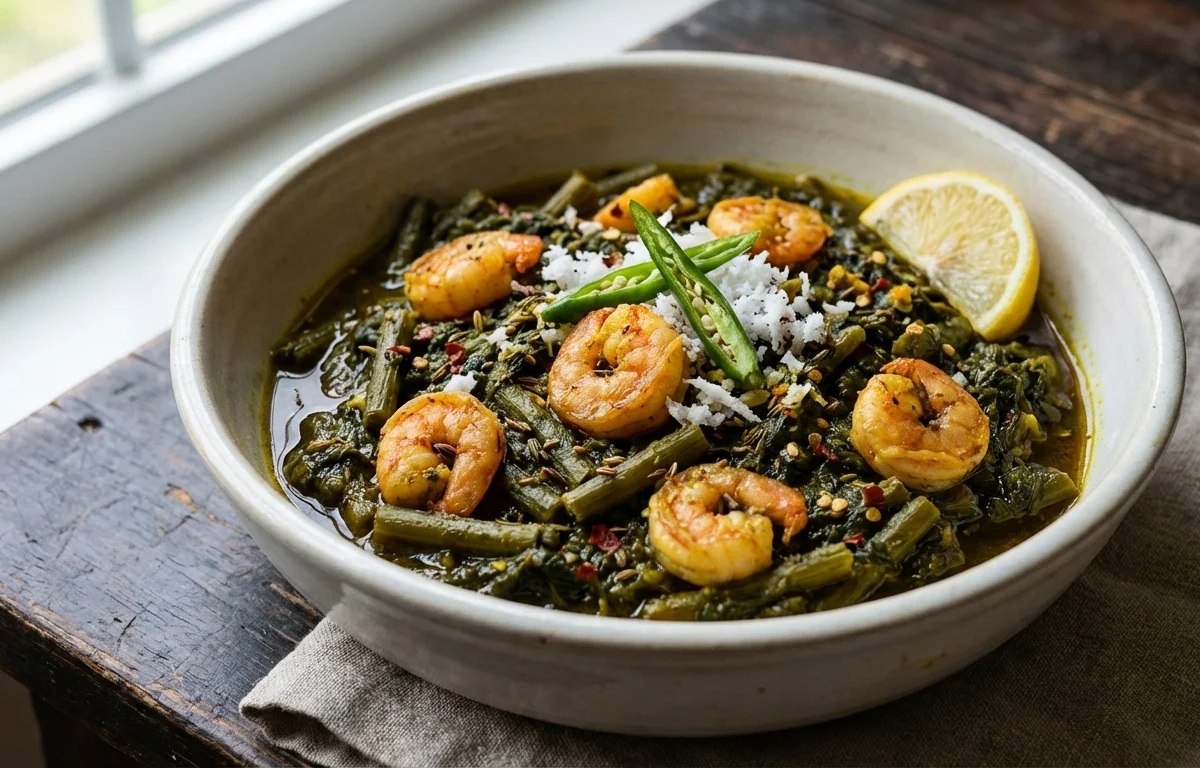
Kochu Shak diye Chingri
A classic Bengali delicacy featuring tender taro stems and succulent shrimp, slow-cooked with coconut and aromatic spices. This semi-dry dish is a flavorful journey into traditional Bengali home cooking.
For 4 servings
5 steps. 35 minutes total.
- 1
Step 1
- a.Boil and Prepare Taro Stems
- b.In a large pot, bring 8 cups of water to a rolling boil. Add the chopped taro stems, 2 tbsp lemon juice, and 1 tsp salt. The lemon juice is crucial to neutralize compounds that can cause throat irritation.
- c.Cook for 15-20 minutes, or until the stems are completely soft and tender.
- d.Drain the stems in a colander. Using the back of a large spoon, press down firmly on the stems to squeeze out as much excess water as possible. This step is key for the final texture.
- e.Lightly mash the drained stems and set them aside.
- 2
Step 2
- a.Marinate and Fry the Shrimp
- b.In a small bowl, combine the shrimp with 1/2 tsp of turmeric powder and 1/2 tsp of salt. Mix well to coat.
- c.Heat 2 tbsp of mustard oil in a kadai or heavy-bottomed pan over medium-high heat until it's lightly smoking.
- d.Carefully add the marinated shrimp to the hot oil. Fry for 2-3 minutes, stirring occasionally, until they turn pink and curl up. Be careful not to overcook them.
- e.Remove the shrimp with a slotted spoon and set aside, leaving the flavored oil in the pan.
- 3
Step 3
- a.Prepare the Spice Base (Masala)
- b.In the same pan, add the remaining 2 tbsp of mustard oil and heat it over medium flame.
- c.Add the panch phoron and let the seeds crackle and become fragrant, which should take about 30 seconds.
- d.Add the slit green chilies and sauté for another 30 seconds.
- e.Stir in the ginger paste and cook for about 1 minute until its raw smell disappears.
- f.Lower the heat, then add the remaining 1/2 tsp turmeric powder, cumin powder, and red chili powder. Stir for 30 seconds, ensuring the spices don't burn.
- 4
Step 4
- a.Cook the Taro Stems
- b.Add the boiled and mashed taro stems to the pan with the spice mixture.
- c.Mix thoroughly to ensure the stems are well-coated with the masala.
- d.Add the remaining 1 tsp of salt and 1 tsp of sugar. Stir to combine.
- e.Cook on medium-low heat for 10-12 minutes, stirring frequently to prevent sticking. The mixture will gradually darken, and the excess moisture will evaporate, resulting in a thicker consistency.
- 5
Step 5
- a.Finish and Serve
- b.Add the fried shrimp and grated coconut to the pan.
- c.Gently mix everything together and continue to cook for another 5-7 minutes, allowing the shrimp and coconut to infuse their flavors into the taro stems.
- d.The dish is ready when it has a semi-dry texture and you see the oil beginning to separate from the sides of the mixture.
- e.Turn off the heat. Serve hot as a main dish with steamed rice.
What to keep in mind.
6 tips from the recipe — small details that make a real difference to the final dish.
- 1Do not skip the lemon juice or a similar souring agent (like tamarind) when boiling the taro stems. This is essential to prevent potential throat itchiness.
- 2Squeezing out all the water from the boiled stems is the most critical step for achieving the perfect, non-soggy texture.
- 3For the most authentic Bengali flavor, use mustard oil. Its pungent aroma is characteristic of the cuisine.
- 4Be patient during the final cooking stage. Slow cooking on low heat allows the flavors to deepen and the moisture to evaporate properly.
- 5Using freshly grated coconut will provide a superior taste and texture compared to desiccated or dried coconut.
- 6The small amount of sugar is not just for sweetness but to balance the complex savory, spicy, and pungent flavors.
Adapt it for your goals.
Vegetarian/Vegan
Omit the shrimp to make it vegetarian. For a protein boost, you can add boiled black-eyed peas (lobia) or chickpeas (chana) along with the taro stems in Step 4.
Different ProteinDifferent Protein
For a very traditional variation, substitute the shrimp with fried Hilsa (Ilish) fish head. Crumble the fried fish head and add it at the same stage as the shrimp.
Spice VariationSpice Variation
For extra warmth, you can add a 1/4 tsp of Bengali garam masala powder at the very end of cooking.
With LentilsWith Lentils
Some variations include adding a handful of soaked and boiled chana dal (split chickpeas) for added texture and nutrition.
Why this is on our healthy list.
Rich in Dietary Fiber
Taro stems are packed with dietary fiber, which aids in digestion, helps maintain bowel regularity, and promotes a healthy gut microbiome.
Good Source of Lean Protein
Shrimp is an excellent source of high-quality, lean protein, which is essential for building and repairing tissues, muscle growth, and overall body function.
Contains Essential Minerals
This dish provides important minerals like manganese and potassium from taro stems and selenium from shrimp, which support bone health, nerve function, and antioxidant defense.
Anti-inflammatory Properties
The use of spices like turmeric and ginger lends anti-inflammatory benefits to the dish, which can help combat chronic inflammation in the body.
Frequently asked questions
Taro stems contain calcium oxalate crystals, which can cause a tingling or itchy sensation in the mouth and throat. Boiling them with a souring agent like lemon juice or tamarind water helps to break down these crystals, making them safe and enjoyable to eat.