
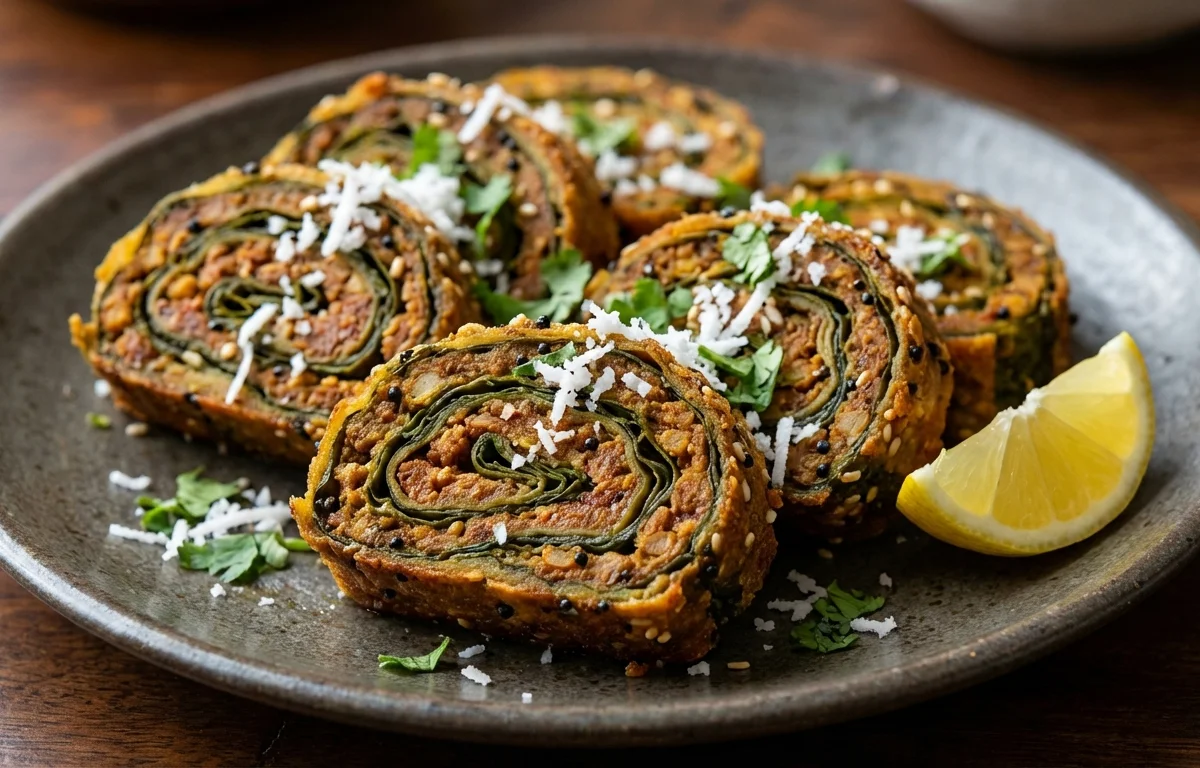
Kheema Patra
A savory and spicy fusion snack where tender minced mutton is slathered onto colocasia leaves, rolled, steamed, and then pan-fried to crispy perfection. It's a unique appetizer that combines the technique of Gujarati Patra with the rich flavors of Mughlai Kheema.
For 4 servings
Prepare the Colocasia Leaves
- Wash the colocasia leaves thoroughly under running water and pat them completely dry with a kitchen towel.
- Place a leaf on a cutting board with the vein-side facing up. Using a sharp knife, carefully shave off the thick central vein and any other prominent veins. This step is crucial to make the leaves pliable and prevent throat irritation.
- Repeat this process for all the leaves and set them aside.
Create the Kheema Filling
- In a large mixing bowl, combine the mutton mince, besan, finely chopped onion, ginger-garlic paste, and minced green chillies.
- Add all the powdered spices: turmeric, red chilli, coriander, cumin, and garam masala. Also add the tamarind paste, grated jaggery, lemon juice, 3 tbsp of chopped coriander leaves, and salt.
- Using your hands, mix everything together vigorously until it forms a thick, well-combined, and uniform paste. The paste should be thick enough to spread easily without being runny.
Assemble the Patra Rolls
- Lay the largest leaf on a clean, flat surface, vein-side up. Take a portion of the kheema paste and spread a thin, even layer across the entire surface of the leaf.
- Place a slightly smaller leaf on top and repeat the process. Create a stack of 3 to 4 leaves, applying the paste between each layer.
- Fold the two longer sides of the leaf stack inwards by about an inch to seal the edges.
- Starting from the bottom (stem end), roll the stack up tightly into a compact, firm log.
- Repeat the process to make 2-3 rolls with the remaining leaves and filling.
Steam the Rolls
- Lightly grease a steamer plate or tray. Place the prepared rolls on it, ensuring they are seam-side down and not touching each other.
- Bring water to a boil in a steamer or a large pot. Place the tray inside, cover with a lid, and steam for 20-25 minutes on medium heat.
- To check if they are cooked, insert a knife or skewer into the center of a roll; it should come out clean. The leaves will also change to a darker green color.
- Once cooked, carefully remove the rolls from the steamer and let them cool down completely on a wire rack for at least 30-40 minutes. This is essential for firm, clean slices.
Shallow Fry the Slices
- Once the steamed rolls are completely cool, use a sharp, serrated knife to cut them into neat 1/2-inch thick slices.
- Heat 4 tbsp of oil in a wide, non-stick pan over medium-high heat.
- Carefully arrange the slices in the pan in a single layer, without overcrowding. Fry for 3-4 minutes on each side, until they are golden brown and crispy.
- Remove the fried patra slices and place them on a plate lined with paper towels to absorb any excess oil.
Temper and Serve
- In a small pan (tadka pan), heat the remaining 2 tbsp of oil over medium heat.
- Add the mustard seeds and let them splutter. Then, add the sesame seeds, hing, and curry leaves. Sauté for about 30 seconds until fragrant.
- Pour this hot tempering evenly over the fried kheema patra slices.
- Garnish with freshly grated coconut and the remaining 1 tbsp of chopped coriander leaves.
- Serve immediately while hot and crisp with green chutney or ketchup.
What to keep in mind.
6 tips from the recipe — small details that make a real difference to the final dish.
- 1Ensure the colocasia leaves are fresh and tender for the best results.
- 2Do not skip shaving the veins of the leaves; it's key to avoiding an itchy sensation in the throat.
- 3The kheema paste must be thick. If it's too watery, add a little more besan to adjust the consistency.
- 4Cooling the steamed rolls completely before slicing is non-negotiable. Warm rolls will crumble when cut.
- 5For even cooking, ensure all your rolls are of a similar thickness.
- 6You can steam the rolls a day ahead and refrigerate them. Slice and fry just before you plan to serve.
Adapt it for your goals.
Meat
Substitute mutton mince with chicken or turkey mince for a leaner version. Adjust cooking time slightly as chicken cooks faster.
VegetarianVegetarian
For a vegetarian version, replace the mutton mince with a mixture of crumbled paneer, mashed potatoes, and grated vegetables like carrots and cabbage.
Cooking MethodCooking Method
For a healthier alternative, arrange the steamed and sliced patra in an air fryer basket. Spray with a little oil and air fry at 180°C (350°F) for 10-12 minutes, flipping halfway, until crisp.
FlavorFlavor
Add 1 tablespoon of crushed peanuts to the kheema mixture for an extra layer of texture and nutty flavor.
Why this is on our healthy list.
Excellent Source of Protein
Both mutton mince and besan (gram flour) are rich in protein, which is essential for muscle repair, building tissues, and overall body function.
Rich in Iron
Mutton is a great source of heme iron, a type of iron that is easily absorbed by the body. Iron is vital for forming hemoglobin, which transports oxygen in the blood, helping to prevent anemia and boost energy levels.
Provides B-Vitamins
Mutton mince is packed with B-vitamins, particularly B12 and B3 (niacin). These vitamins are crucial for energy metabolism, nervous system health, and maintaining healthy skin.
Digestive Spices
The inclusion of spices like hing (asafoetida), cumin, and ginger aids in digestion, helps reduce bloating, and adds a layer of gut-friendly benefits to the dish.
Frequently asked questions
Kheema Patra is a high-protein snack due to the mutton and besan. However, it is shallow-fried, which increases its calorie and fat content. It can be enjoyed in moderation as part of a balanced diet. To make it healthier, consider air-frying or baking the slices instead of pan-frying.