
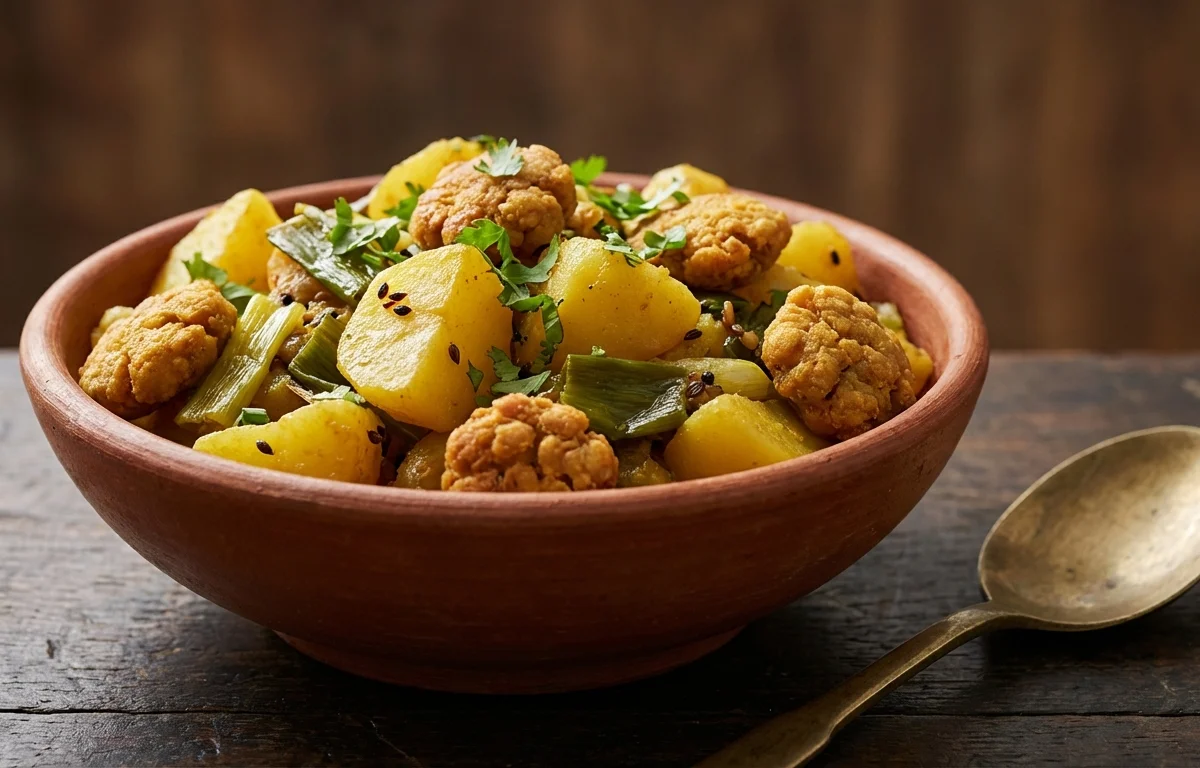
Kesa Piaj Tarkari
A simple and delicious Odia-style curry made with fresh spring onions and potatoes. This quick, home-style tarkari gets its unique flavor from the traditional 'pancha phutana' tempering and is perfect with rice and dal.
For 4 servings
Prep Vegetables: Wash spring onions thoroughly. Finely chop the white bulbs and the green stalks, keeping them in separate bowls. Peel the potatoes and dice them into uniform ½-inch cubes. Finely chop the tomato.
Temper Spices (Phutana): Heat mustard oil in a kadai or a wide pan over medium-high heat until it's fragrant and just begins to smoke lightly. Reduce the heat to medium, add the dried red chillies and pancha phutana. Allow the seeds to splutter for about 30 seconds, being careful not to burn them.
Sauté Aromatics and Potatoes: Add the chopped white parts of the spring onions to the pan. Sauté for 1-2 minutes until they turn translucent. Add the diced potatoes, mix well with the tempered oil, and sauté for another 3-4 minutes, stirring occasionally.
Add Spices and Cook: Stir in the turmeric powder, red chilli powder, cumin powder, and coriander powder. Cook for 30 seconds until the raw smell of the spices disappears. Add the chopped tomato and salt. Mix well and cook for 2-3 minutes until the tomatoes start to soften.
Simmer until Tender: Pour in 60 ml (¼ cup) of water, stir everything together, and bring to a gentle simmer. Cover the pan with a lid, reduce the heat to low, and let it cook for 10-12 minutes. Stir once or twice in between to prevent sticking. Cook until the potatoes are fork-tender.
Finish and Serve: Once the potatoes are cooked, add the chopped green stalks of the spring onions. Gently stir to combine and cook uncovered for 2-3 minutes, just until the greens have wilted but still retain their vibrant color and a slight crunch. Turn off the heat. Serve the Kesa Piaj Tarkari hot with steamed rice and dal or fresh rotis.
What to keep in mind.
5 tips from the recipe — small details that make a real difference to the final dish.
- 1Using mustard oil is key for the authentic Odia flavor. Heat it until it's slightly smoking to mellow its pungent taste.
- 2Pancha phutana is a blend of cumin, mustard, fenugreek, nigella, and fennel seeds. If you don't have the blend, you can use a mix of mustard and cumin seeds.
- 3Cut the potatoes into small, even cubes to ensure they cook quickly and uniformly.
- 4Add the green parts of the spring onions at the very end to preserve their fresh flavor, color, and texture.
- 5For extra flavor and texture, you can add a handful of crushed 'badi' (sun-dried lentil dumplings) along with the potatoes.
Adapt it for your goals.
Add Vegetables
Include green peas, diced carrots, or cauliflower florets along with the potatoes for a mixed vegetable version.
Add ProteinAdd Protein
Stir in some fried paneer cubes or boiled chickpeas towards the end of cooking for a more substantial dish.
Tangy TwistTangy Twist
Add ½ teaspoon of amchur (dry mango powder) or a squeeze of lemon juice at the end for a tangy flavor.
Garlic FlavorGarlic Flavor
Add 1 teaspoon of minced garlic along with the white spring onion bulbs for a more pungent aroma.
Why this is on our healthy list.
Rich in Antioxidants
Spring onions, tomatoes, and turmeric are packed with antioxidants like quercetin, lycopene, and curcumin, which help combat oxidative stress and inflammation in the body.
Aids Digestion
The spices in pancha phutana, particularly fennel and cumin seeds, are known to aid digestion, reduce bloating, and improve gut health.
Supports Immunity
Spring onions are a good source of Vitamin C and Vitamin A, which are essential for a strong immune system and maintaining healthy vision.
Provides Essential Nutrients
This dish offers a good balance of nutrients, including potassium from potatoes (important for blood pressure regulation) and dietary fiber from the vegetables, which supports digestive regularity.
Frequently asked questions
One serving (about 1 cup) contains approximately 145-160 calories, making it a light and healthy side dish. The exact count depends on the amount of oil and the size of the potatoes used.