
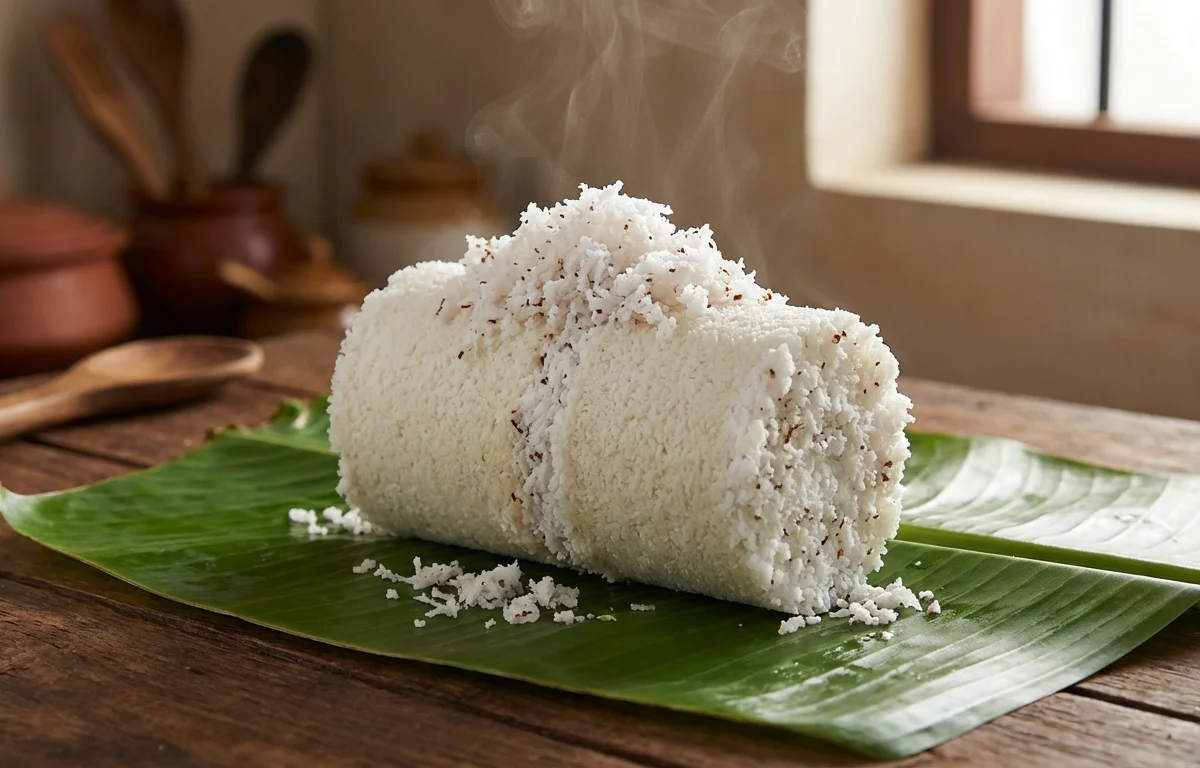
Kerala Puttu
A quintessential Kerala breakfast, these steamed cylinders of rice flour and coconut are wonderfully soft and light. This traditional dish pairs beautifully with kadala curry, banana, or a sprinkle of sugar. The key to perfect puttu lies in achieving the right 'wet sand' moisture level in the flour, resulting in a fluffy, non-sticky texture.
For 4 servings
Prepare the Puttu Mixture (10-15 minutes)
- In a large mixing bowl, combine the puttu podi and salt. Mix thoroughly with your fingertips.
- Begin sprinkling the warm water, a little at a time, over the flour. Use your fingertips to rub the water into the flour in a circular motion to ensure even moistening.
- Continue this process until the flour achieves a texture resembling coarse, damp breadcrumbs or wet sand. This is the most critical step for soft puttu.
- To check for the correct consistency, take a small amount of the mixture in your fist and press firmly. It should hold its shape. When you gently break it with a finger, it should crumble easily.
- For a perfectly uniform, lump-free texture, you can pulse the mixture a few times in a mixie/blender or press it through a coarse sieve.
- Cover the prepared mixture and let it rest for at least 10 minutes. This allows the rice flour to fully absorb the moisture.
Layer the Puttu Maker (5 minutes)
- Take the cylindrical puttu maker (puttu kutti) and place the small perforated disc at the bottom.
- Start with a base layer of 2-3 tablespoons of grated coconut.
- Gently spoon the prepared rice flour mixture on top of the coconut until the cylinder is about half full. Do not press or pack the flour down; it must remain loose.
- Add another thin layer of 1-2 tablespoons of grated coconut.
- Fill the rest of the cylinder with the flour mixture, leaving about an inch of space at the top. Finish with a final layer of coconut.
Steam the Puttu (8-10 minutes per batch)
- Fill the base pot (puttu kudam) with 2-3 cups of water and bring it to a vigorous boil.
- Carefully place the filled cylinder onto the nozzle of the base pot and close the lid.
- Steam on medium-high heat. The puttu is perfectly cooked when a steady stream of steam escapes from the holes on the top lid, which typically takes 8-10 minutes. You will also notice a fragrant aroma of cooked rice and coconut.
- Turn off the heat. Using a kitchen towel for safety, carefully remove the hot cylinder from the pot.
Serve Hot (5 minutes)
- Allow the cylinder to rest for a minute to prevent breakage.
- Using the provided rod or the back of a long spoon, gently push the cooked puttu from the bottom out onto a serving plate.
- Repeat the layering and steaming process with the remaining mixture.
- Serve immediately while hot with kadala curry (black chickpea curry), ripe bananas, pappadam, or a sprinkle of sugar and ghee.
What to keep in mind.
6 tips from the recipe — small details that make a real difference to the final dish.
- 1The 'wet sand' consistency is key. Too little water makes the puttu dry and hard; too much makes it lumpy and dense.
- 2Using warm water helps in making the puttu softer and speeds up moisture absorption.
- 3Never pack the flour mixture into the cylinder. Keeping it loose allows steam to penetrate and cook it evenly for a fluffy texture.
- 4If you don't have a puttu maker, you can steam the mixture in idli molds or a traditional chiratta (coconut shell) placed over a pressure cooker nozzle.
- 5For a richer flavor, you can add a pinch of cumin seeds to the flour mixture.
- 6Leftover puttu can be crumbled and stir-fried with onions, mustard seeds, and curry leaves to make a delicious 'puttu upma'.
Adapt it for your goals.
Ragi Puttu
Replace rice flour with ragi (finger millet) flour for a healthier, nutrient-dense version. You may need to adjust the water quantity slightly.
Wheat PuttuWheat Puttu
Use whole wheat flour (atta) instead of rice flour. This version is denser but equally delicious and high in fiber.
Sweet Puttu (Inippu Puttu)Sweet Puttu (Inippu Puttu)
Mix grated jaggery or sugar with the coconut layers for a sweet version, often served as a dessert or snack.
Masala PuttuMasala Puttu
Add finely chopped onions, green chilies, and a pinch of turmeric powder to the rice flour mixture for a savory, spiced-up puttu.
Why this is on our healthy list.
Excellent Source of Energy
Made from rice flour, puttu is rich in complex carbohydrates that provide sustained energy, making it an ideal and filling breakfast to start your day.
Low-Fat Cooking Method
As a steamed dish, it contains virtually no oil, making it a heart-healthy and weight-management-friendly choice compared to fried breakfast items.
Aids in Digestion
The generous use of fresh coconut adds dietary fiber, which promotes healthy digestion, prevents constipation, and contributes to gut health.
Naturally Gluten-Free
Traditional puttu made from pure rice flour is naturally gluten-free, making it a safe and delicious option for individuals with celiac disease or gluten sensitivity.
Frequently asked questions
Puttu Podi is a special coarse rice flour made from specific varieties of rice, which is then roasted. This roasting process gives puttu its unique texture and flavor. While you can use regular rice flour, the texture might be denser and stickier. For best results, always use flour labeled 'Puttu Podi'.