
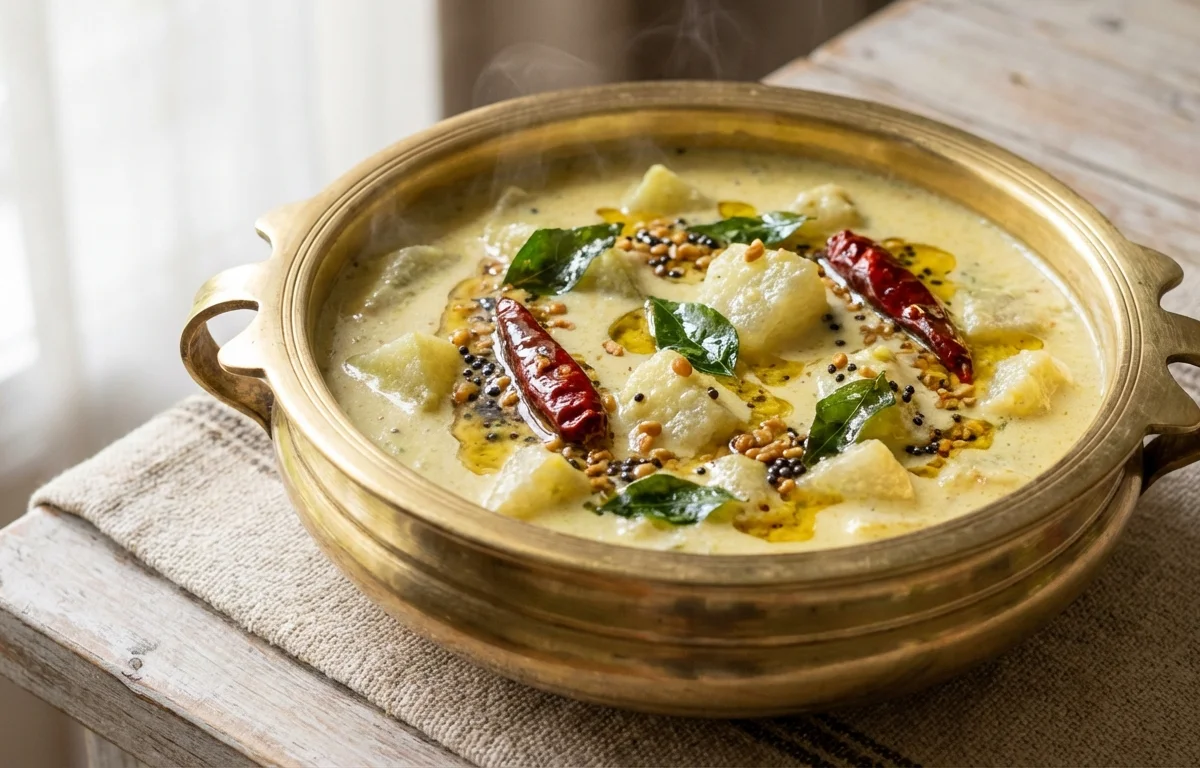
Kerala Pulissery
A classic Kerala curry with a beautiful balance of sweet, sour, and savory flavors. Ripe pineapple is cooked in a creamy coconut and yogurt gravy, finished with a fragrant tempering of mustard seeds and curry leaves.
For 4 servings
Cook the Pineapple
- In a medium-sized pot or kadai, combine the chopped pineapple, turmeric powder, red chilli powder, and 1/2 cup of water.
- Bring the mixture to a boil over medium heat.
- Reduce the heat to low, cover, and simmer for 8-10 minutes, or until the pineapple pieces are soft and tender.
Prepare the Coconut Paste
- While the pineapple is cooking, add the grated coconut, cumin seeds, green chilies, and ginger to a blender.
- Add 3-4 tablespoons of water and blend to a very smooth, fine paste. Scrape down the sides as needed to ensure there are no coarse bits.
Combine and Cook Gravy
- Add the ground coconut paste to the pot with the cooked pineapple.
- Stir well to combine and cook on low-medium heat for 5-7 minutes, stirring occasionally.
- Continue cooking until the raw smell of the coconut disappears and the gravy thickens slightly.
Incorporate the Yogurt
- CRITICAL STEP: Turn off the heat completely and let the pot cool for 2-3 minutes. This is essential to prevent the yogurt from curdling.
- Add the whisked yogurt, powdered jaggery, and salt to the pot. Stir gently but thoroughly until everything is well combined.
- Return the pot to the stove on the absolute lowest heat setting. Gently warm the curry for 2-3 minutes, stirring constantly. Do NOT let it simmer or boil.
Prepare the Tempering (Tadka)
- In a small pan (tadka pan), heat the coconut oil over medium heat.
- Once the oil is hot, add the mustard seeds and wait for them to splutter completely.
- Add the fenugreek seeds, broken dried red chilies, and curry leaves. Sauté for 30-40 seconds until the chilies darken slightly and the curry leaves turn crisp and aromatic.
Finish and Rest
- Immediately pour the hot tempering over the pulissery.
- Cover the pot and let it rest for at least 10 minutes. This step traps the aroma and allows the flavors to meld beautifully.
- Serve warm with steamed rice.
What to keep in mind.
5 tips from the recipe — small details that make a real difference to the final dish.
- 1The key to a perfect pulissery is not boiling it after adding yogurt. Gentle warming on the lowest flame is crucial.
- 2Use ripe, sweet pineapple for the best flavor. The sweetness of the fruit balances the sourness of the yogurt.
- 3Ensure your yogurt is whisked until completely smooth before adding it to the curry to prevent lumps.
- 4Using coconut oil for tempering is non-negotiable for an authentic Kerala taste.
- 5The curry tastes even better the next day as the flavors deepen. Store it in an airtight container in the refrigerator.
Adapt it for your goals.
Fruit/Vegetable Swap
This pulissery can also be made with other fruits or vegetables. Popular variations include ripe mangoes (Mambazha Pulissery), nendran bananas (a type of plantain), or ash gourd (Kumbalanga Pulissery).
Spice LevelSpice Level
For a spicier version, increase the number of green chilies or add a pinch more of red chilli powder. You can also add a slit bird's eye chili to the tempering.
Vegan VersionVegan Version
To make this vegan, substitute the yogurt with a thick, unsweetened plant-based yogurt like coconut or cashew yogurt. Ensure it's not heated too high to prevent splitting.
Why this is on our healthy list.
Promotes Gut Health
The yogurt base is a natural source of probiotics, which are beneficial bacteria that support a healthy digestive system and improve gut flora.
Rich in Vitamins and Minerals
Pineapple provides a significant amount of Vitamin C, an antioxidant that boosts the immune system, and manganese, which is important for bone health and metabolism.
Anti-inflammatory Properties
Spices like turmeric (containing curcumin) and ginger have powerful natural anti-inflammatory and antioxidant effects, which can help reduce inflammation in the body.
Source of Healthy Fats
The use of fresh coconut and coconut oil provides medium-chain triglycerides (MCTs), a type of healthy fat that is easily digested and can provide a quick source of energy.
Frequently asked questions
One serving of Kerala Pulissery contains approximately 190-220 calories, depending on the fat content of the coconut and yogurt used.