
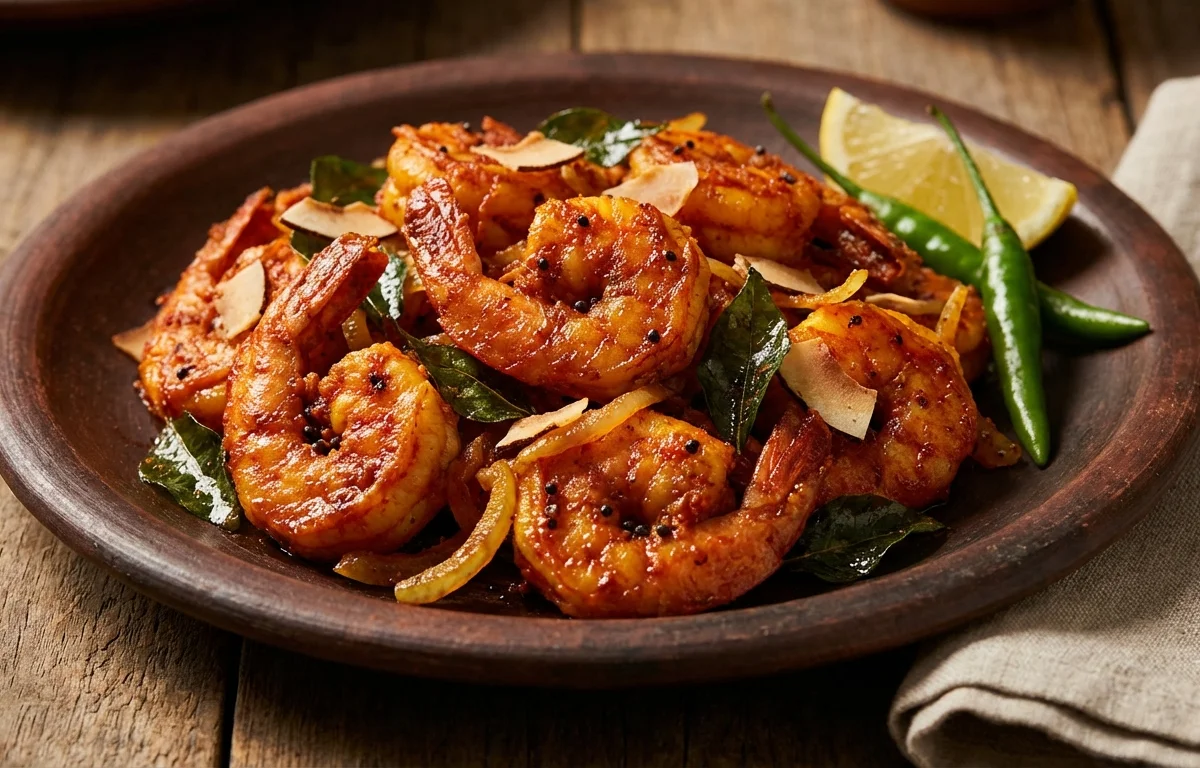
Kerala Prawn Fry
Succulent prawns marinated in a fiery blend of Kerala spices and shallow-fried with coconut oil, curry leaves, and sweet onions. A classic coastal appetizer that's bursting with flavor and ready in under 40 minutes.
For 4 servings
Marinate the Prawns
- In a mixing bowl, combine the cleaned prawns with Kashmiri red chilli powder, regular red chilli powder, turmeric powder, black pepper powder, ginger-garlic paste, lemon juice, and salt.
- Mix thoroughly to ensure each prawn is evenly coated with the spice blend.
- Cover the bowl and let the prawns marinate in the refrigerator for at least 30 minutes, or up to 2 hours for a deeper flavor.
Shallow-Fry the Prawns
- Heat 3 tablespoons of coconut oil in a wide, heavy-bottomed pan or skillet over medium-high heat.
- Once the oil is hot, carefully place the marinated prawns in a single layer. Avoid overcrowding the pan; fry in batches if necessary.
- Fry for 2-3 minutes on each side until they turn pink and are about 80% cooked. They should have a light, crisp exterior.
- Remove the partially cooked prawns from the pan and set them aside on a plate.
Sauté the Aromatics
- In the same pan with the remaining oil, add the mustard seeds. Wait for them to splutter, which should take about 30 seconds.
- Add the sliced onions, slit green chillies, and curry leaves. Sauté over medium heat for 6-8 minutes, stirring occasionally, until the onions are soft and golden brown.
- If using, add the thin coconut slices and continue to sauté for another 2-3 minutes until they are lightly browned and fragrant.
Combine and Finish
- Return the fried prawns to the pan with the sautéed onion mixture.
- Sprinkle the garam masala over the prawns.
- Gently toss everything together to combine. Cook for another 2-3 minutes, allowing the prawns to cook through completely and absorb the flavors of the masala.
- Continue to cook until the masala coats the prawns well and the dish reaches a semi-dry consistency.
Serve
- Turn off the heat. Garnish with a few fresh curry leaves if desired.
- Serve the Kerala Prawn Fry hot as an appetizer or as a side dish with steamed rice, appam, or parotta.
What to keep in mind.
5 tips from the recipe — small details that make a real difference to the final dish.
- 1For the most authentic flavor, do not substitute coconut oil with any other oil.
- 2Do not overcook the prawns. They cook very quickly, and overcooking will make them tough and rubbery.
- 3Using fresh, high-quality prawns will significantly enhance the taste of the dish.
- 4Ensure the pan is sufficiently hot before adding the prawns to get a perfect sear.
- 5The optional coconut slices (thenga kothu) add a delightful crunch and sweetness that contrasts beautifully with the spices.
Adapt it for your goals.
Protein Swap
This same masala base can be used to make Kerala fish fry (using firm fish like kingfish or pomfret) or a chicken fry.
Gravy VersionGravy Version
To make a gravy, add 1/2 cup of thin coconut milk along with the prawns in the final step and simmer for 4-5 minutes until the gravy thickens slightly.
Add TanginessAdd Tanginess
For extra tang, you can add one finely chopped tomato along with the onions and cook until it turns soft and mushy.
Why this is on our healthy list.
Excellent Source of Lean Protein
Prawns are packed with high-quality protein, which is essential for building and repairing tissues, muscle growth, and overall body function.
Rich in Omega-3 Fatty Acids
Prawns provide beneficial omega-3 fatty acids, which are known to support heart health by reducing inflammation and improving cholesterol levels.
Anti-inflammatory Properties
Spices like turmeric (containing curcumin), ginger, and garlic used in the marinade have powerful natural anti-inflammatory and antioxidant properties that help combat oxidative stress.
Frequently asked questions
Kerala Prawn Fry can be part of a healthy diet in moderation. Prawns are an excellent source of lean protein and omega-3 fatty acids. However, since it's a fried dish, it contains a higher amount of oil. Using coconut oil provides beneficial medium-chain triglycerides. To make it healthier, you can reduce the amount of oil used.