
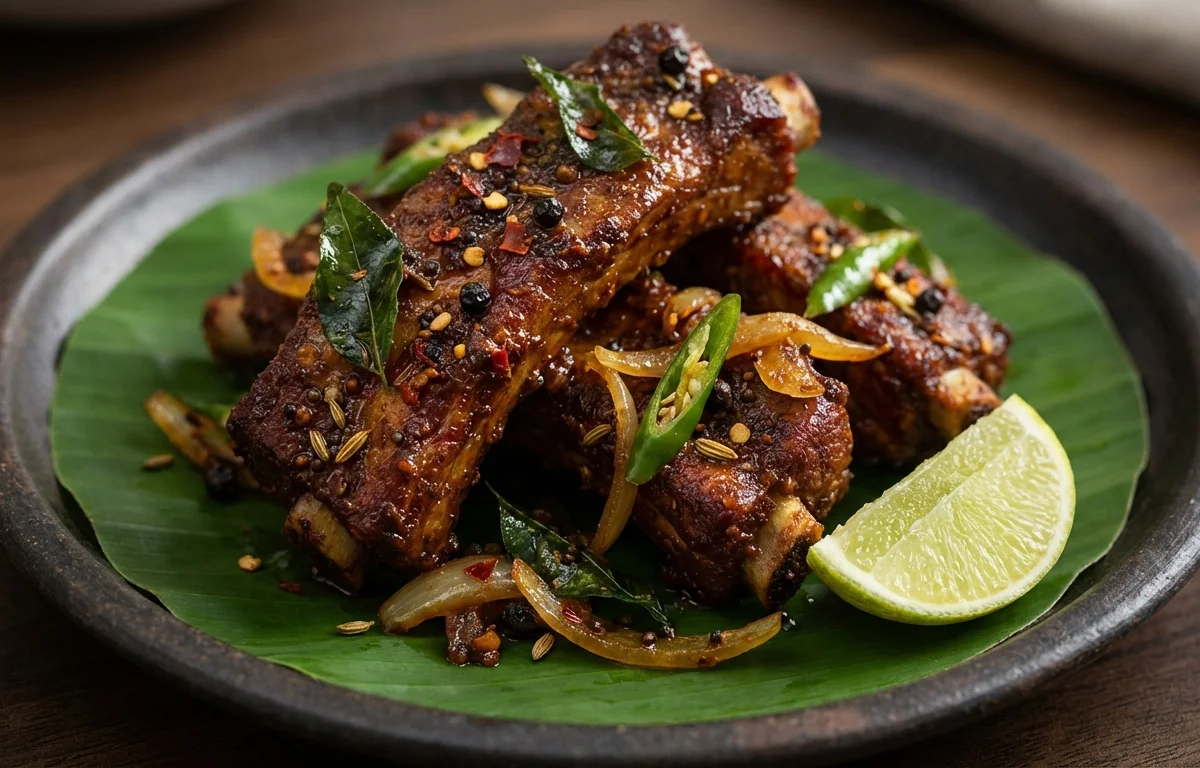
Kerala Pork Ribs Fry
Tender, fall-off-the-bone pork ribs, pressure-cooked and then pan-fried with a fragrant blend of classic Kerala spices. Coarsely ground black pepper, fennel, and curry leaves create an irresistible, spicy crust. A perfect side dish for rice, appam, or parotta.
For 4 servings
Marinate and Pressure Cook the Pork
- In a large bowl, combine the pork rib pieces, turmeric powder, Kashmiri red chili powder, coriander powder, fennel powder, ginger-garlic paste, vinegar, and 1.5 tsp of salt. Mix thoroughly to ensure each piece is well-coated.
- Let the pork marinate for at least 15-20 minutes.
- Transfer the marinated pork to a pressure cooker. Add 1/2 cup of water, mix well, and secure the lid.
- Cook on medium heat for 4-5 whistles, or for about 20-25 minutes, until the pork is about 90% cooked and tender but not falling off the bone.
- Allow the pressure to release naturally. Open the cooker. If there's excess liquid, cook on high heat, uncovered, until the water evaporates and a thick masala coats the ribs.
Sauté the Aromatics
- Heat the coconut oil in a heavy-bottomed pan or kadai over medium heat.
- Add the sliced onions and sauté for 8-10 minutes, until they turn a deep golden brown.
- Add the slit green chilies, curry leaves, and optional coconut pieces. Sauté for another 2-3 minutes until the curry leaves are crisp and the coconut pieces are lightly browned and fragrant.
Fry and Finish the Pork Ribs
- Add the pressure-cooked pork ribs along with any thick masala from the cooker into the pan with the sautéed onions.
- Sprinkle the coarsely ground black pepper and garam masala over the pork.
- Mix everything gently to combine. Reduce the heat to medium-low and pan-fry for 10-15 minutes, stirring occasionally.
- Continue to fry until the ribs are well-browned, the masala becomes dry, dark, and roasts onto the pieces, creating a delicious crust.
- Taste and adjust the salt if necessary. Serve hot.
What to keep in mind.
6 tips from the recipe — small details that make a real difference to the final dish.
- 1For the most authentic flavor, do not skip the coconut oil and fresh curry leaves.
- 2Using coarsely ground black pepper provides a superior texture and pungent flavor compared to fine powder.
- 3Ensure the pork is only 90% cooked in the pressure cooker. This prevents it from disintegrating during the final frying stage.
- 4Frying on a low to medium flame is crucial for achieving a dark, roasted finish without burning the spices.
- 5This dish develops more flavor as it sits. It often tastes even better the next day.
- 6Use a heavy-bottomed or non-stick pan to prevent the masala from sticking and burning during the final fry.
Adapt it for your goals.
Ingredient Substitution
For a different texture, you can use pork belly instead of ribs. You may need to adjust the pressure cooking time as pork belly cooks faster.
Spice Level AdjustmentSpice Level Adjustment
For extra heat, increase the amount of black pepper or add a few dried red chilies along with the onions.
Cooking MethodCooking Method
If you don't have a pressure cooker, you can slow-cook the pork in a covered pot with 1 cup of water for about 1 to 1.5 hours, or until tender, before proceeding with the frying step.
Why this is on our healthy list.
Rich in High-Quality Protein
Pork is an excellent source of complete protein, which is essential for building and repairing muscle tissue, supporting immune function, and maintaining overall body strength.
Source of B Vitamins
This dish provides essential B vitamins, particularly B6 and B12, which play a crucial role in energy metabolism, brain function, and the formation of red blood cells.
Anti-inflammatory Spices
The use of spices like turmeric (containing curcumin) and black pepper (containing piperine) offers anti-inflammatory benefits that can help combat chronic inflammation in the body.
Frequently asked questions
A single serving of Kerala Pork Ribs Fry contains approximately 450-550 calories, depending on the fat content of the pork ribs used.